
U.S. lead scorer Folarin Balogun will play in World Cup match against Belgium after suspension is lifted
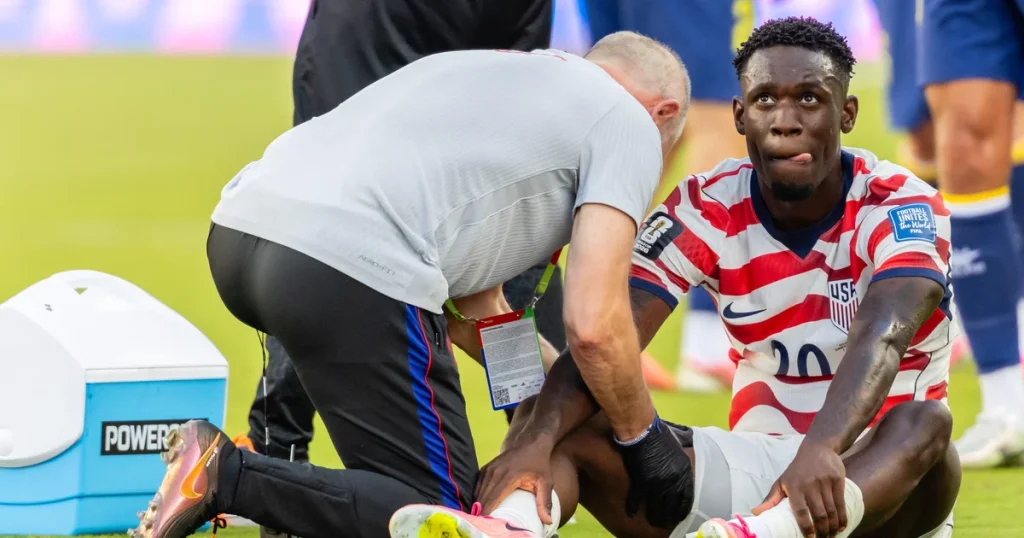
U.S. Lead Scorer Folarin Balogun Set to Return for World Cup Clash Against Belgium
U S lead scorer Folarin Balogun – FIFA’s disciplinary committee has officially rescinded the red card suspension that barred Folarin Balogun from participating in the U.S. Men’s National Team’s upcoming World Cup match against Belgium. The decision, confirmed by U.S. Soccer, allows the forward to return for the game in Seattle, Washington, after a controversial incident during the U.S. team’s encounter with Bosnia and Herzegovina on Wednesday. Balogun, who had been suspended for a red card, is now eligible to play, marking a significant moment for the squad as they prepare for the high-stakes encounter.
The incident that led to Balogun’s suspension occurred in the second half of the U.S.-Bosnia match. According to the referee’s report, the 25-year-old player was involved in a collision with a Bosnian defender while attempting to position himself for a pass. The referee deemed the action a “serious foul,” citing the use of his cleats to scrape down the opponent’s leg and the subsequent contact with the defender’s ankle. After a VAR review, the red card was issued, and Balogun was forced to sit out the next match. However, the disciplinary committee has since reversed this ruling, clearing him to play in the World Cup clash against Belgium.
“We are pleased that Folarin will be able to compete in the match,” stated a U.S. Soccer spokesperson, emphasizing the importance of having key players available for critical games. The organization did not provide specific reasons for the reversal, leaving fans and analysts to speculate about the committee’s decision.
The suspension was initially imposed as a standard penalty for a red card. However, the disciplinary committee has placed Balogun on probation for one year, with the stipulation that if he repeats a similar offense during this period, the suspension may be reinstated. This move suggests that the committee found the incident to be unintentional, potentially reducing the severity of the punishment. While red cards typically result in automatic suspensions, the flexibility to adjust the sanction highlights FIFA’s willingness to consider context in its decisions.
The controversy surrounding the original call has sparked debate among players and fans. Balogun’s actions were described as accidental, with some arguing that the referee’s decision was overly harsh. “It was a split-second moment, not a deliberate act,” said one U.S. player in a statement to CBS News. “He didn’t mean to injure anyone.” Others echoed this sentiment, calling the red card a “great injustice” and questioning whether the use of VAR was decisive in the ruling. Despite the uproar, FIFA maintained its stance, stating that the foul was “serious” and warranted disciplinary action.
The reversal of Balogun’s suspension brings to mind similar cases in international football. Notably, Cristiano Ronaldo faced a comparable situation when he was shown a red card against Ireland in the 2022 World Cup qualifiers. Ronaldo’s penalty kept him from Portugal’s opening match of the tournament, but his case was later reviewed and adjusted. Balogun’s situation mirrors this, with the committee acknowledging the potential for error in the initial call.
President Donald Trump took to social media to celebrate the decision, tweeting that FIFA had “done what was right” and “reversed a great injustice.” His endorsement underscores the political weight often attached to high-profile sporting decisions. Meanwhile, U.S. star Christian Pulisic shared his team’s relief, stating that Balogun’s return is “a huge boost.” In a quote to CBS News, Pulisic said, “Just a big smile on his face and all of ours. It’s fantastic to have him back.”
A Closer Look at the Incident
The collision occurred in a pivotal moment during the U.S.-Bosnia game, which ultimately ended in a 2-1 victory for the Americans. Balogun’s inclusion in the lineup had been crucial, as he had been a standout performer throughout the tournament. The referee’s decision to send him off was based on the immediate assessment of the incident, but the VAR review later confirmed the red card. This process, while intended to ensure accuracy, has sometimes led to contentious rulings, as seen in Balogun’s case.
Balogun’s actions were scrutinized for their intent. Critics argue that the use of cleats and the forceful contact were not intentional, and that the defender’s positioning contributed to the collision. “It’s clear the player was trying to make a pass, not to harm the opponent,” noted a sports analyst in a post on The Athletic. “The call felt like a mistake, especially in a high-pressure moment.” Despite this, the referee and VAR officials upheld the decision, leading to Balogun’s suspension for the following game.
The U.S. team’s performance after the suspension raised questions about the impact of losing key players. Without Balogun, the squad managed to secure the win, but the absence of his creativity and goal-scoring ability was felt. The decision to lift his suspension for the Belgium match has been met with optimism, as the team looks to build momentum in their campaign. “Folarin is a vital part of our attack,” said another U.S. player. “His return could be the difference in this game.”
FIFA’s Disciplinary Process and Its Implications
FIFA’s disciplinary system is designed to maintain fairness in international competitions, but its application can vary. Red card suspensions are typically mandatory, with players serving a one-match ban for the first offense. In Balogun’s case, the committee’s decision to lift the suspension suggests a recognition of the incident’s accidental nature. This adjustment not only benefits the player but also sets a precedent for how similar cases may be handled in the future.
The committee’s authority to fully or partially suspend disciplinary actions gives it discretion in evaluating cases. While the original suspension was strict, the revision indicates that FIFA is open to reconsidering penalties based on new evidence or context. This flexibility is particularly important in high-profile matches where a player’s absence could affect the team’s chances. “FIFA’s ability to adjust sanctions is a positive step,” commented a football journalist. “It shows they are willing to correct mistakes when the facts support it.”
The decision to lift Balogun’s suspension has also sparked discussions about the role of VAR in modern football. While the technology aims to improve accuracy, its use in this instance led to a swift penalty. Some argue that the review process was too quick, while others believe it provided a fair assessment of the incident. Regardless of the debate, the outcome has allowed Balogun to be part of the U.S. team’s preparations for the Belgium match, adding an extra layer of anticipation for fans.
As the World Cup progresses, the U.S. team will need every advantage they can get. Balogun’s return to the field not only boosts their attacking options but also provides emotional support for the squad. His ability to score goals has been a key factor in the team’s success, and his presence could help them secure a strong result against Belgium. The suspension’s reversal is a testament to the dynamic nature of FIFA’s decisions and the importance of having players available for critical moments in the tournament.
With the green light to compete, Balogun’s team-mates are optimistic about the upcoming match. “He’s a player who brings energy and goals,” said Pulisic, highlighting the forward’s impact. The U.S. squad will now focus on maintaining their momentum, with Balogun ready to contribute. The decision to reverse the suspension reflects FIFA’s balance between enforcing rules and acknowledging the nuances of on-field play, ensuring that athletes like Balogun have the opportunity to showcase their skills in the most important games.