
Alibaba sues Pentagon over blacklist designation
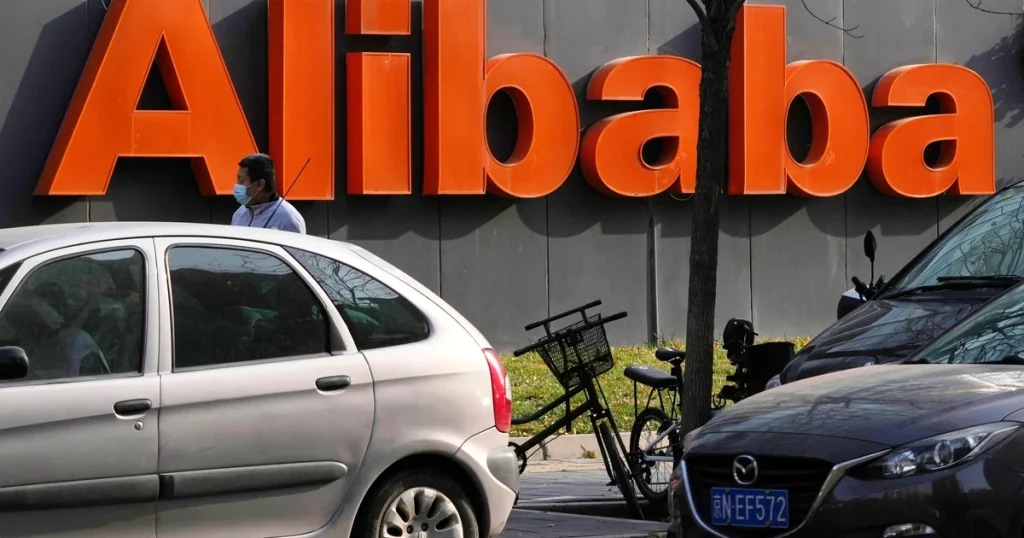
Alibaba Sues Pentagon Over Blacklist Designation
Alibaba sues Pentagon over blacklist designation – On Tuesday, the Chinese technology company Alibaba Group initiated a federal lawsuit against the U.S. Department of Defense, challenging its designation as a firm with military ties. The legal action, filed in San Jose, California, argues that the label assigned to Alibaba by the Pentagon is both unjustified and politically motivated. According to the company, this classification restricts its ability to engage in business with the U.S. government, potentially harming its operations and financial interests.
Pentagon’s List and Legal Claims
The lawsuit centers on the Pentagon’s recent release of a list of 80 companies and their subsidiaries, which it claims have connections to the Chinese military. Alibaba, along with other firms like Baidu and BYD, was included in this list. The company asserts that the decision lacks factual or legal foundation, describing it as an arbitrary act aimed at stifling its growth in the American market.
“The determinations have no basis in fact or law,” the complaint stated, highlighting the company’s belief that the Pentagon’s actions are driven by a broader geopolitical agenda rather than concrete evidence of military collaboration. This move, the lawsuit claims, undermines Alibaba’s reputation as a purely commercial entity and forces it into a defensive posture against U.S. government scrutiny.
Alibaba’s legal team emphasized that the company operates as a publicly traded e-commerce and cloud-services provider with a shareholder base that includes major American financial institutions such as J.P. Morgan, Citigroup, and BlackRock. This diversity, they argued, demonstrates the firm’s independence from Chinese military influence. The designation, which took effect on June 30, now bars the Pentagon from entering new contracts with Alibaba or its controlled subsidiaries, a restriction that the company claims threatens its business continuity.
Reactions from Chinese Entities
Earlier this week, both Baidu and BYD had echoed Alibaba’s concerns, stating that their inclusion on the list was based on insufficient justification. The Chinese Embassy further criticized the U.S. decision, accusing Washington of “overstretching the concept of national security” and creating discriminatory lists to target Chinese enterprises. These statements underscore a coordinated effort by Chinese entities to defend their interests against the Pentagon’s actions.
“Alibaba is not a Chinese military company nor part of any military-civil fusion strategy,” a company spokesperson told AFP. This claim refutes the notion that Alibaba’s business activities are aligned with military objectives, positioning the firm as a victim of political overreach. The spokesperson also noted that the decision to place Alibaba on the list is “arbitrary and capricious,” and the lawsuit seeks to compel the Department of Defense to remove the company from the designation.
Industry experts suggest that the Pentagon’s move is part of a broader strategy to curtail Chinese technological influence in critical sectors. By labeling companies as military-linked, the U.S. government aims to limit their access to defense contracts and U.S. government funding. However, Alibaba argues that this approach infringes on its rights to operate freely in the American market, particularly its ability to retain lobbying firms without restriction.
Impact on Business and First Amendment Rights
The lawsuit highlights the immediate effects of the designation on Alibaba’s business practices. Advocates who have represented the company for years have informed it that they can no longer do so, according to the complaint. This development, the company claims, violates its First Amendment rights by limiting its capacity to engage in lobbying activities, which are essential for navigating regulatory and political landscapes in the U.S.
Alibaba’s legal challenge also extends to the broader implications of the Pentagon’s designation. The company contends that the classification not only affects its financial prospects but also damages its global standing as a trusted business partner. This dispute has sparked debates about the balance between national security concerns and the economic interests of companies operating internationally.
China’s Retaliatory Measures
As tensions escalated, China responded by imposing export controls on ten U.S. companies involved in defense manufacturing and rare earths mining. This retaliatory action, announced on Monday, signals a growing determination to counter the U.S. economic pressure through reciprocal measures. The move has intensified the diplomatic standoff between the two nations, with each side accusing the other of using trade policies to serve political goals.
The feud has taken on added significance following the recent meeting between U.S. President Donald Trump and Chinese President Xi Jinping in Beijing. While the summit was intended to stabilize bilateral relations, the continued designation of Chinese companies by the Pentagon has cast doubt on the effectiveness of these diplomatic efforts. Analysts suggest that the issue remains unresolved, with both sides reluctant to yield ground in their respective positions.
Alibaba’s lawsuit is not just a legal battle but also a symbolic gesture in the ongoing trade and technology rivalry between China and the United States. The company’s claim that the Pentagon’s actions are “arbitrary and capricious” reflects a broader critique of how national security concerns are being used to target specific industries and firms. As the legal proceedings unfold, the outcome could set a precedent for future disputes involving Chinese companies and U.S. government oversight.
With the Pentagon’s restrictions now in place, the stakes for Alibaba have risen. The company’s ability to secure contracts and maintain its lobbying presence in the U.S. hinges on the resolution of this case. Meanwhile, the Chinese government’s response underscores the urgency of addressing these tensions, as the economic and political ramifications continue to ripple across global markets.