
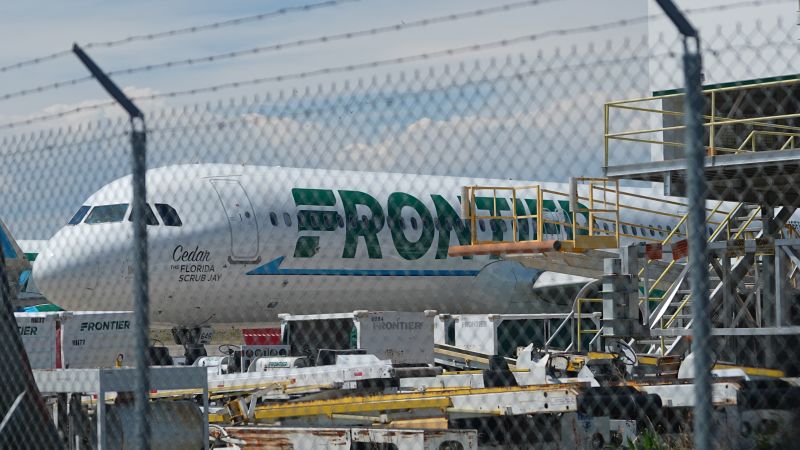
Frontier Airlines Plane Incident at Denver Airport Leads to Tragic Suicide
Man hit by Frontier Airlines plane – On Friday, a dramatic and unforeseen event unfolded at Denver International Airport when a man was struck and killed by a departing Frontier Airlines jet. Officials have since confirmed that the individual, identified as 41-year-old Michael Mott, intended to take his own life during the incident. This revelation came after a thorough examination by Denver’s chief medical examiner, Sterling McLaren, who declared the cause of death as suicide.
Details of the Fatal Encounter
According to the investigation, Mott managed to leap over the airport’s perimeter fence, an act that led to his tragic demise. The Airbus A321, Flight 4345, was en route to Los Angeles when it collided with the man. The pilot’s report, captured in audio from ATC.com, highlighted the urgency of the situation: “We’re stopping on the runway. We just hit somebody. We have an engine fire.” The incident caused smoke to fill the cabin, prompting an emergency evacuation of passengers via slides. Twelve individuals sustained injuries, though only five required hospitalization. Of these, four have since been released from medical care.
The Airport’s Security Infrastructure
Denver International Airport, which spans 53 square miles, is among the largest in the world by land area. Its perimeter fence, a 36-mile-long barrier, stands 8 feet tall and is equipped with barbed wire and alarm systems. Despite these measures, Mott was able to bypass the security during his brief escape. Airport officials stated that ground detection sensors activated as he approached the fence, but the incident was initially noticed through camera footage showing a herd of deer. Security personnel did not spot Mott at first, allowing him to enter the restricted area unnoticed.
Security Measures Under Scrutiny
Following the incident, the airport has initiated an in-depth review of its perimeter security program. While the fence itself was found intact, the event has raised questions about the effectiveness of current monitoring systems. Denver’s chief of police, Ron Thomas, noted that no vehicles or bicycles were located near the area where Mott jumped the fence, suggesting he acted alone. The airport’s CEO, Phil Washington, emphasized that the security team regularly patrols the airfield, yet the incident demonstrates the vulnerability of even well-established protocols. “We don’t want our fence to be deadly,” Washington stated, “but even if it were taller, a determined individual could still find a way to breach it. That is why we implement multiple layers of security.”
Timeline of the Incident
Security cameras captured Mott’s movement, revealing that he took approximately 15 seconds to clear the fence before heading toward the runway. Within two minutes, he was struck by the aircraft, underscoring the speed at which the tragedy occurred. The timing highlights the challenges of detecting individuals in motion, especially in a vast facility like Denver International. Washington acknowledged that the airport has encountered similar incidents in the past, though none had resulted in fatalities. The current event has prompted a reassessment of response times and surveillance coverage.
Impact on Airport Operations
The collision with Mott disrupted the flight’s departure and caused immediate concern among passengers. Emergency protocols were swiftly activated, with crews assisting in the evacuation process. The airline released a statement confirming the incident, describing the Airbus A321 as carrying 224 passengers and seven crew members. While the pilot’s report focused on the immediate danger, the broader implications for airport safety have taken center stage. The incident has sparked discussions about the balance between security and accessibility, as well as the need for real-time monitoring enhancements.
Community Response and Support Resources
In the wake of the tragedy, Denver officials have emphasized the importance of mental health resources. The 988 Suicide & Crisis Lifeline, which provides free, confidential support for individuals in distress or aiding someone in crisis, remains a critical resource. Washington noted that the airport’s security personnel are trained to handle emergencies, but the event underscores the necessity of ongoing vigilance. “Safety and security are our primary concerns,” he said, “and this incident serves as a reminder of how quickly things can escalate in a high-traffic environment.”
Broader Implications for Airports
The incident has also brought attention to the unique challenges airports face in maintaining safety. Denver International, the second-largest airport by land mass after one in Saudi Arabia, is a hub for both domestic and international travel. Its expansive layout and continuous operations make it difficult to monitor every entry point in real time. Officials are now evaluating whether additional measures, such as improved lighting or enhanced camera coverage, are required to prevent future occurrences. While the fence was not breached in a way that directly caused the accident, the event has prompted a reexamination of how security systems respond to potential threats.
Public Reaction and Future Steps
Reactions from the public and aviation experts have been mixed. Some have expressed concern about the possibility of similar incidents at other airports, while others have praised the swift response from both the airline and security teams. The airport has pledged to conduct a full incident analysis, ensuring that lessons are learned to improve safety standards. “We are committed to addressing every aspect of this event,” said Thomas, adding that the focus will be on preventing such tragedies in the future. The emotional toll on passengers, who were briefly trapped in a smoke-filled cabin, has also been acknowledged, with reports highlighting the fear and confusion that followed the collision.
Legacy of the Incident
As the investigation continues, the story of Michael Mott serves as a poignant reminder of the risks associated with high-speed air travel and the importance of robust security measures. While the airport’s perimeter fence was intact, the man’s determination to bypass it demonstrated the need for constant vigilance. The incident has not only affected the airline and its passengers but has also sparked a renewed dialogue about the psychological factors that drive individuals to take such risks. With the 988 Suicide & Crisis Lifeline available to those in need, the tragedy has also reinforced the value of early intervention and support systems in preventing such outcomes.
In conclusion, the collision between the Frontier Airlines plane and Michael Mott has left a lasting impact on Denver International Airport and the broader aviation community. The incident underscores the critical role of security infrastructure, the importance of mental health resources, and the necessity of adapting to new threats in real time. As officials work to refine their protocols, the memory of Mott’s actions will remain a focal point in discussions about safety, security, and human resilience in high-stakes environments.





