
Jarren Duran’s experience with fan abuse shows there’s still risk in athletes being vulnerable
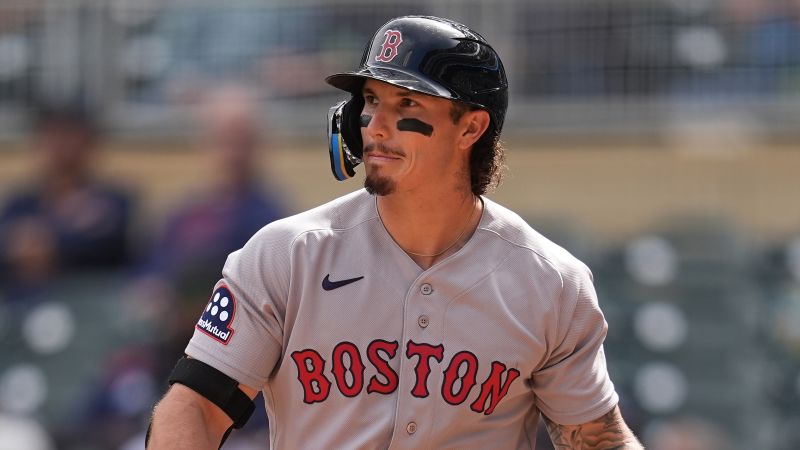
I hope Jarren Duran doesn’t regret speaking publicly about the mental health struggles that led him to attempt to take his own life. When a public person — especially a male athlete presumed to be steeped in a culture that encourages stoicism — opens up about mental health, the initial disclosures are largely lauded as acts of bravery. But by celebrating that someone is no longer suffering in silence, perhaps there is an implication that the suffering itself has been eradicated along with the silence.
And, unfortunately, it wouldn’t be brave if there wasn’t risk involved. The latest chapter of Duran’s ongoing relationship with mental health and being a person who fails (and succeeds) on a public stage underscores how the story doesn’t end right after someone opens up, the support they receive can be chipped away, and how perilous it still is to be vulnerable. Last year, a fan in Cleveland heckled Duran about his mental health just weeks after the Boston Red Sox outfielder revealed in a Netflix docuseries that he had previously attempted suicide.
The fan was ejected after Duran seemed to alert his teammates and stadium staff that “something inappropriate” was said. His postgame comments were appreciative of stadium security, his teammates, and the fans who had expressed support. He said it was the first time someone had leveraged that particular vulnerability against him.
I wonder if he thought then that it would become routine. Or if he had more faith in his fellow man. On Tuesday night, Duran was less circumspect about what was allegedly said to prompt a middle finger flashed at the stands in Minnesota.
“Somebody told me to kill myself,” Duran told reporters. This time, he didn’t alert anyone else on the team. He said that wasn’t important, winning the baseball game was.
It’s only a year after the first time, but now Duran said, “I’m used to it at this point. Sh*t happens. I’m going to flip somebody off if they say something to me.
It is what it is. I shouldn’t react like that, but that stuff is still kind of triggering. It happens.” Major League Baseball and the Minnesota Twins told CNN Sports that they are both investigating the allegations.
On Wednesday, Twins senior vice president of communications and public affairs Dustin Morse said, “We were made aware of the situation late last night and are looking into it. There’s no place in our game for conduct like that.” But the impact on Duran seems to have already sunk in. “Honestly, it’s my fault for talking about my mental health because I kind of brought in the haters,” he said.
Messaging around mental health campaigns — especially those in sports — often focuses on overcoming stigma, and that’s a worthy endeavor. But speaking publicly about mental health struggles is not a panacea to the problems that plague someone. It’s not the end of their journey.
It’s neither an excuse for bad behavior nor an inoculation against further suffering. In 2024, before the release of the docuseries in which he opened up about his mental health, Duran apologized and was suspended for two games after he was caught on the broadcast using a homophobic slur in response to a fan who heckled him at the plate. MLB will review both the fan and Duran’s behavior in this latest incident.
Understanding that Duran is especially prone to painfully internalizing critiques helps explain why he reacts with such volatility at times, but that does not absolve him of an expected level of decorum. Overcoming the stigma that surrounds depression and suicidal ideation is not the same thing as overcoming those struggles themselves. For athletes, especially, they may hope that vulnerability invites empathy that encourages fans to consider the comparative stakes.
Duran’s failure on the field weighs far more heavily on him than it does on Red Sox fans. Of course that’s the case — it’s entertainment for them and a livelihood for him — but far too often fans see heckling as part of what they’ve paid to have access to. Perhaps, sports gambling has skewed that dichotomy, but that is a reason to be wary of gambling, not to further ignore the humanity of an athlete.
What is so concerning about this latest incident is that it shows a fan allegedly willing to weaponize that humanity. The problem isn’t an inability to see the player as a person capable of emotional strife, it’s a direct and knowing attack on that. This particular instance goes beyond the institutional issue of commoditized athletes — although, that’s real — into individual malice.
A fan who would mock Duran’s mental health in such a spiteful way has crossed a line and should face consequences. Full stop. The institutional issue is that athletes cannot control who consumes their vulnerability.
Most fans want, earnestly, to understand their favorite players in a deeper way. We ask them to open up to us so we can better appreciate the person behind the performance. But when they do, we can’t promise to protect them.
So is it any wonder why they often chose not to?
