
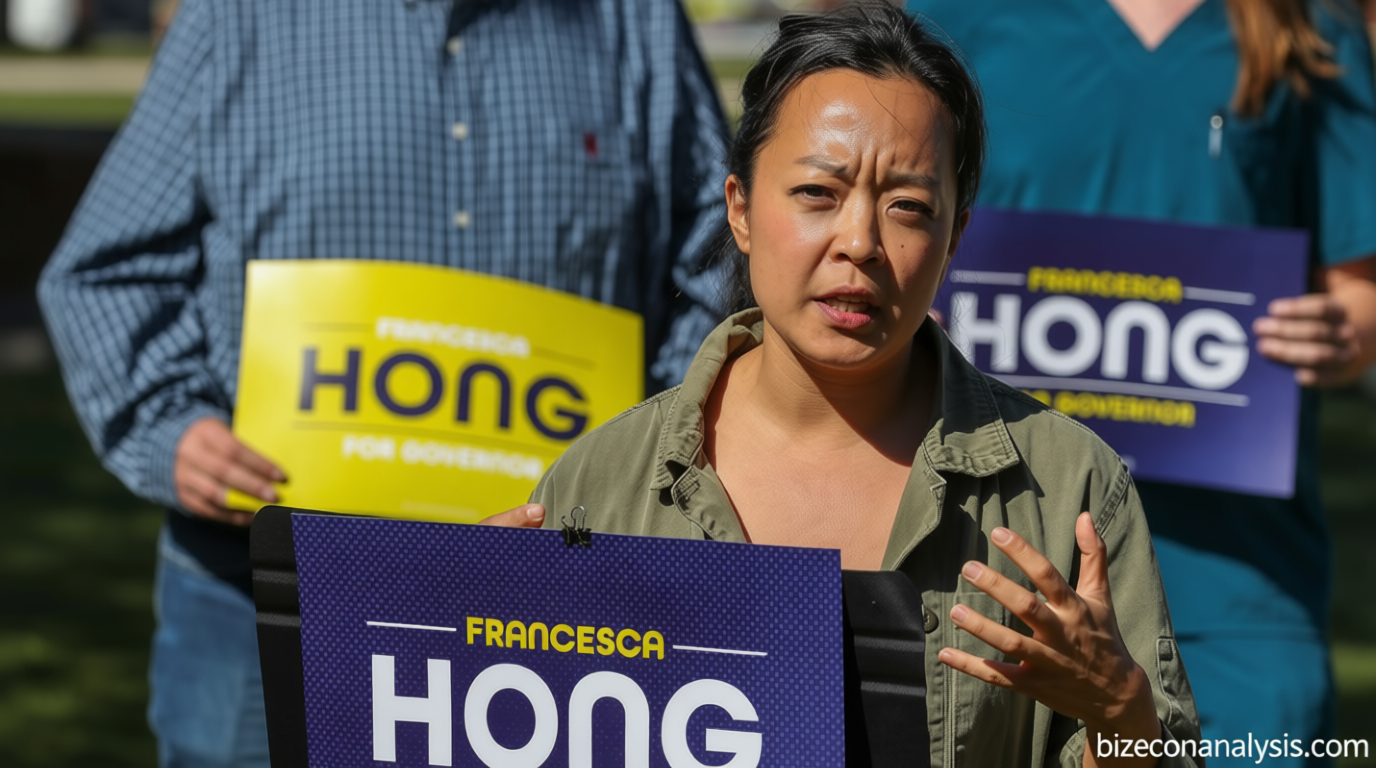
Defund Then Abolish: Wisconsin Governor’s Race Sees Bold Push for Police Reform
Defund then abolish – Francesca Hong, a 37-year-old state representative running in the Democratic primary for Wisconsin governor, has positioned herself as a vocal advocate for the radical idea of defunding the police. Her stance—often summarized as “defund then abolish”—has sparked both support and skepticism in a state where Democratic voters are divided on how far to go in reimagining public safety. While many party leaders have softened their rhetoric since the 2020 election, Hong remains committed to dismantling the current system, framing it as an essential step toward achieving racial and social equity.
Since the 2020 protests that ignited national conversations about police reform, Hong’s campaign has consistently emphasized the need to shift resources from traditional policing to community-based alternatives. A CNN KFile analysis of her social media activity and speeches reveals a clear trajectory: she sees defunding as the catalyst for abolishing police departments altogether. In a 2021 interview, she stated, “Reform can’t be an option. Police exist to uphold white supremacy—defund then abolish.” This unwavering message sets her apart from other candidates in the race, even as the party’s broader strategy has evolved to appeal to moderate voters.
A Polarizing Stance in a Divided Field
As the Democratic primary heats up, Hong’s call to “defund then abolish” has become a defining element of her platform. However, it also places her at odds with many voters in Wisconsin, a state known for its political diversity. While she garners support from progressive activists, critics argue that her approach could alienate suburban and rural voters who prioritize law enforcement efficiency. The Marquette Law School poll from March 2026 highlights this tension, showing that 65% of Democratic primary participants are still undecided, with Hong and Mandela Barnes leading at 14% and 11% respectively.
Hong’s campaign continues to frame the debate as a matter of systemic change rather than incremental reform. She has maintained her original position despite the shift in tone from other Democrats, such as House Speaker Nancy Pelosi, who declared in 2022 that “defund the police is dead.” Hong’s consistency, however, has drawn attention from both allies and opponents. In a recent statement to CNN, she defended her stance, explaining, “The current model of policing doesn’t address the root causes of harm. Defund then abolish is about creating a more just system.” This perspective, while progressive, also raises questions about its practicality in a state with a strong reliance on police for public safety.
From Culinary Roots to Political Leadership
Francesca Hong’s political journey began as a state representative, but her background as a chef and restaurant owner has influenced her approach to policy. During the pandemic, she leveraged her experience in the hospitality industry to connect with small business owners, highlighting the economic and social challenges they faced. This relatability helped her build a grassroots following, though her focus on public safety has since taken center stage. In March 2023, she updated her Twitter bio from “Occupied Ho-Chunk Land” to “Wisconsin, USA,” a move she described as a way to broaden her appeal while still advocating for systemic change.
Her campaign has focused on transforming the role of law enforcement, arguing that the current system perpetuates inequality. While she has deleted some older posts to align with evolving messaging, her core argument—defunding the police as a first step toward abolition—remains unchanged. This approach has drawn praise from progressive groups but also criticism from those who believe it risks underestimating the need for police in communities where crime is a pressing issue. As the race moves forward, Hong’s ability to balance bold vision with pragmatic appeal will be critical to her success.
Republicans have seized on Hong’s rhetoric to question her viability, linking her proposals to broader fears about public safety. The Secure America Act, a GOP-backed initiative to strengthen ICE and Border Patrol, was recently framed as a response to the perceived threat of defunding police. In Wisconsin, opponents have highlighted her past statements, arguing that her stance is too radical for a state with a diverse electorate. “Hong’s message resonates with left-wing activists, but it may not align with the priorities of everyday Wisconsinites,” noted a Republican strategist, underscoring the challenge she faces in a competitive primary.
Despite the opposition, Hong remains undeterred. She has continued to champion the idea of defunding the police, emphasizing its role in addressing systemic racism and inequality. Her campaign has positioned her as a leader for those seeking transformative change, even if it means taking a harder line on police reform than her peers. As the race progresses, her commitment to the “defund then abolish” strategy will likely shape the national conversation about policing in the Democratic Party, especially in a state that could play a key role in the 2026 midterm elections.





