
Trump hints Iran talks could resume this week as US maritime blockade continues
Trump hints Iran talks could resume this week as US maritime blockade continues
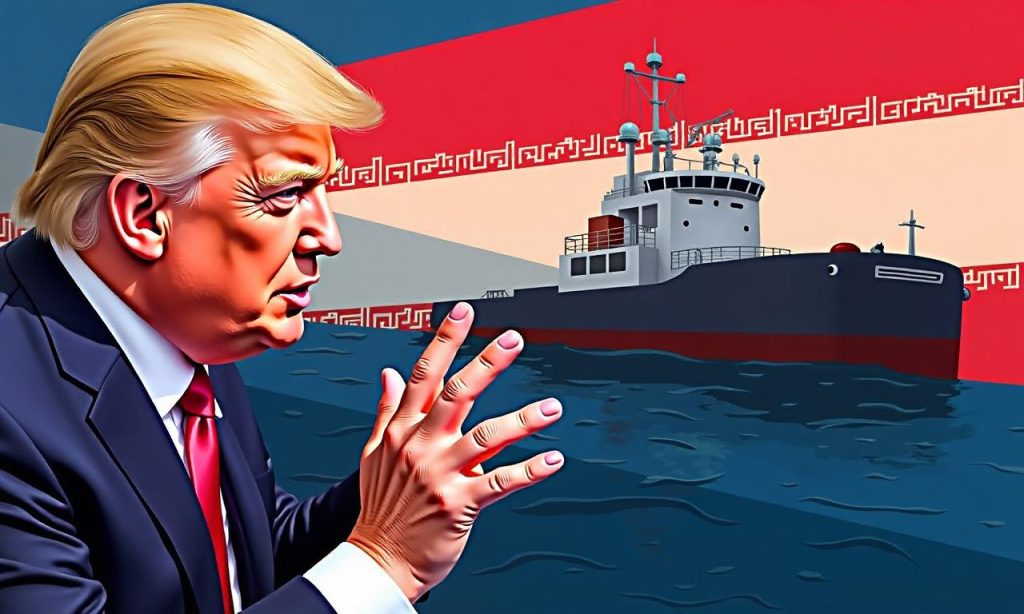
President Donald Trump suggested that discussions to end the conflict with Iran might restart this week, following weekend negotiations that ended in deadlock. The U.S. has maintained a maritime blockade of Iranian ports and coastal regions, which has disrupted the country’s access to international trade routes. “You should stay there [Islamabad], really, because something could be happening over the next two days, and we’re more inclined to go there,” Trump was quoted as saying in an interview with the New York Post.
“You should stay there [Islamabad], really, because something could be happening over the next two days, and we’re more inclined to go there.”
The U.S. military reported that no ships had navigated through the blockade in its first 24 hours, raising concerns about the viability of a two-week ceasefire set to expire next week. While Iran has not yet commented on Trump’s remarks, United Nations Secretary General António Guterres stated it was “highly probable” that talks would resume. Officials from the Gulf, Pakistan, and Iran also indicated that delegations from Washington and Tehran could return to Pakistan later this week, though a specific date remains undetermined, according to Reuters.
Hopes for continued diplomatic engagement helped stabilize oil markets, with benchmark prices falling below $100 on Tuesday. Iran had effectively closed the Strait of Hormuz, a vital global oil and gas passage, since it faced U.S. and Israeli air strikes on February 28. The blockade, enforced by over a dozen U.S. warships and approximately 10,000 military personnel, aims to cut off Iran’s economic lifelines by targeting oil exports and toll revenue from vessels using the strait.
BBC Verify analyzed ship-tracking data and found that at least four Iranian-linked vessels crossed the Strait of Hormuz despite the blockade. Two of these ships had previously been docked at Iranian ports. Three additional non-Iranian vessels also passed through the waterway after the blockade began on Monday. Meanwhile, initial talks in Islamabad failed to reach a deal, with the U.S. asserting Iran had not accepted its terms, particularly regarding nuclear ambitions. The U.S. had proposed a 20-year suspension of uranium enrichment, while Iran sought a five-year pause, sources noted.
As the International Monetary Fund (IMF) warned the war could push the global economy into recession, U.S. Treasury Secretary Scott Bessent told the BBC that some economic hardship was necessary for long-term security. China, however, criticized the blockade as “dangerous and irresponsible,” arguing it would worsen tensions and weaken the fragile ceasefire. Separately, Israel and Lebanon announced direct negotiations after talks in Washington, stemming from Israeli airstrikes on Hezbollah in the north. The meeting, the first since 1993, was hailed as “productive” by the Lebanese ambassador and as a “new era of peace” by the Israeli ambassador. A U.S. official clarified there was no connection between the U.S.-Iran discussions and the Israel-Lebanon talks.
