
Cuba approves unprecedented free-market reforms in effort to stave off economic collapse
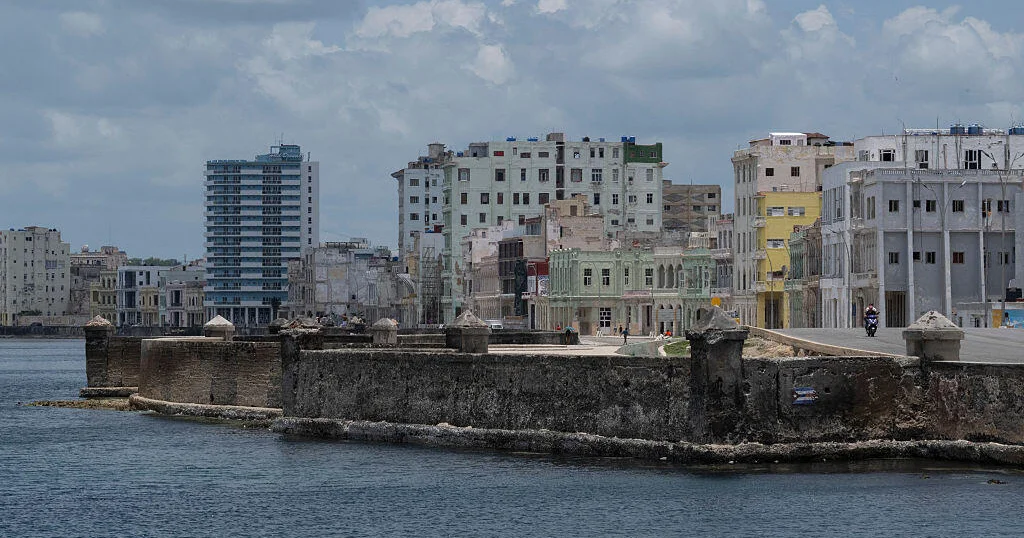
Cuba Approves Unprecedented Free-Market Reforms to Prevent Economic Crisis
Cuba approves unprecedented free market reforms – Cuban legislators have passed over 170 groundbreaking free-market reforms, signaling a major shift in the nation’s economic strategy. These measures, adopted on Thursday, aim to stabilize the Communist regime amid a deepening financial crisis. The reforms include allowing foreign investors to operate independently without state partnerships, enabling large private enterprises, and permitting ownership stakes in state-owned companies. Prime Minister Manuel Marrero, during a pivotal address at the National Assembly, outlined the changes as a critical step toward revitalizing the economy. While the reforms were approved in a unanimous show of hands, Marrero provided no timeline for their implementation.
Pressure from the United States
The reforms come in response to mounting pressure from the United States, which has intensified its economic sanctions on Cuba. President Donald Trump’s administration has been particularly hard on the island, imposing an oil blockade in January that has severely impacted its energy supply. This action followed the removal of Cuba’s ally, Venezuelan President Nicolás Maduro, a move that strained relations between the two nations. The blockade has left Cuba struggling with frequent power outages and dwindling resources, including food, fuel, and medical supplies. Despite these challenges, Cuban leaders have maintained that the crisis is not solely due to external factors.
President Miguel Diaz-Canel emphasized during a recent speech that internal inefficiencies, such as bureaucratic delays and outdated economic norms, have also contributed to the nation’s plight. He acknowledged the need for urgent changes, stating that the government must address “obstacles that don’t come from outside, nor the blockade.” This admission marks a departure from previous narratives that often blamed the U.S. embargo for Cuba’s struggles. However, the reforms are seen as a necessary compromise to avoid further economic decline.
“The most profound change in economic direction since the 1959 revolution,” said Daniel Torralbas, a London-based Cuban economist, describing the reforms as a sweeping overhaul of the island’s economic model. His remarks highlight the magnitude of the shift, which could redefine Cuba’s relationship with market forces for decades to come.”
A Growing Need for Adaptation
The Cuban government’s willingness to embrace market-driven solutions reflects a growing urgency to adapt. For years, Havana has relied on state-controlled industries, but the current crisis has forced a reevaluation. With only one Russian oil tanker docking in Cuba since the start of the year, the nation faces a dire energy situation. Power cuts lasting over 30 hours are now routine, and shortages of essential goods have become a daily reality for many Cubans.
UN High Commissioner for Human Rights Volker Turk has warned that the lack of medical supplies is pushing children to the brink of hunger and disease. “Children are dying in Cuba because of a shortage of medical supplies and medication,” Turk stated, underscoring the human cost of the economic collapse. Meanwhile, the reforms have sparked mixed reactions among the public. While some citizens, exhausted by weeks of blackouts and rotting food, dismiss them as insufficient, others see them as a lifeline.
Political and Economic Tensions
Amid these challenges, the U.S. has continued to exert political pressure. Last month, the American government indicted former Cuban President Raúl Castro, Fidel Castro’s brother, for his role in the 1996 incident where Cuba shot down two civilian aircraft operated by a humanitarian group. This move was part of a broader effort to challenge Cuba’s leadership and economic model. CIA Director John Ratcliffe’s recent visit to Havana, where he hinted at expanding political dialogue, was accompanied by a paramilitary leader involved in the U.S. mission to oust Maduro. This suggests a dual strategy: both diplomatic engagement and covert pressure.
Diaz-Canel has remained defiant, insisting that the reforms are not a capitulation to U.S. influence but a necessary step to “preserve” socialism. “We are not doing this because of pressure from the Yankees,” he said, “but to ensure the survival of our economic system.” His stance aligns with the Communist Party’s broader goal of maintaining control while adapting to changing conditions. Despite this, the reforms have been viewed as a pragmatic response to the island’s crisis, even by those who once considered market changes heretical.
Hope for a Revival
Cuba’s small business sector has welcomed the reforms as a sign of progress. Mario Gonzales, a 32-year-old restaurant manager in Havana’s historic old town, expressed optimism about the potential for a tourism resurgence. “These changes offer hope,” he said, highlighting the importance of private enterprise in revitalizing the economy. Meanwhile, the government has signaled openness to new investment opportunities, a contrast to its historically centralized approach.
The U.S. remains a key player in Cuba’s economic transformation. Vice President JD Vance recently noted that Washington is “talking to the Cuban government” about ways to alter the country’s economic trajectory. “We want Cubans to be happy and successful,” Vance said, framing the reforms as part of a broader effort to improve bilateral relations. However, it is unclear whether these changes will satisfy Trump’s ambitions, which include not only economic adjustments but also a shift in leadership.
As the reforms take effect, their success will depend on how effectively they address long-standing inefficiencies. The Communist Party faces a delicate balancing act: modernizing the economy without abandoning its socialist principles. For now, the nation’s leaders are navigating this challenge with a mixture of resolve and pragmatism, hoping to avert the worst of the crisis. The reforms represent a bold experiment, but their impact will be closely watched by both domestic and international observers.