
Trump speaks with Putin and Zelenskyy as war in Ukraine rages on
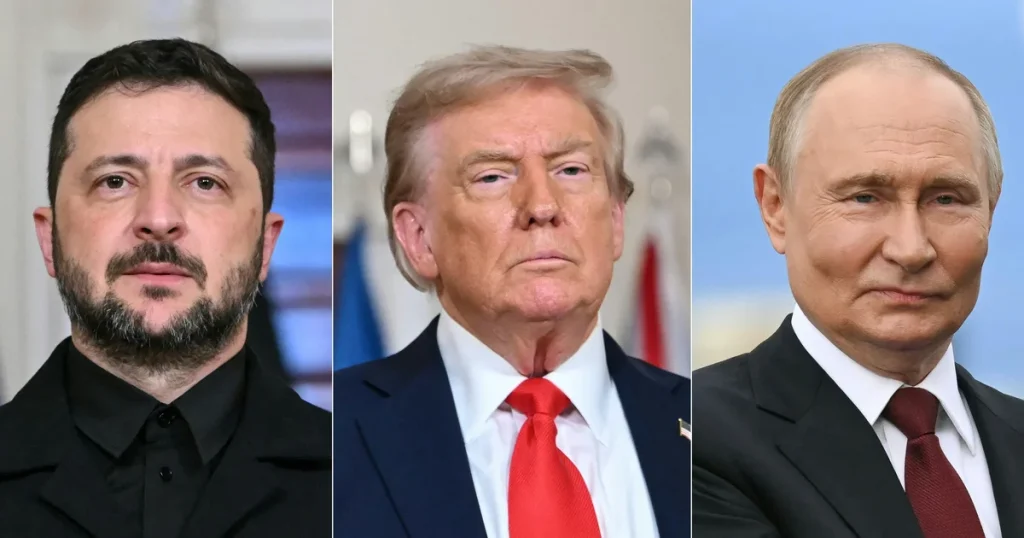
Trump’s 80th Birthday and the Ukraine War’s Global Impact
Trump speaks with Putin and Zelenskyy – As U.S. President Donald Trump celebrated his 80th birthday, he engaged in phone conversations with two world leaders—Russian President Vladimir Putin and Ukrainian President Volodymyr Zelenskyy—amidst the ongoing conflict in Ukraine. These calls took place just days before the G7 summit, where the war is expected to dominate discussions. The diplomatic exchanges occurred against a backdrop of intense military activity, with both sides reporting significant damage and casualties.
Putin’s Call with Trump: A Strategic Exchange
Russian presidential aide Yuri Ushakov confirmed that Putin’s conversation with Trump lasted nearly an hour. According to Ushakov, the discussion centered on resolving the war and Trump’s willingness to shape the positions of European allies and Kyiv. The U.S. leader suggested that a resolution might be achievable at the G7 summit, which will take place in France next week.
“Trump emphasized the need to end hostilities and expressed readiness to influence European allies and Kyiv toward that goal, including at the upcoming G7 summit,” Ushakov stated.
Zelenskyy’s Perspective: Hope for Peace
Ukrainian President Volodymyr Zelenskyy described his dialogue with Trump as a “wonderful conversation,” highlighting shared goals. In a Telegram statement, Zelenskyy noted the U.S. leader’s support for Ukraine and expressed optimism about potential breakthroughs. He also mentioned that Ukraine’s defensive position on the eastern front had strengthened, offering a glimmer of hope amid the war’s prolonged nature.
“We agreed to discuss more during our meeting at the G7 summit,” Zelenskyy said.
Trump’s Focus on Ending the Conflict
During the call, Trump stressed the importance of ending the war swiftly, framing it as a path to “a truly new quality of U.S.-Russian relations.” However, he also pointed out that recent strikes on Russian civilian infrastructure had complicated negotiations. The White House has not yet confirmed these strikes or commented on the call, leaving details to be clarified later.
Putin’s Defense of Military Strategy
In response, Putin argued that Ukrainian attacks on Russian infrastructure would not alter the course of the conflict on the battlefield. Ushakov relayed that the Russian leader believed Kyiv’s efforts to weaken Moscow’s war efforts were insufficient to change the war’s outcome. Putin challenged Zelenskyy to “let him come to Moscow” for a direct meeting, according to the aide.
International Players and Future Moves
The U.S. envoy Steve Witkoff and Trump’s son-in-law Jared Kushner are anticipated to visit Russia soon, furthering diplomatic efforts. Meanwhile, the G7 summit will provide a critical platform for addressing the Ukraine crisis. Trump’s arrival in France will coincide with the event, where he is expected to advocate for a swift resolution.
Iran Talks and Diplomatic Momentum
During the call, Trump mentioned that a deal with Iran was close to completion. He hoped the terms of the agreement could be announced publicly, though no confirmation has been given. The conversation on Iran added another layer to the leaders’ discussions, reflecting Trump’s broader strategy to address global tensions.
Ongoing Conflict: Drone Strikes and Casualties
The war continued with heightened intensity, as reported by Russian officials. In the Oryol region, a Ukrainian drone attack killed one person and injured nine others in a residential building. Similar strikes occurred in Bryansk, where another drone strike resulted in a fatality. Additionally, a fuel storage facility in Yaroslavl was hit, sparking fires. Zelenskyy described the targeted facility as crucial to Russia’s reserve capacity.
Sanctions and the Shadow Fleet
Separately, British Prime Minister Keir Starmer announced an investigation into the Smyrtos, a tanker suspected to be part of Russia’s “shadow fleet.” This fleet is designed to circumvent sanctions related to the Ukraine war. British forces detained the vessel in the English Channel, marking the first U.K.-led operation of its kind. The move was coordinated with French authorities, signaling a joint effort to disrupt Russian economic strategies.
“This operation delivers yet another blow to Russia and reminds those fueling Putin’s war in Ukraine that they cannot hide,” Starmer said.
Trump’s Evolving Stance on the War
Trump’s approach to the Ukraine war has shifted since his presidential campaign. While he once claimed to be able to end the conflict within 24 hours of taking office, he now focuses on influencing allies rather than making bold predictions. The ongoing war has also intensified his frustrations with the Israel-Iran conflict, which he attributes to rising gas prices, market instability, and inflationary pressures.
Impact of the Conflict on Global Markets
The war’s economic ramifications are being felt worldwide, particularly in energy markets. The attacks on Russian oil and gas infrastructure have been a key strategy for Ukraine, aiming to deplete Moscow’s resources. This has contributed to a spike in global energy prices, affecting both the U.S. and European economies. Analysts suggest that such strikes may deter further Russian military actions by targeting their financial capabilities.
Future Prospects and Strategic Collaboration
With the G7 summit approaching, leaders are preparing to leverage international alliances to address the Ukraine war. Trump’s engagement with Putin and Zelenskyy underscores the importance of diplomatic dialogue in navigating the crisis. While tensions remain high, the summit offers a chance to align interests and pursue a common goal. The U.S. and its allies may also use this opportunity to impose additional pressure on Russia through economic sanctions and coordinated military actions.