
“It rips my heart apart”: U.S. military veteran calls on ICE to release wife
“It rips my heart apart”: U.S. military veteran calls on ICE to release wife
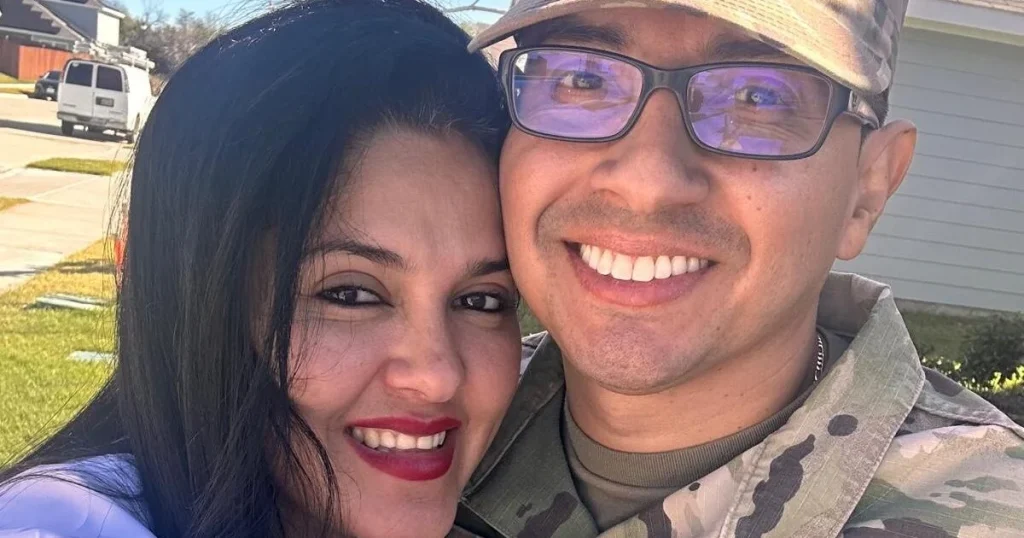
It rips my heart apart – Retired Staff Sgt. Wilmer Trujillo, a veteran of the U.S. Army and Texas National Guard, is pleading with U.S. Immigration and Customs Enforcement (ICE) to free his wife, Arelys Barahona-Martinez, who faces deportation to her home country of Honduras. The couple, who married in 2020, has become a tightly knit family in Princeton, Texas, with Trujillo’s daughters from a previous marriage and Barahona-Martinez’s 20-year-old son, a U.S. citizen diagnosed with neurofibromatosis—a genetic disorder that causes tumor growth, including in his nasal area. Trujillo’s emotional plea comes as his wife is currently held at the Diamondback Correctional Facility in Watonga, Oklahoma, according to ICE’s online detainee tracking system.
Military Service and Emotional Impact
Trujillo, 45, enlisted in the military shortly after high school in the late 1990s, serving four years in the Army before joining the Texas National Guard for 16 additional years. His deployments to Iraq and Afghanistan shaped his commitment to the United States, which he described as a profound source of pride. Despite his service, the recent detention of his wife has left him deeply shaken. In an interview with CBS News on Friday, he shared his anguish, saying,
“I don’t want to hate on ICE. I don’t want to hate on anybody, but yeah, it boggles me. It rips my heart apart.”
He emphasized his love for the country and his family, adding,
“For this country to rip apart my family and take away my wife; she’s my rock and she is my backbone to this family.”
Trujillo’s emotional plea underscores the personal toll of the immigration enforcement actions he believes are impacting his family’s stability.
Deportation Order and Family Circumstances
Barahona-Martinez, 40, was arrested by ICE on June 10, 2024, during a routine check-in at an agency office in Dallas. According to the Department of Homeland Security, she had entered the U.S. illegally and received a deportation order in 2005. The agency stated in a statement to CBS News that the removal order was issued by an immigration judge, and the Trump administration is prioritizing its enforcement. However, Trujillo and his wife’s legal team argue that her case is not as straightforward as it appears.
Barahona-Martinez first crossed the southern border illegally in 2005, where she gave birth to her son. She returned to Honduras in 2006 with him but later crossed back in 2018, driven by the need to provide care for her son’s severe medical condition. Trujillo revealed that gang recruiters in Honduras have been targeting his son, further motivating the family to stay in the U.S. “This is the whole reason she’s here. To save her son,” Trujillo said, highlighting the urgency of her case.
Legal Challenges and Pending Appeals
Mark Shmueli, Barahona-Martinez’s immigration attorney, noted that she has no criminal record and has a clear path to permanent residency. Her marriage to a U.S. citizen, Trujillo, qualifies her for a green card, but this requires the deportation order to be nullified. Shmueli explained that Barahona-Martinez was ordered deported “in absentia” because she missed a hearing she wasn’t aware of. “She received full due process, but the system failed to account for her circumstances,” he said.
Shmueli is currently working on a request to reopen her immigration case and plans to file for Parole-in-Place, a specialized program designed to protect certain military spouses and parents from deportation. This initiative, which allows eligible individuals to remain in the U.S. while their cases are reviewed, could be pivotal in her situation. “She has a valid argument for staying, especially considering her son’s health and the family’s bond,” Shmueli argued, urging ICE to grant her temporary relief from removal.
Broader Context of Military Spouse Deportations
Barahona-Martinez’s arrest is part of a growing trend of ICE detaining spouses of military personnel and veterans, particularly under the Trump administration. This policy shift has expanded the agency’s authority to arrest individuals regardless of their immigration status, leading to more frequent removals. Trujillo’s case is not isolated; other military spouses have faced similar challenges. For instance, Deisy Rivera-Ortega, the wife of an active-duty Army soldier, was detained by ICE in April 2024 but released a month later after media coverage and congressional advocacy, though her deportation case remains active.
Trujillo criticized ICE’s approach, calling it “tough on the family.” He expressed frustration with how his wife is being treated, stating,
“They’re making her seem like a hardened criminal, but she’s just trying to protect her son and keep our family together.”
His argument aligns with broader concerns about the fairness of immigration enforcement for individuals with strong ties to the U.S. and a history of service to the country.
Legacy of Service and Family Bonds
Trujillo’s 20 years of military service have created a deep connection to American values, which he feels are being tested by the current immigration policies. “I’ve dedicated my life to this country,” he said. “It’s heartbreaking to see the system turn on someone who has contributed so much.” His wife, while not a U.S. citizen, has played a vital role in raising his children and providing care for his son. Their relationship, he said, is a testament to the strength of family bonds that transcend borders.
Trujillo’s case also highlights the challenges faced by immigrant families in the U.S. who may have overstayed their visas or entered the country without proper documentation. He stressed that the system should consider their circumstances before removing them, especially when they have a long history of residency and a strong support network. “I’m not asking for favors,” he said. “I’m asking for fairness.”
As of Friday, Barahona-Martinez remains in ICE custody, with her fate hanging in the balance. Her case has sparked discussions about the intersection of military service and immigration policy, with advocates urging the agency to prioritize humanitarian considerations. While the Trump administration has emphasized strict enforcement, Trujillo and his legal team hope to demonstrate that his wife’s situation warrants compassion and a second chance to build a life in the U.S. The outcome of her case could set a precedent for future deportations involving military-connected families, testing the balance between law enforcement and familial loyalty.