
White House garden tours offer an inside look at Trump’s transformations
White House Garden Tours Reveal Trump’s Impact on Historic Spaces
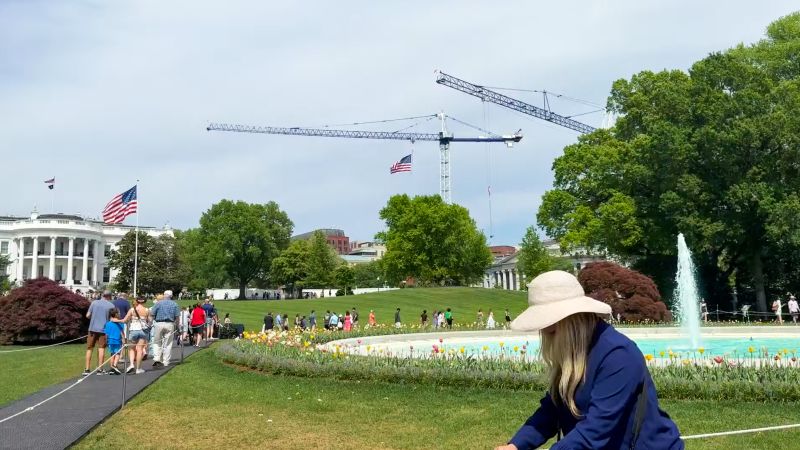
This weekend marked the return of the annual spring garden tours at the White House, giving visitors access to its expansive outdoor areas. The event, which typically highlights the Rose Garden, Jacqueline Kennedy Garden, and White House Kitchen Garden, has taken on a new look this year. Changes to the grounds reflect the administration’s ongoing transformation of the presidential residence, with several historic features altered or removed.
A New Look for the Rose Garden
The Rose Garden, a longstanding centerpiece of the tour, has undergone significant changes. Stone pavers now replace the grassy expanse, while gold accents and a “Presidential Walk of Fame” line the West Colonnade. Recent additions include sculptures, such as one honoring George Washington and another representing the founding fathers. These updates showcase President Donald Trump’s hands-on approach to redesigning the White House’s landscape.
East Wing Expansion and Legal Challenges
Construction on the East Wing’s new ballroom addition is underway, with the site of the former East Wing now partially enclosed by white barricades. The project, which has sparked legal disputes, has displaced the Jacqueline Kennedy Garden—a historic site that has been absent from the tour this year. Plans for the area suggest a grand staircase and brick patio, though little remains of the original garden’s design.
Presidential Legacy and Demolition
The Kennedy Garden, once a key attraction, was removed last fall to make way for the new ballroom. White House officials confirmed that the garden itself will not be relocated, though some plants will be replanted. The pergola, designed by I.M. Pei, is being preserved but has yet to appear in the current plans. Trump’s changes signal a shift from past efforts to honor first ladies’ contributions to the White House’s heritage.
Visitor Reactions and Tour Experience
Attendees offered mixed perspectives on the changes. Cole Eckhardt, a first-time visitor, described the construction as “an eyesore,” noting it “took away from the experience.” In contrast, Lucy Kim, an intern for a GOP congressman, found the ongoing work “in the works” and praised the atmosphere, calling it “a great experience.”
The Kitchen Garden’s Closure
While the Rose Garden and East Wing have seen major alterations, the White House Kitchen Garden remains a focal point of the tour. Originally established by Michelle Obama in 2009, this space was closed to public access this year. Visitors could observe but not walk through it, a departure from previous years. A nearby sign featured a photo of Melania Trump working with the Boys and Girls Club in 2017, highlighting the garden’s continued relevance.
Historical Roots of the Garden Tours
First introduced by Pat Nixon in 1972, the garden tours provide a window into the White House’s evolving history. Each administration has left its mark, with the Bidens planting five trees, the Clintons four, and the Trumps three. These additions often commemorate national events or honor historical milestones, underscoring the role of first ladies in shaping the estate’s legacy.
The event this year underscores how Trump’s vision for the White House continues to reshape its iconic spaces, blending modern design with the remnants of past eras.
