
Rob Reiner’s son Nick seeks $1.5 million from trust fund for defense in parents’ killings
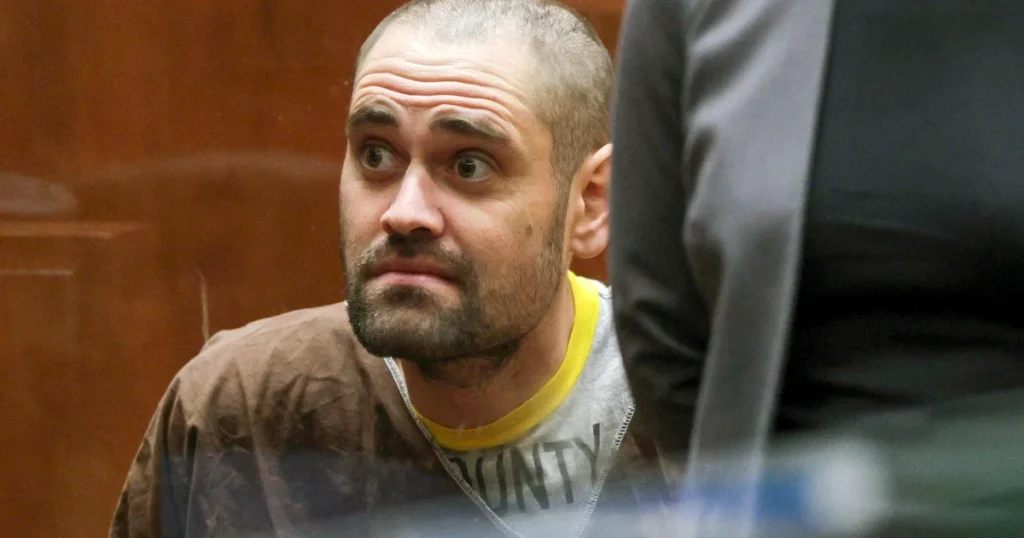
Rob Reiner’s Son Nick Seeks $1.5 Million from Trust for Defense in Parents’ Killings
Rob Reiner s son Nick seeks 1 – Nick Reiner, the son of late film director Rob Reiner and his wife, Michele Singer Reiner, is embroiled in a legal battle over access to funds from a trust established by his parents. The 32-year-old, who is accused of murdering his father and mother during a violent incident in their Brentwood home, has filed a petition in a Los Angeles County court seeking immediate financial support. His legal team argues that the trustees managing the trust have withheld the money without valid legal reasoning, leaving Nick in a precarious position as he prepares for his defense.
The Crime and the Aftermath
On December 14, Rob Reiner and Michele Singer Reiner were fatally stabbed in their Los Angeles home. Nick Reiner was arrested shortly after the incident and has since entered a not guilty plea to two counts of murder. The details of the attack remain under wraps, with authorities keeping most of the autopsy findings confidential. Despite this, the family has faced a wave of speculation about the motive behind the killings, though no official theories have been publicly released.
As the trial progresses, the case has moved at a glacial pace. Nick is set to return to court for a pretrial hearing in September, where key evidence and witness statements will likely be unveiled. His eligibility for the death penalty adds further complexity to the proceedings, though District Attorney Nathan Hochman has indicated his office is still deliberating whether to pursue that option. The lack of leaks from either side has kept the public in the dark about the most basic aspects of the crime.
Trust Fund Dispute
The heart of the legal conflict lies in a trust fund created by Rob and Michele Reiner for their children. According to the petition filed by Nick’s attorneys, the trust holds a minimum of $1.5 million in assets, though the exact value has yet to be disclosed. The legal representatives claim that the trustee, Paul R. Kanin, has denied access to the funds, citing vague reasons that they argue lack merit. This dispute has sparked a debate about whether Nick should be granted immediate use of the money to bolster his defense.
Interestingly, the trust litigation is not centered on the broader family trust. Instead, it focuses on a specific provision within Nick’s individual trust, established in 1993. The document outlines clear instructions: Nick was to receive half of the funds upon turning 30 and the remaining portion at 35. However, the trust has yet to disburse the money owed at the 30-year mark, with Kanin providing a series of shifting excuses. These include concerns about Nick’s competency, which the petition asserts are irrelevant to the mandatory payout.
“Like anyone accused of a crime, Nick is presumed innocent, and he is entitled to mount his defense with the resources that are lawfully his own.”
The petition emphasizes that the trust’s denial of funds is a critical hurdle for Nick’s ability to adequately prepare for trial. His attorneys argue that the money is essential not only for legal representation but also for covering basic needs while he is incarcerated. The case has drawn attention to the importance of financial resources in criminal defense, highlighting how access to a trust could tip the scales in favor of the accused.
Legal Challenges and Changing Counsel
Nick’s legal team has faced challenges in securing the funds, with the situation becoming more complicated after the departure of his initial defense attorney. Alan Jackson, a high-profile lawyer who was hired to represent Nick, left the case less than a month after taking on the responsibility. Jackson cited unspecified reasons for his exit, though he later stated in a declaration that his firm remains prepared to resume representation if the funds are made available.
Jackson’s departure coincided with a tense moment in the case. On the day he exited, he publicly declared that, under California law, Nick was not guilty of murder. This statement underscores the attorney’s confidence in his client’s case, even as the trust dispute lingered. The new petition also reveals that Nick’s siblings, Jake and Romy Reiner, had initially agreed to cover the costs of Jackson’s legal services but later withdrew their support.
The trust litigation has drawn scrutiny over the management of the family’s assets. While the broader trust is not at issue, the individual trusts for each child have become central to the dispute. Nick’s attorneys argue that the trustees have been obstructing his access to funds that were explicitly allocated for his benefit. The legal battle has not only impacted the case’s financial aspects but also raised questions about the fairness of the trust’s administration.
Legacy of a Hollywood Icon
Rob Reiner, the acclaimed director and producer, left an indelible mark on film history. His work in the 1980s and ‘90s includes classics such as “This is Spinal Tap,” “Stand By Me,” “A Few Good Men,” and “When Harry Met Sally…” The latter film, in particular, brought him international fame and introduced him to Michele Singer, a photographer and producer who became his wife. The couple was married for 36 years, a testament to their long-standing partnership both professionally and personally.
Now, the tragedy of their deaths has cast a shadow over Nick’s life and legal future. The family’s history in the entertainment industry adds a layer of public interest to the case, with many wondering how the loss of two prominent figures in Hollywood will affect the proceedings. Meanwhile, the trust dispute continues to unfold, with Nick’s attorneys vying to secure the funds that could determine the outcome of his defense.
Kanin, the current trustee overseeing Nick’s share of the trust, has not yet responded to inquiries about the delayed payments. The silence from the legal representative has fueled Nick’s argument that the funds should be released immediately. With the pretrial hearing approaching, the question remains: will the trust be a lifeline for Nick, or a barrier to justice?
As the case progresses, the family’s dynamics and financial arrangements are under closer examination. The trust litigation has become more than a legal matter—it’s a reflection of the personal stakes involved in Nick’s defense. Whether the funds are granted or denied could shape the narrative of the trial and the family’s legacy in the public eye.
The absence of clear answers about the parents’ deaths and the trust’s delays has left the community and media speculating. While some details of the crime remain confidential, the trust dispute has become a focal point for those following the case. Nick’s struggle to secure the money highlights the intersection of personal loss and financial litigation, a rare but poignant combination in the world of celebrity crime.
With the spotlight on the Reiner family, the legal battle over the trust could take center stage. As Nick prepares for his next court appearance, the outcome of this dispute may determine the strength of his defense—and the future of the case itself.