
Lindsay Clancy trial ends in mistrial with no verdict. What happens next?
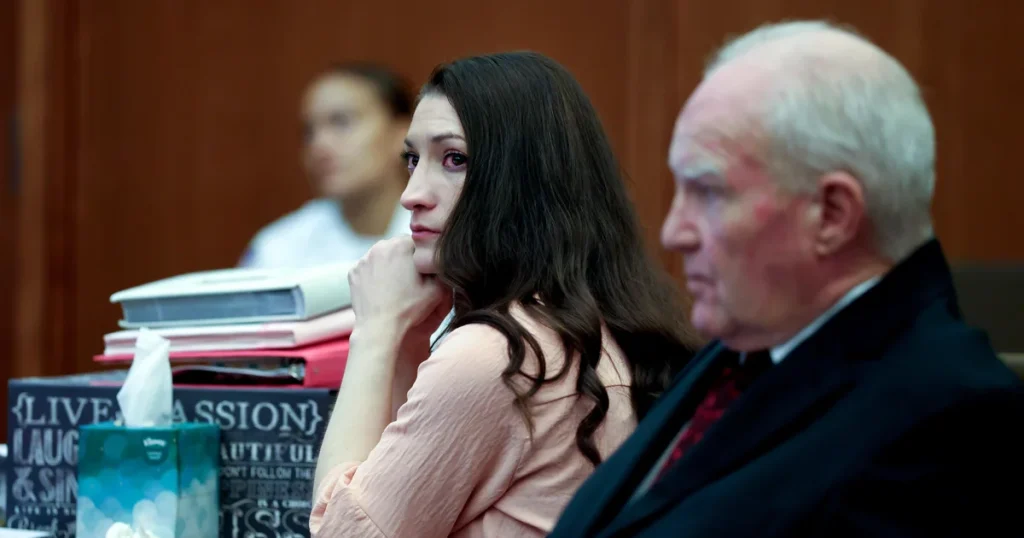
Seven Days of Deliberation End Without Verdict in Lindsay Clancy Case
Bizeconanalysis.com – The jury in the Lindsay Clancy murder case could not agree on a verdict after seven days of closed-door debate, and Judge William Sullivan declared a mistrial on Friday. The 12 jurors, tasked with determining whether Clancy bore criminal responsibility for the deaths of her three small children at their Massachusetts home in January 2023, repeatedly signaled they were stuck. A note passed from the foreperson revealed that one juror remained isolated from the rest of the panel. Sullivan sent the group back into the room several times, urging them to keep working toward consensus. When they returned once more reporting an impasse, he ended the proceedings without a finding of guilt or innocence.
The verdict-less outcome caps a trial that stretched across weeks of raw, often tearful testimony from family members, neighbors, and medical professionals. For days, the jury’s inability to converge kept the courtroom in a state of suspended anxiety, with both sides and the public watching each round of deliberations unfold.
What Happens to Clancy Now
Under Massachusetts procedure, a mistrial resets the defendant’s status to its pretrial condition. Clancy will continue to be held in custody and receive psychiatric treatment at Tewksbury State Hospital, the facility where she has been confined since shortly after the killings in early 2023. The mistrial means neither of the two extreme outcomes materialized: she will not be sent to a state prison as a convicted murderer, nor will she be committed to a long-term mental-health institution under a finding of insanity.
The distinction matters. A verdict of not guilty by reason of insanity would have locked her into a psychiatric facility for an indefinite period, while a finding of criminal responsibility would have meant a prison sentence. The mistrial leaves her in a holding pattern, awaiting whatever the prosecution decides to do next.
The District Attorney’s Call
Plymouth County District Attorney Timothy Cruz now holds the decision on whether to seek a new trial. He could bring the case back before a fresh jury on the original first-degree murder count, reduce the charge to something lesser, negotiate a plea arrangement, or simply decline to retry the matter at all. Speaking outside the courthouse after Sullivan’s ruling, Cruz declined to announce his intentions on the spot.
“I’m going to be meeting with our team, and we will address this case further at the appropriate time in the context of an official court proceeding,” Cruz said.
That deliberate silence leaves the question open for weeks or months, during which Clancy remains in her current custodial arrangement.
Defense Position and the Charging Debate
Clancy’s attorney, Kevin Reddington, had told reporters earlier in the week that he would be prepared to face a second trial if one came, while expressing concern that his client was not yet emotionally equipped to endure another round of courtroom scrutiny. Pressed on that remark during Friday’s news conference, Reddington softened his earlier caution.
“She’ll be ready,” he said, referring to a potential retrial this fall.
Reddington has long argued that Cruz made a strategic error by charging first-degree murder, a count that compels a jury trial. Had the prosecution opted for a lesser homicide count, the case could have proceeded as a bench trial before a single judge, opening the door to a negotiated resolution. That structural choice, critics on both sides note, shaped every downstream decision in the case.
Legal Analysts Weigh In on a Possible Second Trial
Caroline Polisi, a legal analyst who follows Massachusetts criminal cases, described the mistrial as “a gut-wrenching outcome” for everyone connected to the family. Yet she expects the prosecution to return to the courtroom. She pointed to the Karen Read saga: after Read’s first trial produced a hung jury in 2024, prosecutors immediately retried the case, and Read was acquitted on the second attempt.
“I think they’ll likely come back a second time,” Polisi said.
Jessica Levinson, a professor at Loyola Law School, concurred that a retrial is entirely plausible, citing two factors. First, jury composition can swing dramatically from one panel to the next, meaning a different group of twelve might reach a conclusion the first group could not. Second, the prosecution retains discretion over how it frames the case.
“You could see the prosecution bring a much more slimmed-down case. In addition, you could potentially see a plea bargain,” Levinson said.
Polisi elaborated on the strategic recalibration a second trial would permit. She suggested the prosecution might abandon its earlier insistence that Clancy staged a suicide attempt, an argument she felt risked appearing to minimize the mother’s genuine mental-health crisis.
“I would think they would really hone down their case to present it not as, you know, diminishing her mental health state, but acknowledging that she was severely depressed,” Polisi said. “Whether or not she knew the difference between right and wrong, not trying to say it was a fake suicide attempt.”
She added that both the prosecution and the defense would almost certainly seek to interview the jurors who deadlocked, because their reasoning would inform how each side adjusts its theory for a future proceeding.
“We might see a completely different theory of this case if it gets tried a second time,” Polisi said.
Jennifer Roman, a legal analyst based in Boston, echoed the sentiment that a mistrial forces both camps into a post-mortem review of their own choices. She observed that attorneys rarely walk away from a trial without mentally replaying cross-examinations, opening statements, and evidentiary gambles, asking themselves what they would alter given another chance.
“It’s hard not to look back at a trial and, even on the day of, think, ‘That cross-examination went well’ or ‘I wish I had done’ something differently,” Roman said.
For Clancy herself, the weeks ahead will be defined by uncertainty. She remains in a psychiatric ward, neither convicted nor cleared, while the machinery of the Plymouth County District Attorney’s office deliberates over whether to reopen a case that has already consumed more than a year of her life and the public’s attention. Whatever Cruz ultimately decides, the mistrial ensures that the question of what happened in that Massachusetts home in January 2023 has not been answered by a jury.
Related Reading
Frequently Asked Questions
What is Lindsay Clancy trial ends in mistrial?
Lindsay Clancy trial ends in mistrial is the main topic of this guide. The article explains the context, practical details, and next steps readers should understand.
Why does Lindsay Clancy trial ends in mistrial matter?
Lindsay Clancy trial ends in mistrial matters because readers are looking for a useful answer, not just a short summary. Good content should match search intent and help them decide what to do next.