
Lindsay Clancy trial jury might be close to a verdict or a mistrial, depending on holdout juror
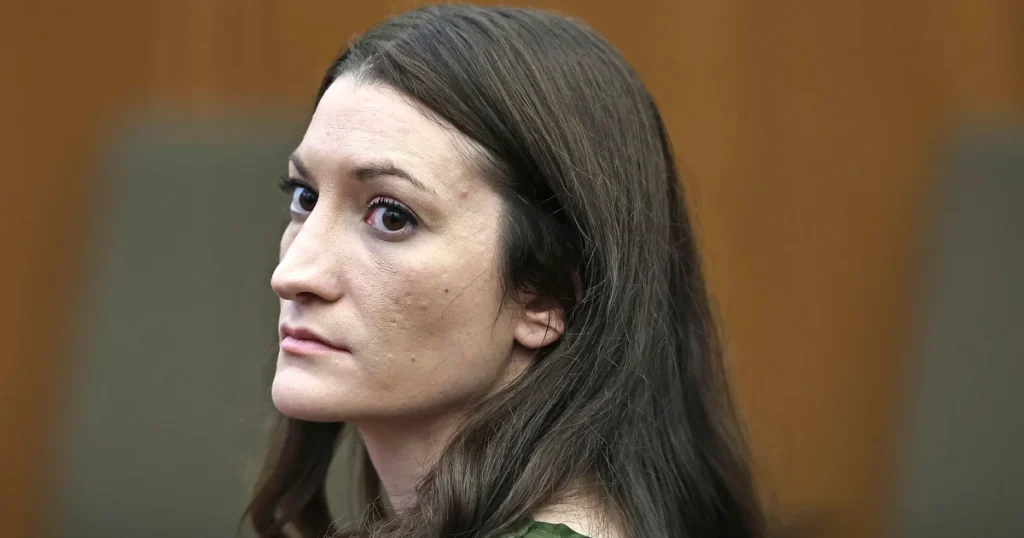
Lindsay Clancy Trial Juror Standoff: Verdict or Mistrial?
Bizeconanalysis.com – A single holdout in the Lindsay Clancy trial jury might determine whether the Plymouth Superior Court case ends in a conviction, an acquittal, or a complete restart. After more than 35 hours of sealed deliberation stretching across seven days, the twelve-person panel remains deadlocked at 11-to-1. The lone dissenter, a male juror, has reportedly told the court he will not apply the reasonable-doubt instruction as written, triggering a public clash between defense counsel and the bench, two written jury notes, and mounting uncertainty about the case’s final disposition.
Friday Morning Confrontation
At 9 a.m. Friday, before the jurors were brought back in, Judge William Sullivan held a short but volatile hearing to decide whether the holdout should be removed and swapped with one of six alternates waiting in reserve. Kevin Reddington, representing Lindsay Clancy, urged the judge to strike the juror immediately, contending that the individual had sworn to follow the law and then broken that oath.
“I would go so far as to say he lied under oath,” Reddington told the court, pressing for dismissal.
Sullivan refused. He made clear he would not re-examine the juror’s reasoning a second time.
“I’m not going to do a further inquiry of this juror,” the judge said. “It’s their duty to accept the law as I’ve given it to them.”
Reddington pushed back, accusing the judge of delivering the reasonable-doubt language too gently the prior day. Sullivan responded with visible frustration.
“What do you want me to do? Get a brass band?” the judge shot back. “I read the instruction as written by the SJC. The fact that I perhaps didn’t give it my full inflection, I’m sorry about that. I’m not an actor. I’m just giving the instructions.”
Reddington alleged the judge was “glossing over” the juror’s outright refusal to apply the standard. Sullivan pushed back firmly, insisting he had thought through the issue “long and hard” and was specifically not glossing over anything. The jurors were sent back to the deliberation room at 9:25 a.m.
Two Notes and the Legal Line
The procedural crisis began Thursday afternoon, when the jury foreperson submitted a written note identifying the holdout by number. Reddington built his first motion to strike the juror on that note; Sullivan denied it. The judge then questioned each juror individually before addressing the full panel, restating the presumption of innocence and the prosecution’s burden of proof.
“I’ve told you that every person is presumed to be innocent until they are proved guilty and that the burden of proof is on the prosecutor,” Sullivan reminded the group.
A second note arrived at the close of Thursday’s session. Sullivan acknowledged its existence on Friday without reading it aloud. Reddington relayed its substance to reporters: a particular juror “has made statements acknowledging doubt but refuses to apply it to the verdict as the law states.” The panel consists of three men and nine women; the defense has referred to the holdout as “he.”
Caroline Polisi, a legal contributor who appeared on CBS Mornings Friday, drew a sharp distinction. A juror who weighs the facts through the lens of the instruction is using the system as designed. A juror who acknowledges the instruction yet flatly declines to apply it is something else entirely.
“There’s a huge distinction between knowing what the law is and outrightly saying, ‘I will not follow it,’ versus knowing what the law is, saying ‘I’m applying the facts as I saw them in this case, to the law as I understand it from the judge and this is my position.’ That’s how the legal system works. If there is a holdout, there is a holdout. That’s a hung jury and that would be a mistrial,” Polisi explained.
Reddington has stated publicly that he prefers to avoid a mistrial and instead restart deliberation with a replacement juror. Prosecutors, meanwhile, have urged the judge to send the panel back in despite telling reporters twice this week that they would accept a verdict in either direction.
Frequently Asked Questions
What happens if the jury cannot reach unanimity? If the holdout will not move and the judge declines to strike the juror, the court will likely declare a mistrial. The case would then be retried before a new jury, with all evidence and testimony repeated from the start.
Can a judge force a juror to conform? No. In Massachusetts, as in most states, a judge may restate instructions and encourage further deliberation, but cannot compel a juror to vote a particular way. The judge’s options are limited to sending the jury back, striking the juror and seating an alternate, or declaring a mistrial.
How long can deliberations continue? There is no fixed statutory limit. In practice, judges monitor for exhaustion and may take breaks, but a jury can deliberate for days or even weeks if the court permits it. The Lindsay Clancy panel had already logged over 35 hours across seven days before the impasse became public.
What role do alternate jurors play? Alternates sit through the trial and hear all evidence but do not deliberate unless a seated juror is excused or struck. In this case, six alternates are available to replace the holdout if the judge grants the defense’s motion.