
Trump formally nominates Todd Blanche as attorney general
Trump’s Attorney General Nomination: A Political Shift and Legal Controversy
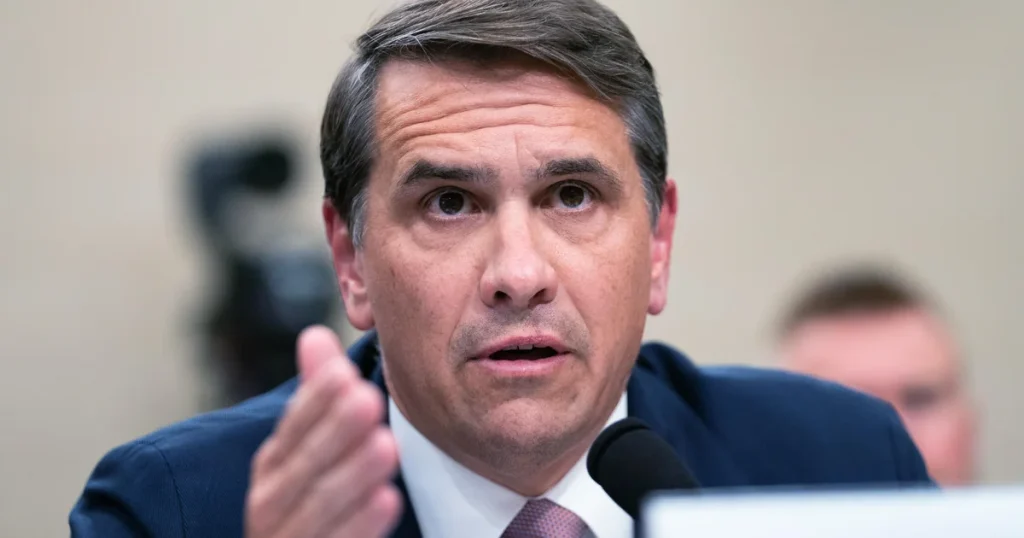
Trump formally nominates Todd Blanche as attorney – On Monday, President Donald Trump officially announced his selection of Todd Blanche for the position of attorney general, marking a pivotal moment in his administration’s approach to legal oversight. This nomination aims to consolidate control over the Justice Department, a key institution that has often been at the center of political and legal debates during Trump’s tenure. Blanche, who has already served as acting attorney general since April when Pam Bondi was dismissed, brings a unique perspective to the role, having previously represented the president in defense matters. His potential confirmation would signal a shift in the department’s direction, with implications for its independence and focus on national priorities.
Blanche’s Legal Background and Senate Confirmation Process
Todd Blanche’s nomination to the attorney general post comes as the White House formally submitted his name to the Senate for consideration. The move follows a public hint from Trump during a Rose Garden event last week, where he announced his intent to appoint Blanche, according to a video shared by White House deputy chief of staff Dan Scavino on X. While the White House has emphasized Blanche’s loyalty and experience, his confirmation may face resistance from some Republican senators, particularly those planning to leave Congress in January.
Thom Tillis, a North Carolina senator set to retire, has already voiced skepticism about Blanche’s nomination, indicating uncertainty over his support. Tillis highlighted that the key to securing his backing would be Blanche’s stance on the Jan. 6 Capitol riot, which has become a central issue in partisan politics. This requirement reflects the broader scrutiny of Blanche’s actions as acting attorney general, where his decisions have been viewed through a partisan lens. His role in shaping the Justice Department’s approach to legal matters has drawn attention, especially in light of recent controversies.
Controversies Over the Anti-Weaponization Fund
Blanche’s tenure has been marked by significant scrutiny, particularly regarding his involvement in the creation of a $1.776 billion “anti-weaponization fund” intended to reimburse individuals who claim they were victims of government overreach. The initiative, part of a settlement agreement between Trump and the government over leaked tax returns, has sparked bipartisan criticism. Democrats argue that the fund serves as a slush money reservoir for Trump allies, while some Republicans express concerns that it might benefit convicted Jan. 6 rioters or other lawbreakers.
During a recent meeting with GOP senators, Blanche’s defense of the fund faced a “full-on revolt,” as described by Senator Ted Cruz. The debate over the fund’s legitimacy led to temporary delays in other Senate business, underscoring its political weight. However, Blanche’s position has since evolved, as he announced last week that the Justice Department would no longer pursue the initiative following a judge’s intervention. This decision, while easing some tensions, has not fully quelled criticism, particularly from those who view the fund as a tool for partisan advantage.
Legal Challenges and the Transformation of the Justice Department
Blanche’s leadership has also drawn attention to the Justice Department’s shift in priorities, with legal experts questioning its neutrality. During his brief time as deputy attorney general, the agency became embroiled in high-profile cases against Trump’s political adversaries, many of which have been criticized for lacking sufficient evidence. For instance, the department charged former FBI Director James Comey with threatening Trump after Comey posted an Instagram photo featuring seashells arranged to spell “86 47″—a number linked to Trump’s 2016 election.
These actions have been accompanied by accusations of vindictive prosecution. One notable case involved the Southern Poverty Law Center, which faced charges of defrauding donors and banks by funneling funds to informants within extremist hate groups. Former prosecutors have criticized this case, arguing that it fails to demonstrate how donors or banks were specifically misled. The controversy deepened when a judge overseeing the prosecution of Kilmar Abrego Garcia dismissed the charges, citing evidence of vindictiveness. This included public comments made by Blanche about the case and the involvement of one of his senior deputies, further complicating his credibility.
Senate Consideration and Political Dynamics
As Blanche’s nomination moves through the Senate confirmation process, the political dynamics will play a crucial role. Tillis, who has already delayed the consideration of several Trump appointees, including Fed Chair Kevin Warsh, is expected to influence the outcome. His comments on Blanche’s potential confirmation highlight the tension between loyalty to the president and the need for impartiality in the Justice Department.
Blanche’s ability to navigate these challenges will depend on his capacity to address concerns about the department’s role in partisan politics. The anti-weaponization fund, while a point of contention, is just one of several issues that have shaped perceptions of his leadership. His oversight of indictments against Trump’s opponents, including the recent dismissal of charges against six Democratic lawmakers, has also raised questions about the agency’s impartiality.
Legal analysts warn that Blanche’s confirmation could signal a broader trend of the Justice Department aligning itself with the administration’s interests. Maya Wiley, president and CEO of The Leadership Conference on Civil and Human Rights, has emphasized this point in a
“As deputy attorney general and acting attorney general, Blanche bears responsibility for the Justice Department’s transformation into a protector of the president’s personal and political interests, rather than the people’s protector through the neutrality of prosecutorial powers.”
Her statement underscores the debate over whether the department has lost its traditional role as an independent arbiter of justice.
Legacy of the Justice Department Under Blanche
Blanche’s time in the Justice Department has been characterized by a mix of strategic decisions and legal challenges. While the agency has managed to secure indictments in some cases, it has also faced setbacks, such as the dismissal of charges against former Chair Jerome Powell and the failure to obtain a grand jury indictment against six Democratic lawmakers. These outcomes have fueled discussions about the effectiveness of the department’s prosecutions and its alignment with the administration’s agenda.
Despite these hurdles, Blanche’s nomination reflects Trump’s confidence in his ability to manage the Justice Department. The president has often praised Blanche’s work, particularly his role in defending the administration against legal threats. However, critics argue that Blanche’s actions have prioritized political goals over objective justice. This tension is likely to remain central during his confirmation hearings, as senators weigh his loyalty against his record.
With the Senate’s confirmation process approaching, Blanche’s ability to address concerns about the department’s independence will be critical. The outcome of his nomination could set a precedent for future appointments and shape the direction of the Justice Department in the years to come. Whether he is seen as a steadfast ally or a controversial figure depends on his capacity to reconcile his past decisions with the expectations of a new era of oversight and accountability.