
Spain and Argentina’s World Cup trophy count before 2026 final
Historical Context: Spain and Argentina Heading Into 2026 World Cup Final
bizeconanalysis.com – Sunday’s World Cup championship match at New Jersey’s MetLife Stadium will feature a historic rematch between Spain and Argentina. This encounter represents only the second time these two football powerhouses have crossed paths in the tournament’s entire history, with their previous meeting occurring six decades earlier. Both nations belong to an exclusive group of eight countries that have captured World Cup glory throughout the competition’s 96-year existence.
Argentina enters as the defending champion, pursuing an achievement no nation has accomplished since Brazil secured consecutive victories in 1958 and 1962. Meanwhile, Spain arrives as a narrow favorite, seeking to add a second championship to its collection after winning its maiden title in 2010.
Argentina’s Path to Glory
La Albiceleste has established itself as a consistent force in international football, reaching the championship match seven times throughout its history while claiming the ultimate prize on three separate occasions. The South American nation’s first triumph came in 1978 when it hosted the tournament on home soil.
The 1978 World Cup featured a distinctive format that differed significantly from modern tournaments. With only sixteen teams participating and no traditional knockout phase, the competition utilized an unusual system where two teams progressed directly to the final after finishing atop their respective group stages. This structure produced one of the most debated moments in World Cup lore.
To secure a spot in the championship match, Argentina needed to overcome Peru by at least four goals in its concluding group fixture. The Argentinians delivered a stunning 6-0 performance. They subsequently defeated the Netherlands 3-1 in overtime during the final held in Buenos Aires. However, the Peru victory became surrounded by controversy following claims that Argentina’s military dictator, Jorge Rafael Videla, visited the Peruvian locker room beforehand and issued subtle warnings to the opposing players.
Argentina’s second and perhaps most celebrated championship arrived at the 1986 tournament in Mexico. Guided by legendary small-statured forward Diego Maradona, the team triumphed over West Germany 3-2 in the final. Yet the quarterfinal clash against arch-rival England remains etched in football memory, occurring merely four years after the devastating Falklands War between the two nations.
During that pivotal match, with the score tied in the second half, Maradona elevated himself for a cross in the penalty area. He clearly struck the ball with his left forearm, sending it past English goalkeeper Peter Shilton into the net. The referee failed to notice the handball, awarding Argentina a 1-0 advantage. Maradona later produced another masterful goal to secure a 2-1 victory. When questioned about the controversial moment, he delivered his immortal words:
“A little with the head of Maradona and a little with the hand of God.”
Argentina has consistently troubled England in subsequent tournaments. The Three Lions were eliminated in the 1998 World Cup round of 16 via penalty shootout, a match where David Beckham received a red card. More recently, on Wednesday’s semifinal, the 39-year-old Lionel Messi—widely regarded as Maradona’s successor—orchestrated a remarkable 2-1 comeback in stoppage time to eliminate England’s hopes.
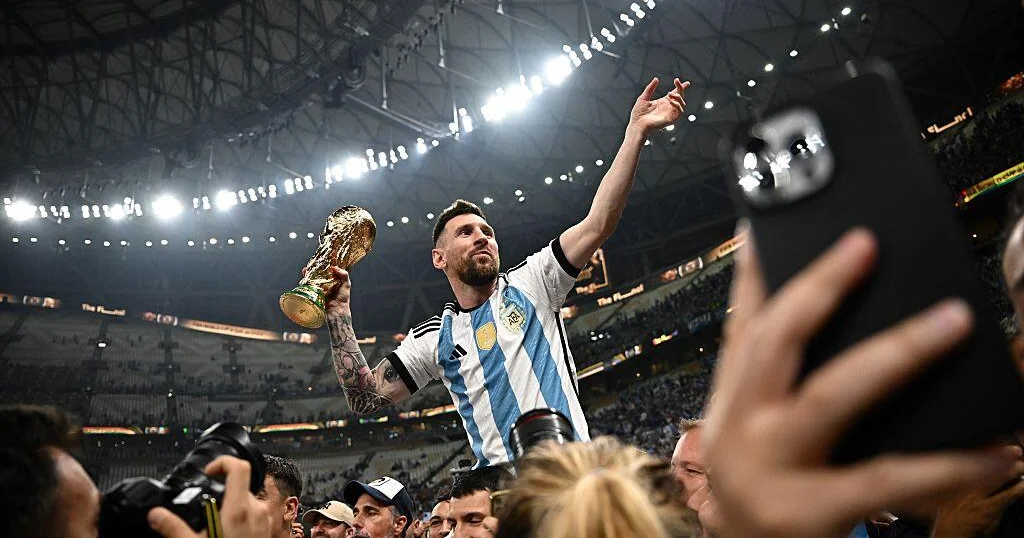
The third Argentine championship came in Qatar during 2022, representing a crowning achievement for Messi, who had accumulated virtually every individual honor available except World Cup success. In that tournament, Argentina joined an elite club by winning the championship despite losing its opening group match to Saudi Arabia 2-1, one of the tournament’s most shocking results. Ironically, Spain achieved this same feat in 2010.
The 2022 final against France is frequently hailed as the greatest World Cup final ever contested. After a thrilling 3-3 draw in regulation time featuring Kylian Mbappé’s hat trick and Messi’s two goals, Argentina prevailed in a penalty shootout.
Spain’s World Cup Journey
La Roja captured its sole World Cup title in 2010 in South Africa, which also represented its only other finals appearance prior to Sunday’s match. Spain has demonstrated remarkable consistency over the decades, qualifying for thirteen consecutive World Cups beginning in 1978. Before claiming the 2010 championship, the Spanish team had never progressed beyond the quarterfinal stage.
Spain’s 2010 triumph came after a tournament run that mirrored Argentina’s 2022 achievement. The Spanish squad lost its opening group match but ultimately won the championship, becoming only the second team in World Cup history to accomplish this feat.
If Argentina secures victory on Sunday, it will equal Germany and Italy’s record of four World Cup titles, positioning itself just one championship behind Brazil, which holds the all-time record with five titles.