
South Carolina store owner acquitted of murder in 2023 killing of Black teen wrongly suspected of shoplifting
South Carolina store owner acquitted of murder in 2023 killing of Black teen wrongly suspected of shoplifting
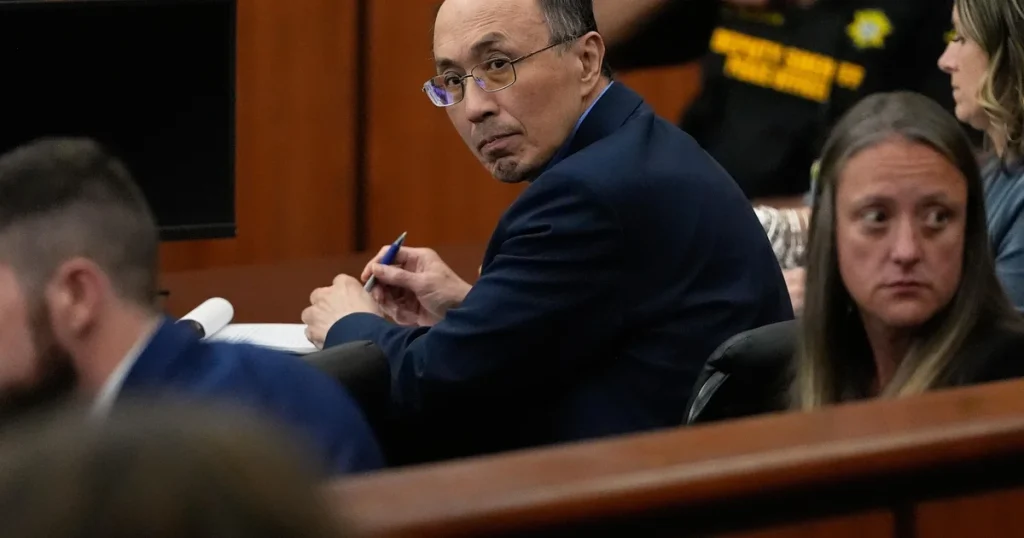
South Carolina store owner acquitted of murder – On Monday, a jury in South Carolina acquitted a store owner of murder following the 2023 fatal shooting of a 14-year-old Black teen, Cyrus Carmack-Belton, who was wrongly accused of stealing from a convenience store. Chikei Rick Chow, a 61-year-old Asian-American man, shot Belton in the back after chasing him from his Columbia-based Xpress Mart Shell station. Chow maintained that he acted in self-defense, claiming the teen had threatened his son, Andy Chow, during the incident.
A Shattered Community and a Moment of Silence
The verdict left the African American community in Richland County, where approximately 49% of residents identify as Black, in a state of emotional turmoil. Family members of Belton, who had been tragically killed in a single gunshot to the lower back while fleeing the scene, sat in stunned silence as the jury reached its decision. After the announcement, cries of anguish echoed from the gallery, where Belton’s relatives clung to one another. Chow, seated quietly, remained frozen in place before lowering his head into his hands, a gesture that underscored the weight of the moment.
Richland County Coroner Nadia Rutherford confirmed that the teen died from a wound consistent with being shot while running away. She noted there was no evidence of a struggle inside the store prior to the shooting, emphasizing that Belton had not been confronted by Chow before the incident. This detail became a focal point for both sides during the trial, as prosecutors and defense attorneys clashed over the sequence of events.
Diverging Narratives in the Closing Arguments
During the final stages of the trial, defense attorney Shaun Kent presented a compelling case to jurors, framing the shooting as a split-second decision made by a father protecting his child. “This case is not about a shoplifter. This case is about a father who sees a gun pointed at his son and has to act,” Kent asserted, urging the jury to consider Chow’s perspective. He highlighted testimony from Andy Chow, who allegedly claimed Belton had pointed a firearm at him during the confrontation.
“Chow chased a kid down, shot him in the back,” said Solicitor Byron E. Gipson, the prosecutor, as he concluded his argument. Gipson also emphasized the physical distance Chow covered, noting the teen was pursued for more than 130 yards before the fatal shot was fired. This, he argued, proved the urgency of Chow’s actions and the lack of opportunity for Belton to pose a direct threat.
In contrast, Gipson challenged the defense’s claim, pointing out that no witnesses saw Belton holding a weapon during the chase. He placed a water bottle on the courtroom table, symbolically underscoring the prosecution’s belief that Chow’s assumption of theft led to an unjust act of violence. “At the end of the day, Chow believed a human is not more than that,” Gipson said, referring to the bottle as a representation of the teenager’s alleged crime.
The defense, however, stressed that Chow’s actions were driven by perceived danger. “The decision to pull the trigger was made in the heat of the moment,” Kent argued, urging jurors to empathize with a parent’s instinct to safeguard his child. The attorney also highlighted the lack of corroborating evidence for the prosecution’s narrative, noting that multiple witnesses failed to confirm Belton had pointed a gun at Chow.
A Legacy of Confrontations and Police Calls
Years before the shooting, Chow had already faced scrutiny for similar incidents at his store. CBS News previously reported that he had shot a shoplifter and fired at another’s vehicle in separate encounters, both described as cases of self-defense by local officials. Between 2018 and 2023, police responded to over 300 calls involving Chow’s store, including reports of assaults, thefts, and even robberies. These prior incidents raised questions about whether Chow’s actions in 2023 were routine or an escalation of tensions.
Following the verdict, the community’s reaction was swift and powerful. Vigils were held outside the store, with attendees carrying signs and chanting for justice. One notable display involved arranging empty water bottles to spell out “Cyrus,” a poignant tribute to the teen who had been accused of a crime he did not commit. The event highlighted the deep-seated frustration over racial profiling and the presumption of guilt that often accompanies such encounters.
Broader Implications and a Nation’s Reflection
The case has sparked nationwide conversations about race, justice, and the role of store owners in policing their customers. While Chow’s acquittal may have brought temporary relief to his family, it also reignited debates about the use of lethal force in situations where a suspect’s intentions remain unclear. The defense’s argument that Chow had acted to protect his son resonated with many, but critics pointed to the lack of physical evidence as a key flaw in the prosecution’s case.
Belton’s death, occurring just over a year after the incident, serves as a stark reminder of the consequences of mistaken identity. The coroner’s findings reinforced the idea that the shooting was not a confrontation in the store but a pursuit that culminated in a single, decisive act. Despite this, the jury’s decision to acquit Chow reflected the complex interplay of witness testimony, legal interpretation, and the weight of racial bias in the courtroom.
As the trial concluded, the focus shifted to the broader societal impact of the case. For Belton’s family, the acquittal meant a loss of closure, while for Chow, it marked a victory in a trial that had tested the limits of his legal defense. The proceedings left a lingering question: in a moment of crisis, how much of a person’s fate depends on the perception of a single act, and how does that perception shape the outcomes of justice? The answers may not be clear, but the story of Cyrus Belton and Chikei Rick Chow continues to echo in the hearts of those who witnessed the tragedy and its aftermath.
Richland County’s Coroner Nadia Rutherford’s testimony, combined with the absence of any prior altercation, painted a picture of a straightforward chase that ended in a lethal shooting. Yet, the trial revealed how deeply such events can divide a community. The emotional weight of the case, from the family’s grief to the jurors’ deliberations, underscores the human stories behind the legal proceedings. As the verdict was delivered, the air in the courtroom seemed heavy with the knowledge that a life was taken, and a family’s trust in the justice system was forever altered.