
U.S.-Iran Updates: U.S. revokes license authorizing sale of Iranian oil after tankers attacked in Strait of Hormuz
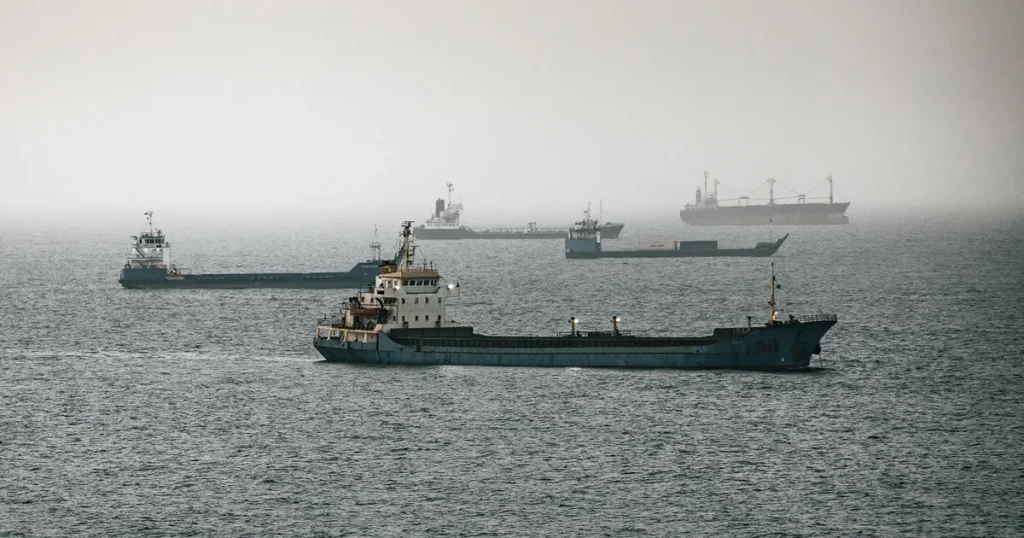
U.S.-Iran Tensions Escalate as Oil Sales License Revoked Amid Strait of Hormuz Attacks
Iranian Strikes and U.S. Sanctions Spark Market Volatility
U S Iran Updates – Crude oil futures experienced a notable surge on Tuesday following Iran’s attack on three tankers in the Strait of Hormuz and the United States’ decision to revoke a key sanctions waiver. This move has introduced fresh uncertainty into efforts to restore normal shipping operations through the strategic waterway, which is critical for global oil exports. The renewed conflict between Iran and the U.S. has intensified concerns over regional stability and energy supply disruptions.
Brent Crude, the international oil benchmark, climbed by approximately 5.5% during the day, reaching just under $76 per barrel for September deliveries. Meanwhile, the U.S. benchmark, West Texas Intermediate, also rose over 5% to slightly above $72 per barrel for August shipments. These price increases reflect heightened anxiety among traders about potential further attacks or sanctions that could limit Iran’s ability to sell its oil.
Despite the recent uptick, both oil benchmarks remain significantly lower than their all-time highs from late March and early April. During that period, the U.S. and Iran were locked in more aggressive confrontations, including missile strikes and naval skirmishes. The current situation, while volatile, appears to be a continuation of the previous cycle of tensions rather than a new escalation.
U.S. Treasury Revokes Iran’s Oil Export Waiver
The U.S. Treasury Department took decisive action on Tuesday afternoon by rescinding a waiver that had permitted Iran to sell oil and petrochemical products. This decision effectively cut off a major revenue stream for Iran, which had been negotiated as part of a broader 14-point memorandum of understanding between the two nations. The move marks another step in the U.S. effort to pressure Iran into compliance with its sanctions policies.
The Office of Foreign Assets Control (OFAC) confirmed that the waiver was revoked as of Tuesday, effective immediately. This waiver, issued last month, had allowed Iran to continue oil sales while diplomatic talks were ongoing. By ending the waiver, the U.S. is signaling its dissatisfaction with Iran’s recent actions and its commitment to enforcing stricter economic penalties.
“The OFAC is revoking GL X, which authorized the sale of Iranian oil. As President Trump and the administration have repeatedly affirmed, the MOU in effect with Iran is entirely performance-based,” stated a U.S. official in a CBS News interview. “Iran will only reap benefits if they exhibit good behavior. Iran’s actions in the Strait were wholly unacceptable to the United States and will be met with consequences. Our negotiators continue to work in good faith towards a final deal.”
The decision comes in direct response to Iran’s attack on three tankers, which occurred earlier in the day. The incident has raised questions about the safety of maritime traffic in the region, a vital artery for global oil transportation. Analysts suggest that the U.S. aims to deter Iran from further aggression by reducing its financial resources and complicating its ability to fund military operations.
Saudi Arabia Condemns Iranian Strikes on Oil Vessels
Saudi Arabia swiftly criticized the Iranian attacks, emphasizing their threat to international trade and energy security. The kingdom denounced the strike on its vessel, the Wedyan, as an “assault on the security and safety of international navigation, and on the security of global energy supplies.” This statement underscores the Saudi perspective that Iran’s actions endanger not only its own interests but also the stability of the entire Middle East region.
The Saudi government also expressed its disapproval of the attack on the Qatar-flagged Al-Rakiyat, marking the third vessel targeted by Iran in the Strait of Hormuz. While the exact number of ships affected remains a topic of discussion, the coordinated strikes have drawn attention to the potential for broader disruptions in the region’s energy infrastructure. The U.S. and its allies have long viewed the Strait of Hormuz as a critical chokepoint, and Iran’s repeated incursions threaten to undermine this strategic advantage.
The official confirmation of the ship’s name, initially reported by Reuters, aligns with ongoing investigations into the incident. Saudi officials have called for a swift resolution to the crisis, urging Iran to demonstrate restraint and cooperation. This diplomatic push highlights the importance of maintaining open lines of communication despite the recent hostilities.
Khamenei’s Funeral and Regional Political Dynamics
On Tuesday night, the body of Iran’s late Supreme Leader, Ali Khamenei, was transported to Iraq, where processions are planned for Wednesday in Najaf and Karbala, two major cities in Iraqi Shiism. The move reflects the deep religious and political ties between Iran and Iraq, as well as the symbolic significance of Khamenei’s funeral. His remains will be returned to Iran on Thursday for burial at the Imam Reza shrine in Mashhad, his birthplace.
Khamenei, who led Iran for nearly three decades, will be honored with both mourning and celebration in his home country. The funeral ceremonies, set to take place in Tehran, are expected to draw significant public and political attention, reinforcing Iran’s stance on regional issues. Meanwhile, Iraqi Prime Minister Ali Falih Al-Zaidi traveled to Najaf to meet with Khamenei’s body, underscoring the close relationship between Iran and Iraq amid the ongoing tensions with the U.S.
The events in the Strait of Hormuz and Khamenei’s passing have coincided, creating a dual focus on military and political developments. Iran’s leaders are using this moment to rally domestic support and assert their position in the broader geopolitical landscape. The funeral, however, may also serve as a reminder of the fragile balance between Iran and its neighbors, particularly in light of recent attacks and retaliatory measures.
U.S.-Turkey F-35 Dispute Intensifies Amid Regional Tensions
As tensions with Iran continue, the U.S. and Israel have also clashed over the sale of F-35 fighter jets to Turkey. Israeli Prime Minister Benjamin Netanyahu publicly opposed the deal, arguing that it would upset the delicate power dynamics in the Middle East. He warned that Turkey’s aggressive ambitions could destabilize the region, making the F-35s a “force for peace and stability.”
President Trump, during a bilateral meeting with Turkish President Recep Tayyip Erdoğan, had indicated the U.S. was considering the sale. Trump stated, “It’s a decision we’re going to make,” and added that many of his advisors believed the move was justified. “We have a better relationship with Turkey, and Turkey’s been in many ways much more loyal than other countries that we think would be loyal,” he explained, highlighting the strategic importance of Turkey in U.S. foreign policy.
“We have secured the five jets and Mr. Trump also promised us,” Erdoğan said in a translated statement, emphasizing that the agreement had been finalized. “And in this regard, Mr. Trump always stands by his word.” This exchange suggests a growing alignment between the U.S. and Turkey, even as Israel voices its concerns over the deal’s potential impact on regional security.
The F-35 controversy adds another layer to the complex web of international relations in the Middle East. While the U.S. seeks to strengthen ties with Turkey, Israel views the deal as a threat to its security interests. The timing of these developments—amid heightened tensions with Iran—raises questions about the broader implications for the region’s stability and the effectiveness of U.S. diplomacy in mediating competing interests.
As the situation unfolds, the interplay between economic sanctions, military actions, and diplomatic maneuvering will shape the future of U.S.-Iran relations. The revocation of the oil export waiver and the attacks in the Strait of Hormuz have forced both sides to reconsider their strategies, while the funeral of Ali Khamenei and the F-35 dispute highlight the ongoing challenges of maintaining peace and cooperation in the region.