
Robotaxis are on the road to London. Cabbies, who pass a grueling test, aren’t about to hand over their keys.
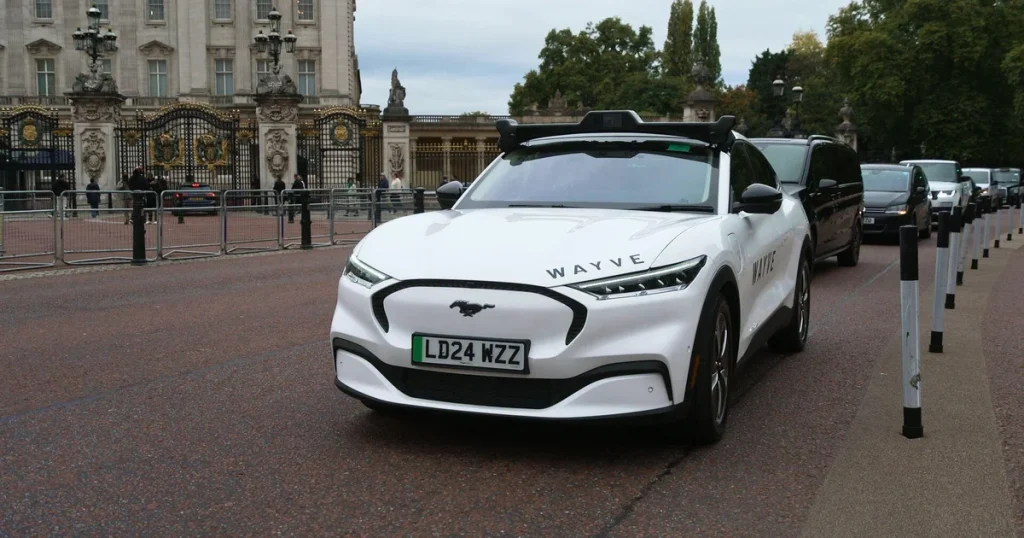
Robotaxis Are Making Their Mark on London’s Streets
Robotaxis are on the road to London – On May 17, 2026, a story was first shared about the evolving landscape of London’s transportation sector. Today, the city’s iconic black cabs face a new challenge: the rise of autonomous vehicles powered by artificial intelligence. While tech firms claim these robotic taxis are safer and more efficient, London’s seasoned drivers remain steadfast in their craft, resisting the idea of handing over their trade to machines. The city’s cabbies, known for their unmatched dedication, have spent years mastering a unique skill: memorizing an extensive network of streets and landmarks. This task, rooted in tradition, is being tested by the promise of AI-driven innovation.
A Legacy of Expertise and Endurance
For decades, London’s black cabs have symbolized the city’s cultural identity. Their drivers, who must pass a rigorous examination, have long been celebrated for their ability to navigate the labyrinthine streets of London with precision. This test, known as “the Knowledge,” has been in use since 1865, when it was first introduced to horse-drawn cabmen. Today, it remains a cornerstone of the profession, requiring cabbies to memorize 25,000 streets, along with thousands of landmarks, businesses, and the most efficient routes connecting them. The process is as demanding as it is time-consuming, often taking years of study to complete.
“We’re the oldest form of transport in the world, fact. We come before buses, and trains, and stuff. Yeah, we are the icons of London.”
— Tom Scullion, a driver with 34 years of experience
Tom Scullion, one of the city’s veteran drivers, humorously highlights the enduring value of human expertise. He recalls the unique and often bizarre requests passengers have made over the years, such as a man who brought an Irish wolfhound for a ride. The dog, which was a regular passenger, would sit quietly in the back while Scullion navigated the streets. In contrast, Scullion also mentions the anonymity of modern rides, where passengers may hail him in the morning without prior recognition. “That’s the trust we get,” he says, underscoring the deep bond between drivers and their passengers.
The Challenge of the Knowledge
Preparing for the Knowledge is no small feat. Candidates, known as “applicants,” must undergo a series of oral exams at the Transport for London office. Dressed in their Sunday best, they face an intense process that tests not only their memory but also their ability to recite routes with accuracy. Mark Hansford, a former candidate, recalls the stress of the exam: “Whenever you’re ready, sir, we’ll go from Soho House at 40 Greek Street to the Chancery Rosewood, please.” His attempt to navigate the city’s streets, however, was met with a polite but firm correction from the examiner.
“Unfortunately, sir, I can’t score you today.”
— Mark Hansford, during his failed exam attempt
Tommy Simmons, another candidate, demonstrates the complexity of the test by describing a specific route: “Leave on left Greek Street, right Shaftesbury Avenue, left Great Windmill Street, forward Haymarket.” As he recites each turn, examiners measure the accuracy of his path, ensuring he selects the most direct route. The challenge is not just about memorization—it’s about understanding the city’s ever-changing dynamics, from construction sites to new businesses opening in old neighborhoods.
Brainpower Behind the Wheel
Research into the impact of the Knowledge on drivers’ brains has revealed fascinating insights. A study conducted by University College London found that the posterior hippocampus, the region of the brain associated with spatial memory, can grow in size among experienced cabbies. This adaptation, which occurs over years of practice, highlights the mental rigor required to master the city’s geography. For some, the process of memorization has become a defining part of their identity.
“Everyone in their profession has had to train themselves with knowledge to be the best at what they are.”
— Steven Fairbrass, an applicant who has spent eight years preparing
Steven Fairbrass, who has been working toward the Knowledge for eight years, explains the depth of the memorization process. “These are like the points—” he begins, referencing the “Blue Book,” the official guide that lists thousands of key locations. Anshu Moorjani, another candidate with five years of effort, adds that the list includes 6,000 points of interest, from landmarks like the National Gallery to lesser-known establishments. The test’s adaptability is evident when businesses change names; drivers must update their knowledge accordingly. “If a restaurant goes out of business, it changes names, and you learn the new one,” Fairbrass notes.
Preparing for the Future
Despite the rise of autonomous vehicles, the Knowledge test remains a symbol of human ingenuity. While AI-powered taxis are already operating in cities like San Francisco and Chicago, London has been slower to adopt them. This delay gives drivers a chance to showcase their unique skills, which machines may struggle to replicate. The city’s cabbies argue that their ability to handle unpredictable situations, such as sudden detours or passenger requests, sets them apart from robots.
As the competition intensifies, drivers like Scullion and Fairbrass are determined to keep their profession alive. They view the Knowledge not just as a test of memory, but as a reflection of their commitment to the city. “It’s like comparing a hot dog vendor to Gordon Ramsay,” Scullion jokes, emphasizing the artistry of his work. For him, the streets of London are more than a map—they are a living, breathing entity that demands constant attention.
A Cultural and Economic Battleground
The battle between human cabbies and robotaxis extends beyond practicality; it’s a cultural and economic struggle. The Knowledge is more than a qualification—it’s a rite of passage that fosters pride and camaraderie among drivers. Yet, as technology advances, the question remains: will the next generation of London’s transportation rely on AI, or will the human element endure? For now, the cabbies’ dedication to their craft suggests the latter. Their ability to memorize, adapt, and connect with passengers ensures their place in the city’s history, even as the future looms on the horizon.
While autonomous vehicles may soon be allowed to operate in London, the city’s drivers are not easily displaced. The Knowledge, with its 161-year-old roots, continues to serve as a testament to the resilience of human expertise. As Scullion puts it, “You’re never gonna beat the Knowledge.” For now, the streets of London remain a domain where tradition and innovation coexist, each vying for dominance in a city that values both its past and its progress.