
After 10 years and 3,000 interviews, one man’s mission to preserve WWII veterans’ legacy continues
Rishi Sharma’s 10-Year Quest to Honor WWII Veterans’ Stories Enters Its Next Chapter
After 10 years and 3 000 interviews – In Yorktown, New York, Rishi Sharma has spent the last decade traversing the United States in pursuit of a singular goal: to document the voices of World War II combat veterans. To date, he has completed over 3,000 interviews, yet his journey shows no sign of slowing down. The 28-year-old’s work, driven by a deep respect for history, has become a vital effort to keep the memories of those who fought in the war alive for future generations.
A Legacy Etched in History
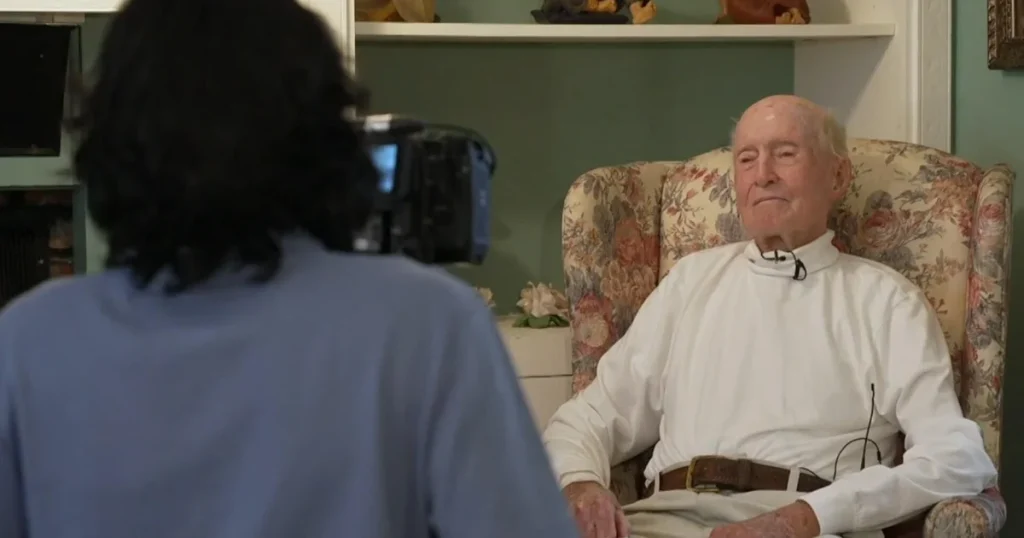
Rishi’s commitment to this mission is unwavering. “I’ve made it my life’s work to meet every surviving combat veteran from World War II,” he explained. “Each day has been devoted to this cause, without pause or compromise.” Recently, he sat down with Nils Mockler, a 100-year-old Marine veteran from Yorktown. Nils, who served as a combat intelligence scout, recounted his experiences during one of the war’s most pivotal battles—
Iwo Jima. “The first time I saw the American flag raised on that island,” Nils reflected, “it was more than a symbol of victory. It was a moment that still gives me chills, even now.”
Nils described the scene with vivid clarity, emphasizing the emotional weight of the moment. “The sight of that flag being raised in the face of relentless fire,” he said, “was a testament to courage and unity. It still makes the hair on my arms rise, just as it did back then.”
The Journey Begins with a Local Spark
Rishi’s path began in Southern California, where he initially reached out to veterans in his own neighborhood. What started as a personal project quickly grew into a nationwide endeavor. To streamline his efforts, he created a detailed map of locations he aimed to visit over the coming years, ensuring he could cover regions across the country. “There are heroes out there who didn’t ask for recognition,” he noted in 2016. “They just showed up when their country needed them, and I wanted to meet them, one by one.”
His fascination with the war stems from a place of personal curiosity rather than family tradition. Despite his parents’ Indian heritage and their immigration to the U.S., Rishi’s interest in WWII history developed independently. “I grew up hearing stories about bravery, but it wasn’t until I started speaking with veterans that I realized how deeply their experiences shape our understanding of the past,” he shared. This realization fueled his determination to preserve their legacies through oral histories.
Preserving Stories for Future Generations
Rishi’s project, named Remember WWII, relies entirely on community support. Funding comes from donations, and each interview is conducted with meticulous care, often lasting several hours. After recording their stories, he ensures the veterans’ families receive the audio files, allowing them to keep the memories close. “It’s about giving their voices a permanent home,” he said. “No story should be lost to time.”
The significance of his work is underscored by the dwindling numbers of surviving veterans. A decade ago, approximately 700,000 WWII veterans were still alive, but today, that number has dropped to around 30,000. Rishi warns that this decline means more than just the fading of individual memories—it represents a loss of the moral foundation that shaped post-war America. “These veterans were the guiding light of our society,” he stated. “Their quiet wisdom and experiences have long influenced how we navigate challenges, and without them, we risk forgetting the values that defined their era.”
Why the Moral Compass Matters
Rishi’s vision extends beyond mere documentation. He sees the veterans as living testaments to a time of unparalleled sacrifice and clarity. “They were the ones who carried the weight of the nation’s decisions,” he explained. “Their stories aren’t just about battles—they’re about resilience, leadership, and the unyielding spirit of service.” As the next generation of Americans begins to shape the future, Rishi believes these narratives are essential to understanding the roots of modern ideals.
His efforts have sparked conversations about how to honor veterans in the digital age. While traditional memorials and ceremonies remain important, Rishi argues that personal stories offer a more intimate connection to history. “When you listen to a veteran recount their day-to-day struggles and triumphs, it brings the past to life in a way that textbooks can’t,” he said. This perspective has resonated with many, leading to increased community involvement and support for his work.
A Nation’s Reflection in the Hands of a Single Man
This weekend marks a milestone: the 250th anniversary of American independence. Rishi sees this as an opportunity to highlight the enduring impact of the WWII generation. “It’s not just about celebrating a century of freedom,” he remarked. “It’s about recognizing how that generation’s sacrifices laid the groundwork for everything we have today.” He pointed to the war’s role in shaping global alliances, advancing civil rights, and establishing the United States as a leader on the world stage.
As the number of living veterans continues to shrink, Rishi’s work becomes more urgent. “Every interview is a step toward preserving a legacy that might otherwise be forgotten,” he said. “These stories are the bridge between past and present, and they deserve to be shared as widely as possible.” His dedication to this mission has already inspired others to take up the cause, proving that history can be a living, evolving conversation rather than a static record.
For Rishi, the journey is personal and profound. “I think of each veteran as a teacher,” he said. “They’ve given us lessons in courage, humility, and what it means to serve. I want to make sure those lessons are never lost.” With every interview, he adds another chapter to the story of a generation that changed the course of history. As he continues his work, the hope is that the next century will carry forward the values and sacrifices that defined the 20th century’s most pivotal conflict.
Rishi’s story is a reminder that preserving history requires both passion and persistence. While the road ahead is long, his commitment to capturing the voices of the past ensures that the lessons of WWII will echo for years to come. “When the last veteran passes away,” he said, “we’ll have to find other ways to remember them. But until then, I’ll keep listening, recording, and sharing.”