
Trump warns of “communist menace” in speech at Mount Rushmore on eve of July 4th
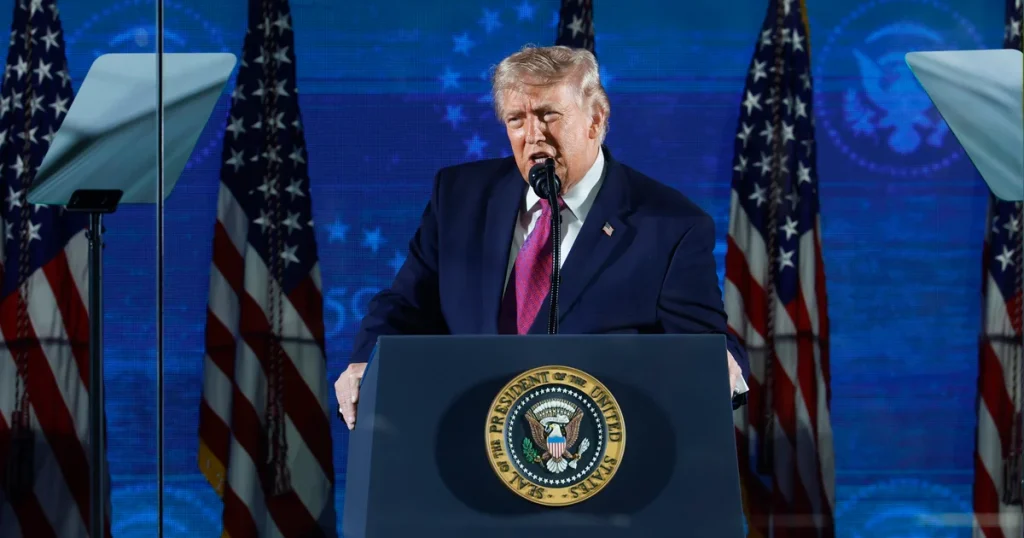
Trump Warns of “Communist Menace” in Speech at Mount Rushmore on Eve of July 4th
America’s 250th Anniversary and a New Threat
Trump warns of communist menace in speech – President Donald Trump began the celebrations marking the United States’ 250th anniversary on the July Fourth weekend by addressing a crowd at Mount Rushmore, a iconic national monument carved into the Black Hills of South Dakota. The speech, delivered under the towering granite faces of four former presidents—Washington, Jefferson, Lincoln, and Roosevelt—served as both a tribute to American heritage and a call to arms against what he described as a growing ideological threat. While lauding the nation’s founding principles, Trump focused on a pressing concern: the resurgence of communist influence.
Against the backdrop of the monument, which symbolizes the nation’s greatest leaders, Trump framed his remarks as a defense of American identity. “Our country’s identity is under siege from communist ideals,” he declared, citing “radicals” and “extremists” who, according to him, undermine the historical foundations of the United States. He argued that these forces are not only eroding the nation’s values but also infiltrating its cultural fabric, particularly through newcomers who reject American traditions in favor of alternative systems. “There is now a resurgence of the communist menace in our land, including from newcomers to our country who embrace ideas totally opposed to our way of life and our great success,” the president said. “You can be a communist, or you can be a patriot. You cannot be both.”
A Political Strategy for Midterm Elections
In addition to his warnings about communism, Trump linked the speech to a broader political agenda aimed at securing Republican victories in the upcoming midterm elections. He emphasized that the only path to ensuring this outcome was through structural changes to Congress, particularly the elimination of the filibuster. “The only way to guarantee that the Republicans win the midterms is to abolish the filibuster and pass the SAVE America Act,” he stated. The proposed legislation, which he described as a critical measure, would require voters to present valid photo identification and prove their U.S. citizenship before casting ballots. “This will fortify our electoral system and safeguard the integrity of our democracy,” Trump claimed, framing the act as a necessary tool against fraud and ideological infiltration.
“There is now a resurgence of the communist menace in our land, including from newcomers to our country who embrace ideas totally opposed to our way of life and our great success,” the president said. “You can be a communist, or you can be a patriot. You cannot be both.”
Trump’s focus on the communist threat came as part of a larger effort to galvanize support for his policies and consolidate his base ahead of the midterms. He argued that the nation’s founding is inseparable from its people, stating, “As we march into our 250th year, incredible, beautiful year it will be, we must never forget: There is no American freedom without American culture, and there is no American founding without the American people.” This sentiment underscored his belief that preserving traditional American values is essential to maintaining national sovereignty and preventing the spread of foreign ideologies.
Defining American Culture and Freedom
Throughout the speech, Trump reiterated his vision of American culture as a cornerstone of national strength. He described it as the “most beautiful land,” “most thrilling story,” and “most precious legacy” in history, asserting that Americans are the heirs to this heritage. “Americans love freedom. We cherish independence, and we know that we are the heirs to the most beautiful land, the most thrilling story, and the most precious legacy on which the sun has ever shined in America,” he proclaimed. This rhetoric positioned the United States as a unique nation, with its identity rooted in individualism and self-determination.
“We do not need anyone’s permission to say what we think, to live as we please, to worship as we choose, or to keep and bear arms,” Trump added, emphasizing the importance of personal liberties.
By framing the communist menace as a direct challenge to these freedoms, Trump sought to unify his audience under a common cause. He criticized those who, in his view, prioritize collective governance over individual rights, suggesting that such thinkers are aligned with a system that suppresses dissent and subjugates the people to a centralized authority. “The communist threat is not just an external one—it’s a domestic issue that threatens the very soul of our nation,” he said, blending historical references with contemporary concerns.
Trump’s speech also touched on the role of immigration in shaping the country’s future. While celebrating the contributions of American citizens, he stressed that newcomers must demonstrate a commitment to the nation’s values. “You do not have to be born here, but you do have to love what we have built, you must love our country,” he told the audience, reinforcing the idea that loyalty to the United States is a prerequisite for participation in its democratic process. This line was met with enthusiastic applause, signaling the president’s success in framing the issue as a matter of national unity and ideological purity.
A Legacy of Resilience and Vigilance
As the speech concluded, Trump returned to the theme of American resilience, urging listeners to remain vigilant against forces that seek to erode the country’s traditions. He painted a picture of a nation on the brink of a new era, where the survival of its identity depends on the actions of its citizens. “The American people are the bedrock of this nation, and their unwavering support is what has allowed us to achieve so much,” he said. “We must protect that foundation from those who would replace it with a system that values control over freedom.”
While the speech was rooted in the historical context of the 250th anniversary, Trump’s message was equally directed at the present. By invoking the legacy of the nation’s founding, he positioned himself as a defender of its core principles against modern challenges. The address at Mount Rushmore, with its dramatic setting and symbolic imagery, reinforced the president’s narrative of American exceptionalism, framing the country’s success as a product of its people and its values. “We are the heirs to a legacy that cannot be replicated,” he declared, a sentiment that resonated with his supporters and highlighted the urgency of his political message.
Trump’s speech also reflected his broader strategy of linking domestic issues to global threats. By contrasting the communist menace with the United States’ own system of governance, he aimed to create a sense of existential urgency. “The world is watching, and they see a nation that is being pulled in the wrong direction,” he said. “We must stand firm and protect the American way of life.” This approach not only addressed immediate political concerns but also framed the midterm elections as a battle for the nation’s soul.
In the end, Trump’s address at Mount Rushmore served as a powerful reminder of the stakes involved in preserving American identity. By emphasizing the interplay between culture, freedom, and political structure, he sought to rally his audience around a shared vision of the future. As the nation celebrated its bicentennial, the speech underscored the enduring relevance of the American experiment, with Trump positioning himself as its unwavering advocate. The event, while symbolic, was a clear statement of intent: to defend the nation’s values against any perceived encroachment, whether from within or beyond its borders.