
What a Brooklyn bodega reveals about the craze for an experimental weight-loss drug
What a Brooklyn Bodega Reveals About the Craze for an Experimental Weight-Loss Drug
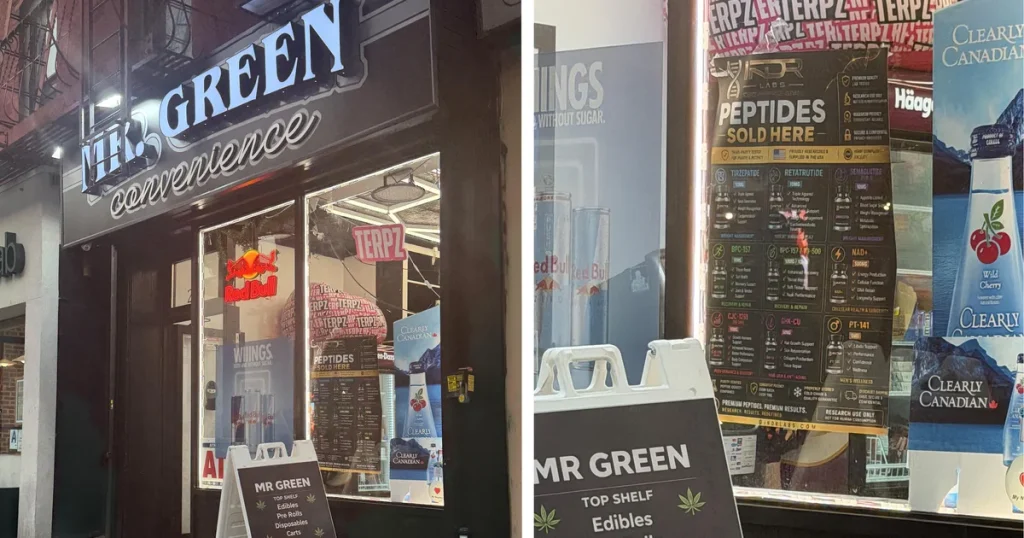
What a Brooklyn bodega reveals about – Deep in the heart of Brooklyn’s bustling Bedford Avenue, a small bodega named Mr. Green has become an unlikely hub for a drug that has bypassed federal regulations. Behind the counter, a cashier casually processed a vial of retatrutide, an experimental weight-loss medication typically prohibited for commercial sale. The transaction occurred without age verification, medical questionnaires, or prescriptions, reflecting a growing trend of retail outlets selling unapproved substances. A prominent sign outside the store boldly declared “PEPTIDES SOLD HERE,” yet the fine print beneath it noted that the peptides were “not for human consumption.” Despite this disclaimer, the product remained in high demand, with the employee later confirming its popularity after initially doubting its availability.
The Unregulated Appeal of Retatrutide
Retatrutide, a peptide-based compound, has captured the imagination of health-conscious consumers, particularly those seeking rapid results. While it is still in the research phase, its potential to outperform FDA-approved weight-loss drugs has sparked a frenzy. In a recent encounter, the CBS News reporter was able to purchase a vial for $95, highlighting how easily access to the drug is now available. The bodega’s setting—between a poke restaurant and a funeral home—adds an element of everyday normalcy to its sale, blurring the lines between convenience and risk.
According to the store’s signage, retatrutide is marketed for “weight management,” a term that has become synonymous with weight loss in popular discourse. However, the drug’s classification as research-grade means it is not yet approved for human use. This discrepancy has raised concerns among medical professionals, who question the implications of such widespread availability. “I was surprised that there would be a company so openly selling a product that’s not approved by the FDA,” remarked Jonathan Darrow, a former Harvard Medical School professor specializing in drug regulation. “What argument could they possibly be putting forth to justify this?” His skepticism underscores the growing unease about the drug’s commercialization before it has undergone rigorous safety testing.
The Role of Indr Labs in the Distribution Chain
The vial sold at Mr. Green was labeled by Indr Labs, a peptide vendor that claims to offer products for research use only. On its website, Indr Labs promotes its peptides as rigorously tested by third-party labs, providing certificates of analysis to assure quality. Yet, the certificate for retatrutide contained a graph suggesting the sample was actually tirzepatide, another weight-loss drug. This inconsistency has led to questions about the authenticity of the lab reports.
Tori Johnson, operations manager at Vanguard Laboratory, which the certificate attributed to Indr Labs, confirmed the reports were fabricated. “We did not issue these [certificates],” she stated via email. “We do not have a client called INDR Labs.” The lab’s association with Indr Labs appears to be a marketing tactic, allowing the company to claim credibility while selling unverified products. Indr Labs later updated its website to require a password for accessing lab reports, a move that may have been intended to obscure the lack of transparency.
Despite these irregularities, Indr Labs continues to advertise its peptides as “98% purity” and offers “discreet packaging,” appealing to buyers who want to avoid drawing attention to their purchases. The lack of medical claims on the product’s label, however, suggests a strategy to sidestep regulatory scrutiny while capitalizing on the drug’s popularity. This dual approach—promoting research-grade peptides as health-enhancing—has created a gray area where consumers can purchase the drug without formal approval.
Federal Regulations and the FDA’s Challenge
Federal law permits the use of experimental drugs in clinical trials or animal research, but commercial sale to the public is generally restricted. The FDA, responsible for ensuring drug safety and efficacy, has struggled to enforce these rules in the face of rapid demand. Last month, CBS News reported that retatrutide had gone viral online, with licensed professionals prescribing it to patients. Now, its presence in brick-and-mortar stores signals a shift toward broader accessibility.
The FDA has warned consumers against purchasing retatrutide labeled for research use, emphasizing that such products may lack quality assurance. “These drugs are of unknown quality and may be harmful to their health,” the agency stated in a public advisory. Yet, the drug’s allure persists, fueled by social media buzz and anecdotal success stories. Eli Lilly, the pharmaceutical company developing retatrutide for obesity and type 2 diabetes, has called on regulators to “help dismantle illicit networks” selling the drug. While clinical trials show retatrutide’s potential to exceed the effectiveness of approved weight-loss medications, its commercialization ahead of FDA approval raises ethical and safety concerns.
Experts warn that the absence of oversight means consumers are exposed to risks without clear guidelines. The ease of purchasing retatrutide in a bodega, where it is sold alongside snacks and sodas, underscores how quickly the drug has moved from niche research to mainstream appeal. This trend has sparked debates about the role of retail in drug distribution and the challenges of regulating consumer markets in an era of rapid digital connectivity. As demand grows, so does the pressure on the FDA to act, but the agency has yet to fully address the proliferation of unapproved products in everyday settings.
The Convenience Store Effect
The sale of retatrutide in convenience stores represents a significant cultural shift. Where once consumers had to navigate complex online marketplaces or wait for clinical trial results, they can now purchase the drug with minimal effort. This accessibility has turned the bodega into a symbol of the drug’s popularity, with the employee’s comment—“This sh** has been selling”—capturing the casual attitude toward its use.
While the drug’s unapproved status remains a point of contention, its commercial success highlights the power of consumer demand. In clinical trials, retatrutide has demonstrated efficacy that surpasses existing FDA-approved weight-loss drugs, which has ignited a social media frenzy and created a black-market appetite. The contrast between its scientific promise and its retail availability illustrates the tension between innovation and regulation. As the FDA grapples with enforcement, the convenience store’s role in distributing retatrutide serves as a stark reminder of how quickly unproven substances can enter the public sphere.
For now, the bodega’s shelves remain stocked with retatrutide, a testament to its growing appeal. Yet, the journey from lab to retail raises questions about the future of drug regulation. Will the FDA intervene more aggressively, or will the market continue to outpace oversight? As the drug’s presence expands, so too does the need for clearer guidelines to protect consumers from potential harm. The experiment in Brooklyn, where a small store sells an unapproved drug, may be just the beginning of a broader trend in the intersection of health, commerce, and regulation.
In the absence of formal approval, the sale of retatrutide in everyday retail environments signals a new era of drug accessibility. The ease of purchase, combined with its perceived effectiveness, has created a market that thrives on convenience and hype. While the FDA continues to issue warnings, the reality is that consumers are already using the drug in ways that blur the boundaries between research and real-world application. The bodega, once a symbol of local convenience, now stands as a microcosm of the drug’s broader cultural impact—a place where the future of medicine meets the immediacy of daily life.