
Colombians, weary of violence, prepare to vote in polarizing election
Colombians, weary of violence, prepare to vote in polarizing election
Colombians weary of violence prepare to vote – As the nation braces for a pivotal moment in its political landscape, millions of Colombians will cast their votes on Sunday in a presidential election that has become a focal point of national debate. The outcome of this high-stakes race is expected to hinge on a runoff between two sharply contrasting candidates, leaving the country to grapple with the implications of their divergent visions for the future. While a new leader may emerge, no contender has yet secured the 50% threshold needed to win outright, setting the stage for a decisive second round on June 21. Recent polling data suggests the competition has narrowed to three key figures, though two stand out as frontrunners.
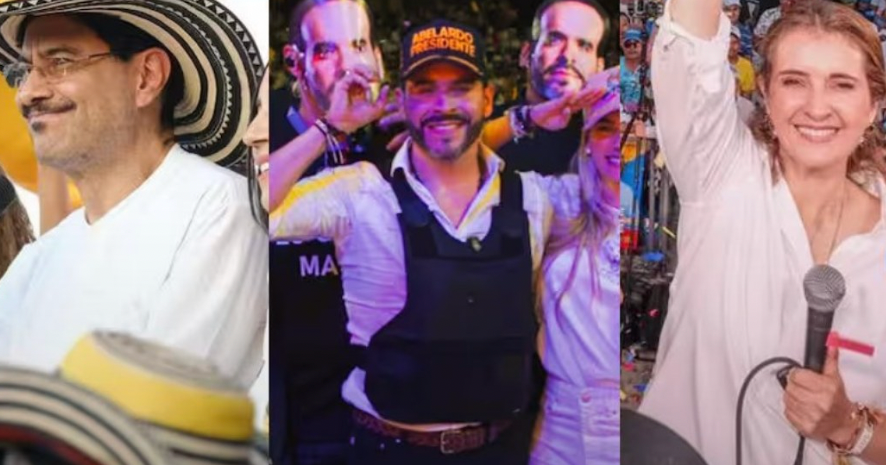
On the far-left, Senator Iván Cepeda represents the ruling Pacto Histórico coalition, carrying forward the legacy of President Gustavo Petro. His platform emphasizes continued dialogue with armed groups, including guerrilla factions and drug cartels, a stance that has drawn both support and criticism. Meanwhile, Abelardo de la Espriella, a right-wing lawyer and former cabinet member, has positioned himself as a bold, outsider-style candidate. His rhetoric mirrors that of Donald Trump and Nayib Bukele of El Salvador, with a focus on aggressive tactics to combat crime and corruption.
Completing the top three is Paloma Valencia, a centrist senator backed by former President Álvaro Uribe. She has cast herself as a pragmatic alternative, balancing traditionalist values with modern governance. The race, however, is deeply polarized, reflecting the nation’s fractured identity. A recent AtlasIntel survey, conducted with 4,531 interviews, revealed Cepeda leading the first round with 38.7%, closely followed by de la Espriella at 37.3%, while Valencia trails significantly at 14.3%. Both Cepeda and de la Espriella have seen their support more than double Valencia’s tally, underscoring the stark divide between ideological extremes.
A tale of two visions
Cepeda’s approach is rooted in Petro’s peace negotiation policies, which many argue have inadvertently strengthened armed groups rather than weakened them. Critics claim these strategies have allowed criminal organizations to expand their influence, even as violence persists. Meanwhile, de la Espriella has proposed a militarized solution, including the destruction of traffickers’ strongholds through bombing campaigns and the establishment of 10 private maximum-security prisons modeled after El Salvador’s CECOT. These facilities, he insists, will be built in remote locations to isolate prisoners and enforce strict labor conditions.
“Cepeda has a soft hand on not only coca cultivation, but also of organized criminal groups that are in charge of the production of cocaine,” said Daniel Mejía, a professor analyzing drug policy at the Universidad de los Andes in Bogotá. “His strategies prioritize dialogue over decisive action, which some view as a necessary shift, while others see it as a failure to address the root of the problem.”
De la Espriella’s platform also includes a return to aerial fumigation of coca fields, using glyphosate to target drug production. This stance has drawn accusations of harshness, with opponents labeling him as a hardliner who prioritizes punitive measures over reconciliation. In contrast, Valencia advocates for a combination of ground troops, drone surveillance, and resumed aerial fumigation. While she shares de la Espriella’s focus on security, she has criticized his use of flashy campaign tactics, calling them a “circus” in a recent statement.
Violence and its consequences
The election is taking place against a backdrop of escalating violence, with communities in coca-growing regions bearing the brunt. Over the past year, human rights groups have documented more than 50 massacres, including recent clashes between rival guerilla factions that claimed around 50 lives. These incidents have deepened public frustration with the peace process, which many feel has failed to deliver tangible results. Low-income families, particularly those near coca fields, have endured years of instability, with crime rates rising and economic opportunities dwindling.
Security has emerged as a central concern for voters, ranking second only to healthcare in priority lists. The campaign has been shadowed by a wave of violence, including the assassination of a presidential contender, bombings, and the abduction of local leaders. These events have heightened the stakes for the upcoming vote, with citizens eager to see which candidate can bring stability to a country that has long struggled with conflict.
Beyond security: A broader agenda
While security is a primary issue, the election also addresses economic and social challenges. Business owners, especially those in the service sector, are anxiously awaiting decisions on the minimum wage, which saw a dramatic increase earlier this year. This change has sparked fears of further economic strain, with many hoping for either a reversal or an expansion of the adjustment. Additionally, voter intimidation has been reported in rural areas, where armed groups have allegedly targeted political supporters to influence the outcome.
The contest is not just about immediate solutions to violence but also about the direction of Colombia’s future. Cepeda’s supporters argue that his focus on negotiation is essential to prevent further bloodshed, while de la Espriella’s backers believe that only a hardline approach can dismantle entrenched networks of crime. Valencia, meanwhile, positions herself as a bridge between these extremes, promising a middle path that balances security with economic growth. The choice between these candidates may determine whether Colombia moves toward a more conciliatory or combative era.
As the nation prepares to vote, the political landscape remains volatile. The election could redefine Colombia’s relationship with its armed groups, its economic policies, and its governance model. With public fatigue growing over years of conflict and failed agreements, voters are seeking leaders who can deliver concrete change. The results of Sunday’s vote will not only shape the next administration but also serve as a referendum on the nation’s priorities in a time of uncertainty and division.