
About 2,000 U.S. troops supporting relief efforts after Venezuela earthquakes
About 2,000 U.S. Troops Supporting Relief Efforts After Venezuela Earthquakes
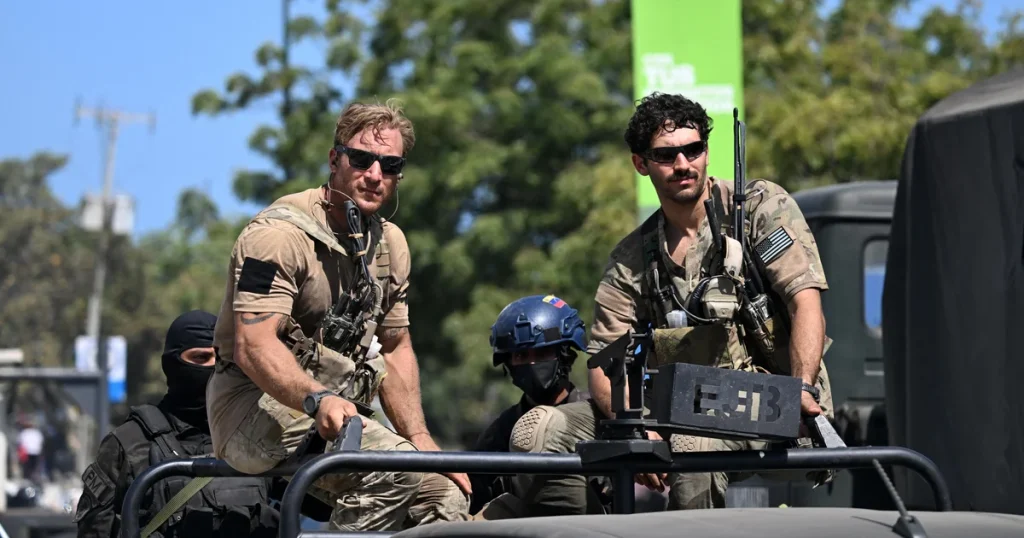
About 2 000 U S troops – Following a series of destructive earthquakes that struck Venezuela last week, the U.S. military has deployed around 2,000 service members to assist in the ongoing recovery operations. This effort is being led by Gen. Francis Donovan, the head of the U.S. Southern Command, who emphasized the critical role of the military in addressing the crisis. “Our forces are actively engaged in both search and rescue missions and the distribution of essential supplies across the affected regions,” Donovan stated during a press briefing on Wednesday. The troops are operating on land, air, and sea, ensuring a coordinated response to the natural disaster.
The current priority of the U.S. military is locating survivors trapped beneath the rubble, particularly in the aftermath of the seventh day since the tremors. Donovan explained that in such situations, the window for rescuing people is typically limited to 3 to 7 days. “We’re focused on maximizing the chances of saving lives, especially those still trapped and injured,” he added. According to Venezuela’s government, the earthquakes have resulted in over 2,000 fatalities and more than 10,000 injuries, underscoring the scale of the humanitarian emergency.
John Barrett, the U.S. Embassy’s chargé d’affaires in Caracas, provided further details on the military’s response. He noted that shortly after the initial quakes, the U.S. swiftly deployed approximately 310 urban search and rescue specialists to the region. These teams are now conducting operations on the ground, having already identified five survivors, including a mother and her young child. “Our efforts are not only about rescuing individuals but also about stabilizing the situation and preparing for long-term recovery,” Barrett said.
Phase Two of the U.S. Strategy
The U.S. response to the earthquakes aligns with a broader three-phase plan initiated by the Trump administration following the January capture of Venezuelan President Nicolás Maduro. This plan, which includes stabilization, economic recovery, and transition to free and fair elections, has been adjusted due to the unprecedented nature of the disaster. “While the initial phase is focused on life-saving actions, we’re already planning for the next steps,” Barrett remarked. He highlighted that economic recovery efforts had begun even before the earthquakes, though the immediate focus remains on humanitarian aid and survivor outreach.
Barrett also outlined the types of military assets supporting the mission. The Southern Command has established a coordination cell to streamline the transportation of relief supplies. On the ground, specialized teams are providing critical services, such as a mobile Army medical unit equipped for surgical interventions and a U.S. Marine Combat Logistics Company with water purification systems and a heavy-duty tow truck. These resources are essential for addressing the logistical challenges posed by the damaged infrastructure.
Removing debris from collapsed buildings is described by Barrett as a “major undertaking,” requiring sustained effort and collaboration with local authorities. “We’re working to meet the immediate needs of the Venezuelan people, including sanitation, clean water, and energy solutions,” he said. “Our goal is to maintain this momentum until the situation is fully under control.” The military’s role extends beyond direct rescue to include setting up supply chains and ensuring the delivery of critical resources to affected communities.
Comparing Past Disasters
When asked about the magnitude of the U.S. military’s involvement, Gen. Donovan compared the current operation to previous crises. “Each disaster is unique, but the scale of this response is larger than our efforts after Hurricane Melissa in Jamaica last year,” he explained. “Still, it’s smaller than the response we provided following the 2010 earthquake in Haiti.” This comparison highlights the tailored approach of the U.S. military, which adapts its strategies based on the specific needs of each disaster.
Donovan also noted that the current focus on search and rescue has created favorable conditions for the distribution of relief supplies. “We’re moving at full speed, ensuring that all necessary resources are available for the people in need,” he said. The Southern Command’s statement confirmed that the military is providing logistical support, with an emphasis on coordinating the flow of humanitarian aid. This includes both transportation and the deployment of specialized equipment to address the most urgent requirements.
Barrett reiterated the importance of the U.S. commitment to Venezuela, stating that over $300 million in humanitarian aid has been allocated since the disaster. “This financial support is crucial for rebuilding and supporting the communities affected by the earthquakes,” he said. The military’s presence is seen as a key component of this aid, combining both human and material resources to enhance the recovery process.
As the situation evolves, the U.S. military is expected to continue its support, ensuring that both immediate and long-term needs are met. With the coordination of international partners and local authorities, the operation is progressing steadily. The combined efforts of the military, government agencies, and humanitarian organizations are vital in addressing the challenges posed by the earthquakes and supporting Venezuela’s path toward recovery.