
Supreme Court upholds state bans on transgender athletes in girls’ and women’s sports
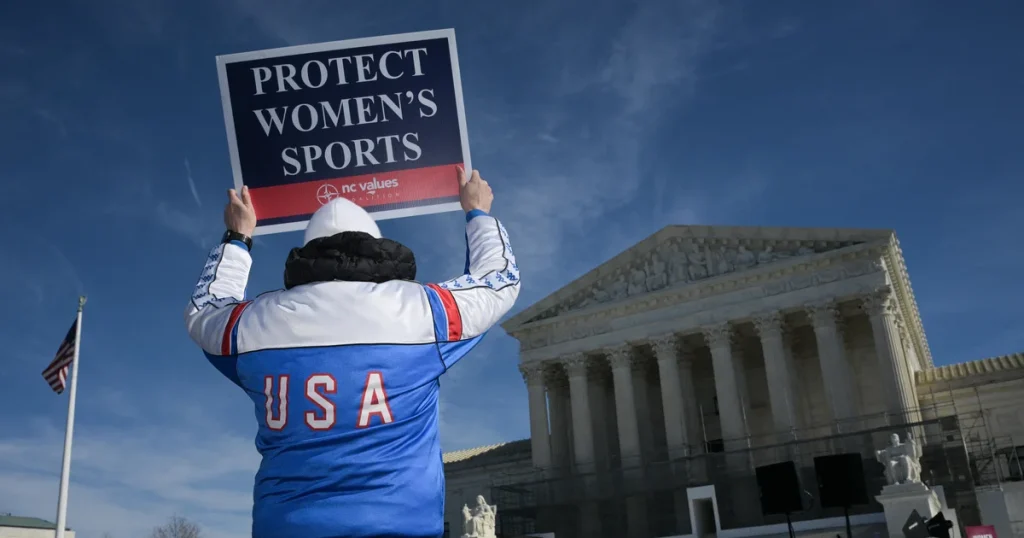
Supreme Court Upholds State Bans on Transgender Athletes
Supreme Court upholds state bans on transgender – On Tuesday, the Supreme Court affirmed that states can restrict transgender athletes from competing in girls’ and women’s sports, reinforcing its stance on gender identity in athletic participation. The decision supported laws from West Virginia and Idaho, which were challenged in two landmark cases, West Virginia v. B.P.J. and Little v. Hecox. This ruling represents a key moment in the ongoing legal debate over transgender rights and the interpretation of Title IX, the federal law promoting gender equality in education. Advocates argue the decision limits opportunities for transgender individuals, while supporters claim it preserves competitive fairness.
Majority Ruling: Biological Sex as the Basis for Eligibility
Justice Brett Kavanaugh, representing the majority, emphasized that states have the right to define eligibility for women’s and girls’ sports based on biological sex. He stated the Constitution and Title IX do not necessitate a complete shift in athletic policies, allowing schools to maintain gender-specific teams. “The law permits states to bar transgender athletes if they choose,” Kavanaugh wrote, framing the decision as a balanced approach that protects the interests of all participants. The ruling aligns with the Court’s broader interpretation of equal protection, prioritizing traditional definitions of gender in sports.
Under the majority’s reasoning, states may enforce bans without facing legal challenges, provided they follow established guidelines. The decision acknowledges that transgender athletes can compete in other categories, such as boys’ or men’s teams, if they align with their biological sex. This distinction allows for flexibility, though critics argue it creates a rigid system that excludes transgender individuals from participation in their chosen gender category. The Court’s stance has sparked widespread discussion about the intersection of identity and athletic competition.
Dissenting Views: Concerns Over Exclusion and Fairness
The three liberal justices countered that the decision imposes an absolute ban, ignoring the nuanced impact of transgender athletes on competition. Justice Sonia Sotomayor’s dissent highlighted that the ruling fails to consider whether transgender athletes displace others, stating, “The facts do not matter, even though the consequences are serious.” She argued the Court’s approach could limit access for transgender girls who wish to play in sports, despite their presence not necessarily affecting team outcomes. This critique underscores the debate over how best to balance equality and fairness in athletics.
“Sports are not zero-sum, but the law should not force them into that framework.”
Sotomayor also noted the emotional toll on transgender athletes, emphasizing that the ban affects individuals regardless of their competitive impact. Her opinion warned that the decision could set a precedent for stricter policies, potentially extending beyond sports into other areas of public life. The dissent calls for a more inclusive interpretation, urging the Court to defer to empirical evidence rather than establish rigid rules for participation.
Broader Implications for State and Federal Policies
The Supreme Court’s ruling strengthens state laws that have already restricted transgender athletes from competing in girls’ sports. With 25 states implementing such policies in recent years, the decision provides legal backing for these measures, ensuring they remain enforceable. President Trump’s 2020 executive order, which barred transgender girls from participating in Title VII-protected sports, aligns with this trend, creating a cohesive approach between federal and state governments.
Organizations like the NCAA and International Olympic Committee have also adopted similar eligibility rules, limiting women’s sports to those born female. The Court’s decision validates these standards, offering a consistent legal foundation for athletic programs across the country. As a result, transgender athletes may now face more uniform restrictions, depending on the jurisdiction and specific policies in place.