
California Gov. Gavin Newsom proposes federal billionaire tax and AI “public equity” fund
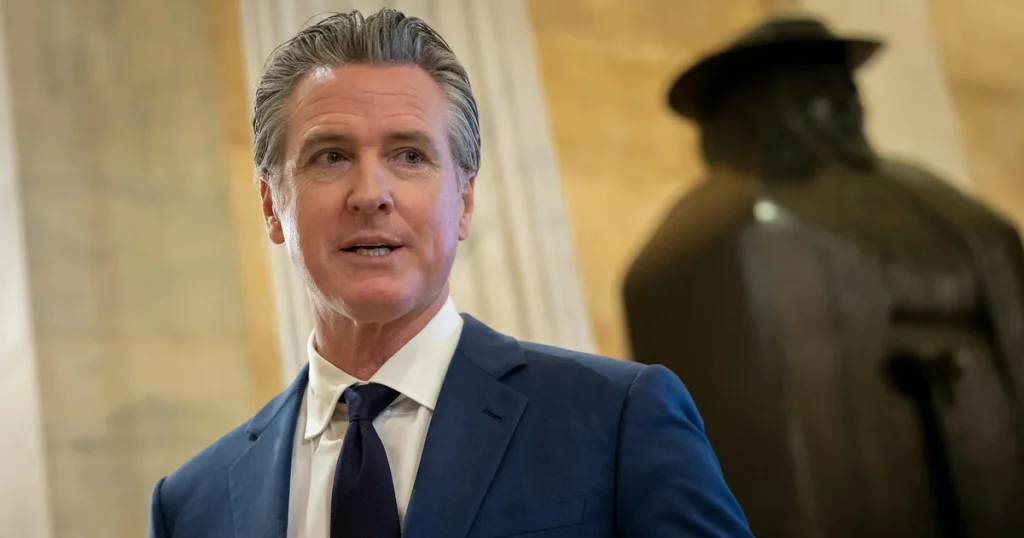
California Governor Newsom Proposes Federal Billionaire Tax and AI Public Equity Fund
California Gov Gavin Newsom proposes federal – California Governor Gavin Newsom has unveiled a sweeping economic reform plan, including a federal tax on ultra-wealthy individuals and the creation of an AI public equity fund. These initiatives, outlined in a recent Substack essay, aim to tackle wealth inequality and prepare for the shifting dynamics of an AI-driven economy. Newsom’s proposals underscore his commitment to addressing systemic disparities while positioning California as a leader in shaping the future of economic policy. As he considers a presidential run in 2028, the plan also reflects his belief in federal action over state-level measures for broader impact.
The Federal Billionaire Tax: A Populist Strategy
Newsom’s federal billionaire tax is framed as a modern update to the “Buffett Rule,” a concept popularized by former Treasury Secretary Warren Buffett. The plan targets the top 1% of earners, ensuring they contribute a fair share to public services. “The construction worker can pay a higher rate than the developer,” he wrote, emphasizing the inequity in current tax systems. By advocating for a minimum tax on billionaires, Newsom seeks to level the playing field, arguing that wealth should be taxed as it generates value for society.
“The construction worker can pay a higher rate than the developer. And the delivery driver ends up paying more than the founder of the company whose packages he delivers.”
Newsom criticizes the existing tax structure for being influenced by corporate interests and political lobbying. He claims that loopholes allow the wealthy to avoid their fair share, leaving everyday workers to bear the brunt of rising costs. His proposal would close these gaps, directing a portion of the collected wealth toward social programs like education, healthcare, and child care, while also funding an AI public equity fund to support displaced workers.
State-Level Tax Measures and Their Limitations
Newsom supports a federal approach over state-level initiatives, such as the billionaire tax measure on California’s November ballot. While acknowledging its merits, he argues that state taxes may not be sufficient to address wealth concentration. “Billionaires can simply move to avoid any single state’s taxes,” he explains, noting that the federal government has a greater capacity to implement nationwide reforms. This strategy aligns with his broader vision of using federal power to reshape economic systems.
Despite his support for the federal plan, Newsom emphasizes the need for legislative oversight in budget decisions. He believes that the state-level tax, though well-intentioned, overlooks opportunities to fund comprehensive programs like universal child care and free higher education. “It ignores our public schools,” he writes, “and overlooks women’s health clinics, housing, and child care.” His argument highlights the importance of balancing immediate needs with long-term economic equity goals.
AI Public Equity Fund: Bridging Technology and Society
Newsom’s AI public equity fund seeks to invest in the sector’s growth while ensuring workers are not left behind. The initiative would provide severance packages, portable benefits, and enhanced unemployment insurance to those displaced by automation. Additionally, it would support universal child care, tuition-free college education, and career training programs, fostering resilience in the face of technological change. By redirecting a share of AI-generated wealth, the fund aims to create a safety net for workers and promote inclusive economic progress.
The proposal positions California as a pioneer in leveraging AI for public benefit, rather than letting it concentrate wealth in private hands. Newsom argues that the AI economy represents a new frontier, requiring proactive measures to ensure its rewards are shared broadly. This vision ties into his broader agenda of using federal policy to address both current and future challenges, including the transition to an “AI century.”
Relocation Trends and Tax Evasion
Newsom’s critique of state-level taxation is bolstered by trends showing tech billionaires relocating to states with lower tax rates. Figures like Mark Zuckerberg, Larry Page, and Sergey Brin have moved to Florida, where tax burdens on high-net-worth individuals are reduced. This shift, reported by the Los Angeles Times, illustrates the limitations of state-level policies in curbing wealth concentration. Newsom insists that a federal system is necessary to create a more equitable tax landscape across the nation.
By advocating for federal action, Newsom aims to prevent the same patterns of tax avoidance that have undermined state efforts. His plan would ensure that the wealthiest individuals contribute meaningfully to public coffers, regardless of their geographic choices. This approach not only addresses wealth inequality but also reinforces the role of the federal government in driving economic transformation and social equity.