
The Hidden Connection Between Guitars and Elephants
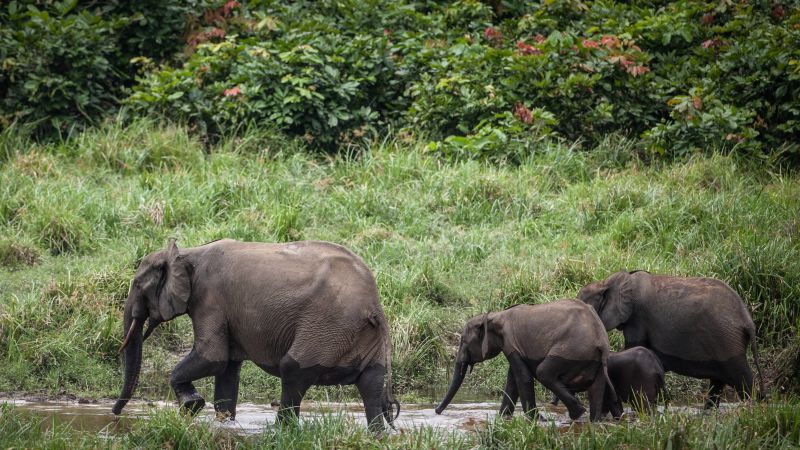
Your guitar may depend on elephant – When you strum a Taylor guitar, you might not realize the instrument’s creation is tied to the survival of a rare African forest elephant. A nine-year study by UCLA’s Congo Basin Institute (CBI) has revealed that the fate of these majestic creatures directly impacts the future of the ebony trees used in guitar craftsmanship. As the population of African forest elephants has plummeted by 80% over the past three decades, their role in sustaining ebony forests has become increasingly critical—and their absence could mean the end of a cherished musical tradition.
Elephants as Unseen Seed Distributors
Camera traps and dung analysis have uncovered a surprising ecological truth: elephants are essential to the regeneration of ebony trees. These animals consume the fruit of the trees, transport seeds across vast distances, and excrete them into the forest floor, ensuring new growth. This process not only expands the tree’s range but also reduces the risk of inbreeding. Moreover, the seeds encased in dung are less likely to be eaten by rodents, giving them a better chance to germinate. The research found that areas without elephants had 68% fewer saplings, underscoring the elephants’ irreplaceable role in maintaining the ecosystem.
For decades, the ebony tree’s dark, dense wood has been prized for its use in guitar components like bridges and fretboards. Its smooth, mirror-like finish has made it a favorite among luthiers, including California’s Taylor Guitars. Founded in 1974 by Bob Taylor and Kurt Listug, the company has become a global leader, with artists such as Taylor Swift and Jason Mraz relying on its instruments. Yet, as the study shows, the guitar maker’s success now hinges on the elephants’ survival.
From Tea Leaves to Elephant Dung: A Conservation Revelation
Bob Taylor, co-owner of the Crelicam ebony mill in Yaoundé, Cameroon, has been deeply concerned about the dwindling supply of ebony. The commercial demand for the wood has led to widespread deforestation, threatening the species’ existence. “In most places where ebony had been harvested, the supply had run out,” said Matthew LeBreton, director of the Crelicam Mill, in an interview with CNN. This realization prompted Taylor to fund research under the motto: invest in the inevitable.
The research, led by the CBI, has reshaped the understanding of ebony’s ecological role. Initially, scientists assumed the seeds could be dispersed by various animals, but the study demonstrated that elephants are the sole effective carriers. “If the elephant disappears, we should expect a loss, an extinction, of the ebony species,” warned Eric Onguene, a CBI research assistant, to CNN. His words highlight the urgency of preserving these elephants to safeguard the future of a material that has shaped musical history.
A Global Effort to Save a Local Resource
What began as a simple investigation into ebony seed dispersal has evolved into a broader initiative. Known as the Ebony Project, it is a collaborative effort involving businesses, local communities, and scientists. The project aims to ensure the long-term survival of the tree by engaging Indigenous Baka communities in the Congo Basin. “You must involve the local population and show them how their actions can protect the ecosystem,” explained Zac Tchoundjeu, a CBI researcher, to CNN. This approach emphasizes sustainability through community participation rather than top-down conservation measures.
The connection between the elephant and the ebony tree is not just ecological but also economic. The decline in elephant numbers has accelerated the depletion of ebony, making it a finite resource. Taylor Guitars’ investment in the study reflects a growing awareness that without elephants, the supply of this wood could vanish entirely. “You wake up one day and go, ‘Uh oh. This is not going to last forever,’” Taylor admitted to CNN. “I hate to throw the word sustainable around, but we could say, this is not sustainable: we will run out. So we have to do something… It’s inevitable that we’re going to run out of trees, so I’m going to invest in planting trees.”
The Ebony Project now serves as a model for how industries can align with conservation efforts. By distributing seeds to local communities, the initiative seeks to foster a sense of ownership and responsibility. The Baka people, who have lived in harmony with the forest for generations, are being empowered to protect the trees that sustain both their culture and the guitar industry. This partnership not only addresses the immediate threat to ebony but also highlights the interconnectedness of human and natural systems.
A Musical Legacy at Risk
For Taylor Guitars, the implications of the study are clear. The company’s global success depends on the availability of ebony, which is now under threat from habitat loss and the illegal ivory trade. The IUCN has classified African forest elephants as nearing extinction, a crisis that could spell disaster for the wood they help preserve. “The results are quite frightening,” Onguene told CNN. “We thought seeds could be dispersed by many animals, but the elephant’s role is unique. Without them, the ebony trees might not survive.”
This revelation has forced the guitar maker to rethink its strategies. While the company continues to produce iconic instruments, it is also investing in reforestation and sustainable practices. The Ebony Project’s success could determine whether the musical legacy of ebony remains intact or fades into history. As the CBI’s research shows, the survival of these trees is not just a matter of ecological balance—it’s a question of preserving the very materials that have defined musical instruments for centuries.
Experts emphasize that the elephants’ decline is a symptom of broader environmental challenges. The illegal ivory trade, driven by demand in countries like China and the United States, has contributed significantly to their dwindling numbers. Meanwhile, deforestation for timber and agriculture has destroyed their habitats. The CBI’s work underscores the need for integrated solutions that address both the ivory trade and the loss of forest ecosystems. “We need to protect elephants and trees simultaneously,” Tchoundjeu said. “They are not separate issues—they are part of the same system.”
As the study progresses, its findings could influence conservation policies and industry practices worldwide. The collaboration between Taylor Guitars and local communities offers a blueprint for how businesses can contribute to ecological preservation. By investing in the inevitable, the company is not only securing its future but also ensuring that the deep-rooted connection between elephants and ebony endures. The fate of the guitar and the fate of the forest elephant may seem worlds apart, but in the Congo Basin, they are inextricably linked—a harmony of nature and human innovation that must be preserved for generations to come.





