
Trump hints at wind down of war as US prepares to send more troops to Gulf
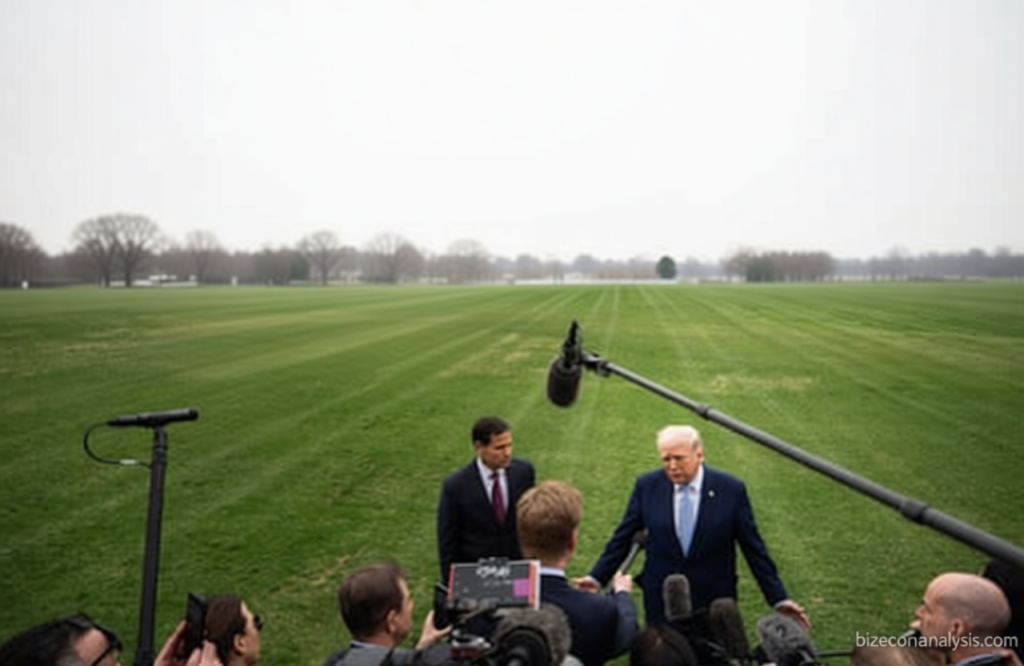
Trump Hints at Winding Down Middle East Conflict Amid Gulf Troop Deployment
As the United States ramps up its military presence in the Gulf, President Donald Trump has suggested the possibility of reducing operations in the Middle East. This comes despite reports that Washington is set to deploy three additional amphibious assault ships and around 2,500 marines to the region. The decision follows heightened tensions after Iran issued a warning to target global tourist destinations and continued its campaign of airstrikes and missile attacks.
Trump’s remarks, shared on Friday, included a dual message about the potential end of the ongoing conflict. Initially, he dismissed the idea of a ceasefire, emphasizing Washington’s dominance. “I don’t want to do a ceasefire. You know you don’t do a ceasefire when you’re literally obliterating the other side,” he stated during a White House press briefing. Yet, later that evening, he tweeted on his Truth Social platform that the U.S. was considering “winding down” its military efforts in the area.
“We are getting very close to meeting our objectives as we consider winding down our great Military efforts in the Middle East with respect to the Terrorist Regime of Iran,” he wrote.
Plans to occupy or block the strategically vital Kharg Island have emerged, even as earlier statements hinted at a reluctance to deploy ground troops. The island, just 8 square miles in size, serves as a critical hub for Iranian oil exports and is linked to offshore drilling fields via pipelines. Control of Kharg Island could disrupt Iran’s oil supply, a lifeline for its economy. However, such an operation would expose American forces to Iranian drone and rocket attacks in a confined geographic space.
The Pentagon has already dispatched the 31st Marine Expeditionary Unit, a force of approximately 2,200 marines, to the region. Officials noted that the USS Boxer, carrying the unit, is set to depart three weeks earlier than planned. The exact purpose of these deployments remains unclear, as military statements continue to shift. A White House representative confirmed, “As President Trump said, he has no plans to send troops anywhere – but he wisely does not broadcast his military strategy to the media, and he retains all options as commander-in-chief.”
Meanwhile, the war shows no signs of easing. On Friday, an Iranian drone strike damaged a Kuwaiti refinery, while the U.S. and Israel launched coordinated attacks on 16 Iranian cargo ships in Gulf ports. A local official from Hormozgan province reported, “Following the American-Zionist air attack, at least 16 cargo vessels belonging to citizens of the towns of Bandar Lengeh and Bandar Kong were completely burned in the fire.”
Further complicating the situation, Israeli strikes on Syrian government targets occurred shortly after U.S. officials anonymously proposed using Syrian forces to disarm Hezbollah in eastern Lebanon. The escalating violence across the region, from Tel Aviv to Dubai and the Caspian Sea, has driven oil and gas prices higher, with warnings of further economic strain.
