
Iran names slain supreme leader’s son as successor, in a defiant message to Trump
Iran names slain supreme leader’s son as successor, in a defiant message to Trump
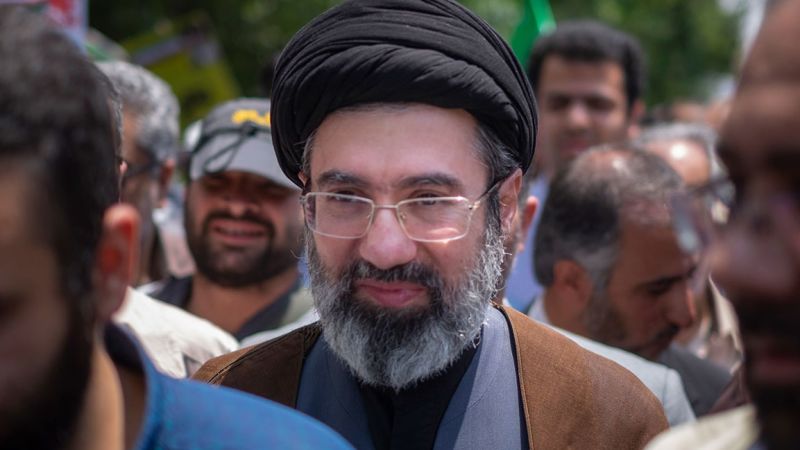
After nearly four decades of leadership, the Islamic Republic’s power has shifted to Mojtaba Khamenei, the son of the late Supreme Leader Ali Khamenei, who was killed in a US-Israeli airstrike. This move has sparked discussions about the consolidation of authority within Iran’s hardline factions, despite the 1979 revolution’s promise to end dynastic rule.
A Defiant Political Statement
The 88-member Assembly of Experts, tasked with selecting Iran’s next supreme leader, made the appointment that many Iranians had feared. By choosing Mojtaba, the regime reaffirmed its commitment to a leadership model rooted in familial succession, contradicting the ideals of the 1979 revolution. The decision was framed as a clear signal of resistance against American influence, particularly following Donald Trump’s label of the young leader as “unacceptable.”
“Trump’s designation of Mojtaba Khamenei as ‘unacceptable’ underscores the tension between U.S. pressures and Iran’s traditional power structures,” analysts noted.
Legacy and Image-Making
State media quickly launched a campaign to legitimize the new leader, releasing a four-minute documentary that highlighted his early life, seminary education, and service in the Iran-Iraq war. The film aimed to counter skepticism by emphasizing his frontline experience during the conflict, portraying him as a worthy heir to his father’s legacy. Despite his lack of formal recognition as a Mujtahid, the documentary stressed his political and religious preparedness.
Even before the news reached the public, image-building efforts began. Mojtaba’s rise to the top post, coupled with his association with the Revolutionary Guards, positioned him as a central figure in the country’s authoritarian framework. His marriage to Zahra, daughter of Gholam Haddad Adel, a former parliament speaker and Khamenei ally, further solidified his ties to the regime’s inner circle.
Behind the Scenes Influence
Though Mojtaba maintained a low profile for years, his role in Iran’s political machinery was evident. He leveraged his connections with the Revolutionary Guards and economic networks to support hardline policies. By 2009, his impact was clear during protests against Mahmoud Ahmadinejad’s re-election, where demonstrators targeted him with chants like “Mojtaba may you die so you don’t assume the leadership role.”
His behind-the-scenes influence grew as he worked in his father’s office, gradually positioning himself as a future leader. Social media in 2021 revealed supporters promoting him as a potential successor, reflecting his strategic role within the regime. Critics argue that his backing of Ahmadinejad’s 2005 campaign solidified his alignment with conservative interests.
Global Ambitions and Sanctions
By 2019, Mojtaba was sanctioned by the U.S. Treasury for his role in advancing his father’s “destabilizing regional ambitions and oppressive domestic objectives.” This move highlighted his connection to the Revolutionary Guards, a key force in Iran’s geopolitical strategy. The recent appointment, however, signals a broader trend: the regime’s insistence on maintaining its ideological and military core despite external pressures.
With the country under a communications blackout, state media relied on AI-generated clips to fill gaps in Mojtaba’s public presence. This tactic underscores the regime’s determination to shape narratives and ensure his legitimacy as the third Supreme Leader, reinforcing its grip on power.
