
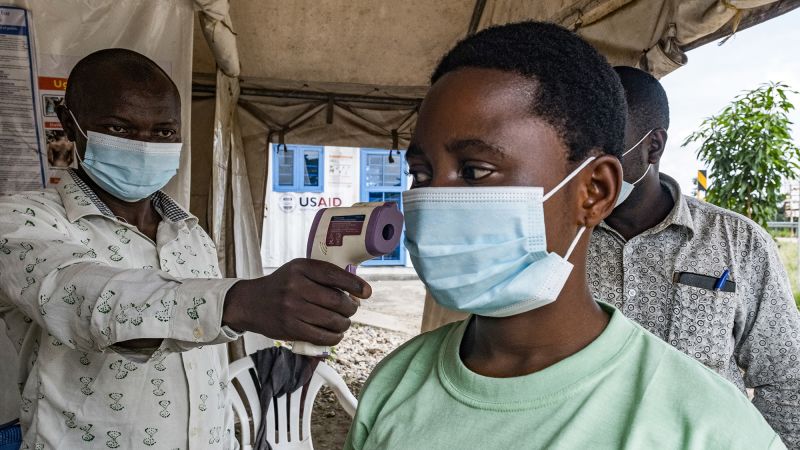
WHO Chief Warns of Ebola Outbreak Escalation Amid Rising Cases
WHO chief raises alarm over scale – Dr. Tedros Adhanom Ghebreyesus, the Director-General of the World Health Organization, has sounded the alarm on Tuesday about the accelerating spread of the Ebola outbreak in the Democratic Republic of Congo (DRC) and Uganda. With the death toll increasing, he emphasized the unprecedented nature of the crisis, stating that the situation demands urgent attention. Local authorities in both countries have also raised concerns, highlighting the threat posed by the growing number of infections and the difficulty in containing the virus in densely populated regions.
Outbreak Dynamics and Regional Impact
The outbreak is primarily fueled by the Bundibugyo virus, a strain within the Orthoebolaviruses family, which is responsible for Ebola disease. Dr. Tedros noted that the virus is predominantly affecting the remote northeastern province of Ituri in the DRC, where healthcare infrastructure remains fragile. This area, characterized by its isolated communities and limited access to medical resources, has become a hotspot for transmission. Despite efforts to curb the spread, the situation has worsened, prompting the WHO to take decisive action.
“I am deeply concerned about the scale of the outbreak and the rapid spread,” Dr. Tedros said in a statement. “The numbers are climbing faster than expected, and we need to act swiftly to prevent this from becoming a larger regional crisis.”
Meanwhile, Uganda has reported its own cases, with two confirmed instances in the capital, Kampala. This development underscores the virus’s ability to cross borders, raising fears of a broader epidemic. The African Centers for Disease Control and Prevention (Africa CDC) has been closely monitoring the situation, expressing caution about the implications of such a rapid escalation.
Global Response and Travel Restrictions
On Monday, the United States implemented a public health measure to restrict entry from the DRC’s affected regions, following the confirmation of a case among its citizens. This decision was met with criticism from Africa CDC, which argued that broad travel bans could hinder critical movement for healthcare workers and disrupt economic activities. “Travel restrictions, while well-intentioned, may impede the flow of supplies and personnel needed to combat the outbreak,” Africa CDC officials stated.
Dr. Tedros acknowledged the gravity of the situation, noting that the current rate of new cases and fatalities suggests the outbreak could soon surpass previous records. As of Tuesday, the DRC’s health minister, Dr. Samuel Roger Kamba, reported 131 confirmed deaths, with over 500 cases suspected. The WHO confirmed 30 cases in Ituri province, which has been at the epicenter of the crisis. These figures highlight the strain on local health systems and the need for increased international support.
International Emergency Declaration
On Sunday, the WHO declared the outbreak a “public health emergency of international concern,” a classification reserved for threats that could spread globally. The decision followed a series of alarming trends, including a high positivity rate and a surge in cases. “The data indicates a potential for a significantly larger outbreak, which would have far-reaching consequences,” Dr. Tedros explained during a press briefing.
This marks the first time a WHO Director-General has declared an emergency of this magnitude without convening an emergency committee first. “I did not make this call lightly,” he added, “but the evidence points to a scenario where containment efforts alone may not be enough.” The emergency status is expected to trigger a coordinated response from global health organizations and member states, ensuring resources and expertise are mobilized promptly.
Transmission and Treatment Challenges
According to Africa CDC, Ebola is transmitted through direct contact with the bodily fluids of infected individuals, such as blood or saliva. The virus can also spread via contaminated surfaces or objects, making it difficult to control in areas with limited hygiene facilities. Dr. Tedros stressed the importance of rapid response measures, including quarantine protocols and community education, to slow the transmission rate.
Despite advancements in medical science, there are currently no approved treatments or vaccines specifically targeting the Bundibugyo virus. This lack of targeted interventions has forced health authorities to rely on general Ebola protocols, which may not be as effective for this strain. “The absence of a dedicated vaccine means we must be even more vigilant in our containment strategies,” said a WHO spokesperson during a recent update.
Regional Collaboration and Future Outlook
Dr. Tedros highlighted the critical role of regional collaboration in mitigating the outbreak’s impact. “Uganda’s cases are a clear warning that this virus is not confined to the DRC alone,” he remarked. “We must strengthen our partnerships with neighboring countries to ensure a unified approach.” This includes sharing diagnostic resources, coordinating vaccination drives, and enhancing surveillance systems.
The DRC government has been working alongside international partners to expand treatment centers and improve outreach in affected communities. However, challenges persist, including political instability, limited funding, and the virus’s ability to spread through both urban and rural populations. “Every confirmed case in Ituri brings us closer to a critical threshold,” said Dr. Kamba, the DRC’s health minister. “We are doing our best, but more support is needed to prevent further loss of life.”
As the situation evolves, experts warn that the outbreak could have severe implications for both public health and economic stability. The WHO’s emergency declaration serves as a catalyst for increased funding and international cooperation, but time is of the essence. “If we don’t act now, the numbers could skyrocket,” Dr. Tedros said. “This is not just a local issue—it’s a global challenge.”
Meanwhile, the African CDC continues to monitor the outbreak closely, urging countries to remain proactive. “The Bundibugyo virus is a reminder of how quickly Ebola can spread when conditions are favorable,” a CDC representative noted. “We must invest in preparedness to avoid a repeat of past crises.” With the outbreak expanding beyond the DRC into Uganda, the stakes have never been higher, and the world is watching closely for signs of containment or further escalation.
As the death toll rises and the number of suspected cases increases, the international community faces a difficult choice: to implement strict measures that may disrupt travel and trade, or to invest in long-term strategies that address the root causes of the outbreak. The WHO’s emergency status is a clear signal that the situation requires immediate attention. “We are at a pivotal moment,” Dr. Tedros concluded. “The actions we take today will determine the trajectory of this outbreak for months to come.”
With the outbreak intensifying, the need for a multi-faceted response has never been more pressing. From enhancing local healthcare capacity to deploying global resources, every step must be taken with urgency. The path forward will likely involve a combination of containment efforts, public health education, and international aid. As the virus continues to spread, the world will be tested in its ability to respond quickly and effectively to this evolving crisis.





