
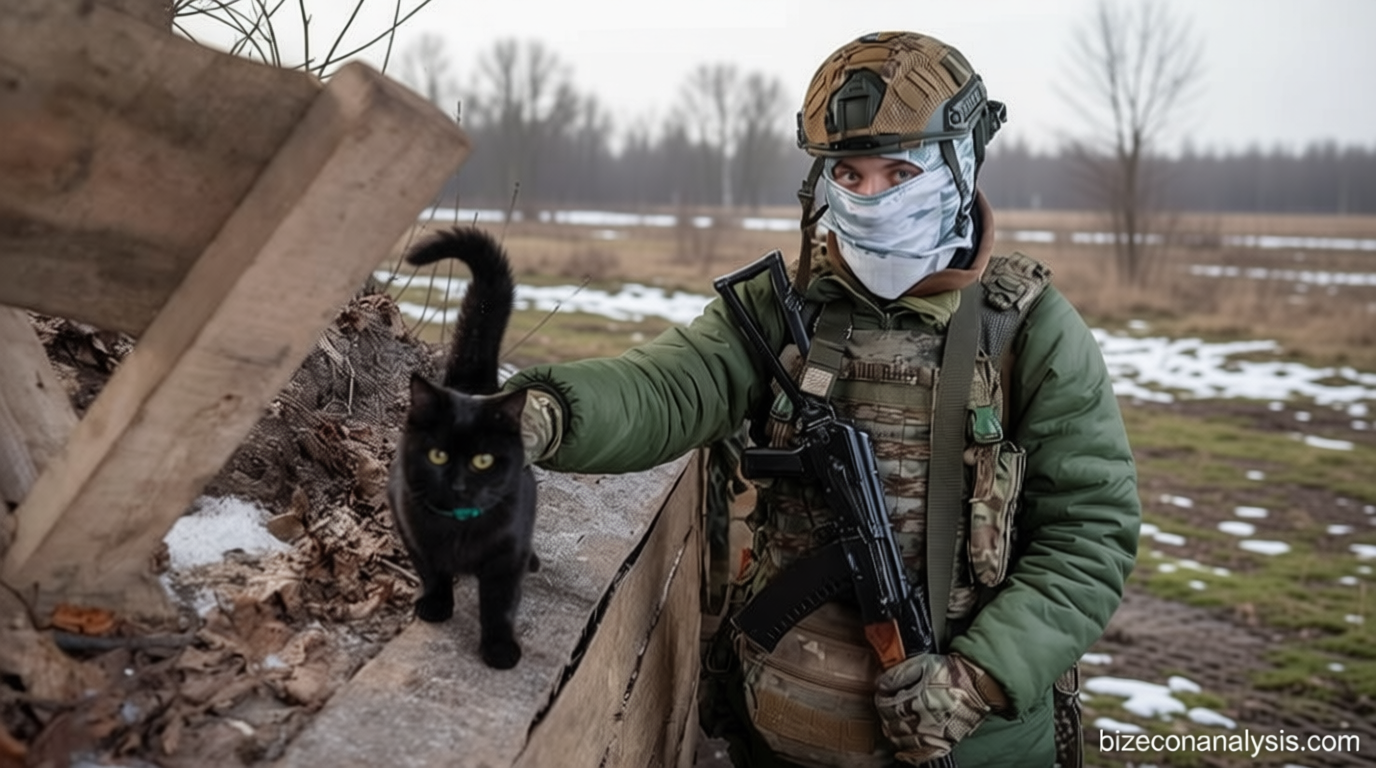
Meet the Cat and Dog Rescued by a Drone from the Ukrainian Frontline
Earlier this month, a Ukrainian military unit used an unmanned aerial vehicle to save two pets from the heart of active combat zones. The animals, named Barsik and Zagybluk, had become familiar fixtures in the brigade’s occupied territory before being trapped in a frontline location. With danger too great for humans to approach, the soldiers devised a daring plan to transport them safely using drone technology.
“The guys put them in special breathable pouches, carefully tied them to a drone, and evacuated them,” said Nadiya Zamryga, the brigade’s press officer, during a phone interview with CNN. She highlighted the precision required of the drone operator, who navigated the pair for about 10 kilometers (6.2 miles) before executing a smooth landing.
Barsik, the cat, was eventually reunited with his “cat dad,” a soldier who had sustained injuries during the conflict and is now recovering. The reunion was a heartwarming conclusion to the operation, which demonstrated the deep bond between Ukrainian troops and their animal companions. Meanwhile, Zagybluk, the dog, remains with the unit at a rear base, where he continues to thrive.
Ukrainian soldiers often joke that joining the military inevitably transforms one into a cat enthusiast. Felines are frequently spotted in trenches, checkpoints, and destroyed homes, offering comfort and warmth to soldiers in exchange for food and affection. Even the most resilient frontline creatures can face life-threatening situations, as seen in this remarkable rescue.
A War of Wounds and Wildlife
As the conflict enters its fifth year, the toll on both humans and animals grows increasingly severe. Inga Sakada, director of operations at UA Animals, Ukraine’s largest animal rights organization, shared the group’s efforts in rescuing thousands of creatures from war-torn regions. “Twice a month, our vets travel to the frontline zone and work non-stop, sometimes from 7 a.m. until 10 p.m., treating, vaccinating, and neutering animals brought to us,” she explained.
“In peak periods, we can receive around a hundred requests a day, and unfortunately, we cannot cope with them all,” Sakada noted. She emphasized the challenges of meeting demand, including a shortage of volunteers, shelters, and financial resources.
Stories of animal loss underscore the harsh realities of war. In September, the Ukrainian Equestrian Federation reported that a Russian drone strike had destroyed a stable, killing several prized racehorses. A month later, a fire at a Kharkiv farm claimed the lives of 13,000 pigs. Recently, officials warned that mines left behind by retreating Russian forces are now harming wildlife in the Chernobyl exclusion zone, including Przewalski’s horse.
UA Animals has evacuated over 10,000 animals since the full-scale invasion began, ranging from cats and dogs to tigers, lions, camels, and even bees. “We rescued 13 beehives from a newly liberated village in eastern Ukraine and transported them to Lviv,” Sakada said, highlighting the diverse species affected by the conflict.





