
Guns on the television and in Iran’s streets as Trump renews war threats
Guns on the television and in Iran – As night descends over Tehran, the city’s vast capital, and the Alborz Mountains’ snowy ridges vanish into the dark, Iranians have been gathering in public spaces for state-organized demonstrations designed to rally citizens against U.S. interests. These events, often held near Tajrish Square—a affluent district in the city—feature the rhythmic repetition of “Death to America,” echoing through crowds waving Iranian flags. Amid the fervor, street vendors sell tea and souvenirs, including baseball caps and patches emblazoned with national symbols, to those participating in the fervent displays of patriotism. One young woman, Tiana, wearing glasses that mirror the colors of the Iranian flag, spoke above the din of chants. “I am fully prepared to give my life for my country and my people,” she said. “Every citizen, every soldier, and every leader we have is equally ready to fight with unwavering determination,” she added, dismissing Trump’s recent social media warnings of renewed military aggression.
Trump’s War Threats and the Escalating Tensions
On Sunday, U.S. President Donald Trump posted a message on his Truth Social platform, declaring, “For Iran, the clock is ticking, and they better get moving, fast, or there won’t be anything left of them.” This statement heightened the already volatile atmosphere, as stalled peace negotiations and a fragile ceasefire continued to erode trust between the two nations. At a nearby kiosk, an elderly man carried a handcrafted sign written in Farsi, offering to translate its message. “Nuclear and missile technology is as vital as our borders,” it read, emphasizing Iran’s resolve to protect its strategic assets. “We need nuclear power and clean energy, not a bomb,” he explained, highlighting the government’s refusal to abandon its nuclear program as a key point of contention. “Trump knows we don’t have a bomb, yet he attacks us anyway,” he said, capturing the frustration of many Iranians.
Public Gun Kiosks and Preparing for Conflict
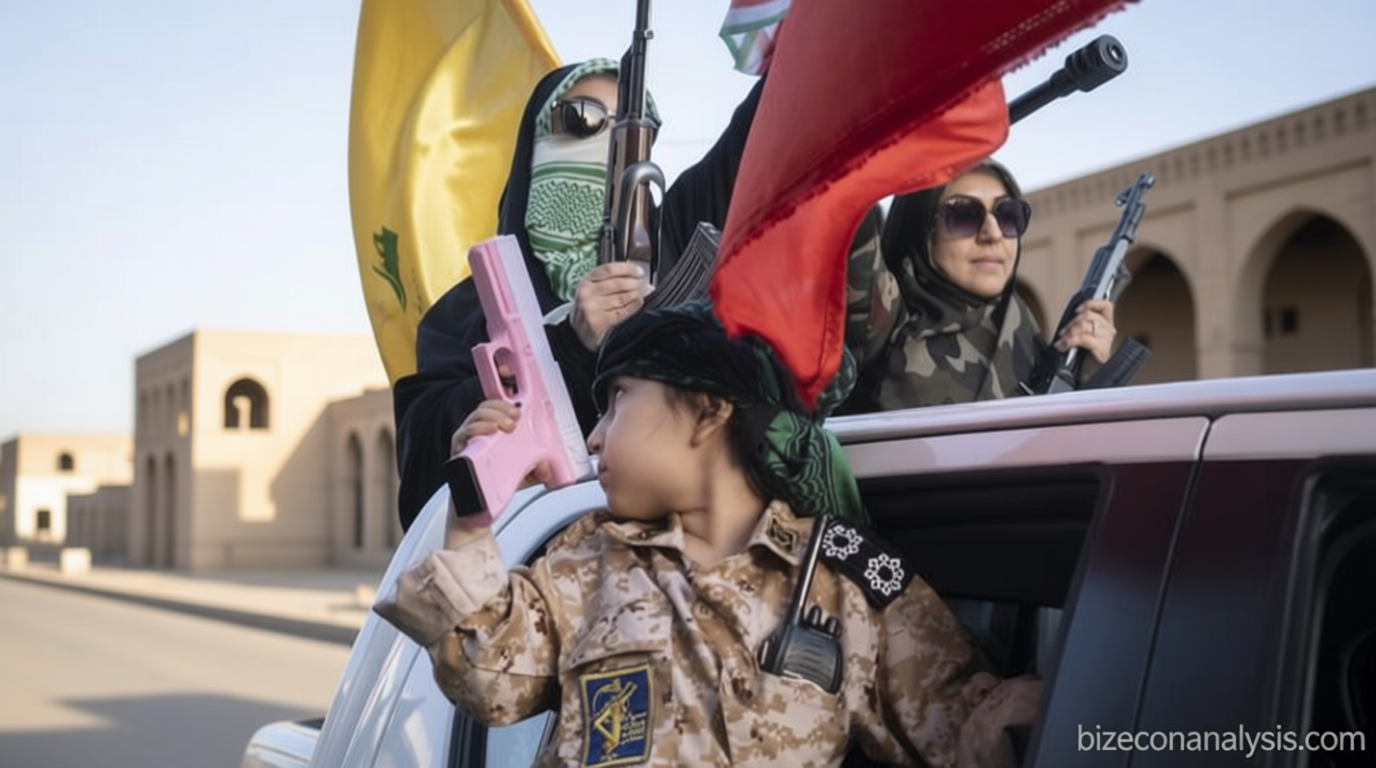
Recent days have seen a dramatic shift in the streets of Iran, with the emergence of public gun kiosks offering basic firearm instruction to civilians. This development signals the growing readiness of the government to equip its populace for potential conflict. In Vanak Square, a woman clad in a black chador practiced handling an AK-47 assault rifle, guided by a masked member of the Islamic Revolutionary Guard Corps. Nearby, a small child played with an unloaded Kalashnikov, pointing the weapon skyward before triggering it and returning it to her instructor with a grin. The sight of such scenes has become a common backdrop to the nightly rallies, underscoring the militarization of everyday life.
State television has also joined the chorus of nationalist sentiment, broadcasting programs where hosts wield assault rifles. On the Ofogh channel, male anchor Hossein Hosseini demonstrated his expertise by firing a rifle into the studio ceiling during a live broadcast. “They sent me a weapon from Vanak Square so that I too, like all of you, can learn how to use it,” he announced, echoing the message of the kiosks. Similarly, female presenter Mobina Nasiri held an assault rifle while addressing viewers, emphasizing the government’s push to unify the population under a shared sense of urgency. These visual displays of armed readiness aim to reinforce the idea that Iran is prepared to defend itself at any cost.
Amidst the Fervor, Diverging Opinions Emerge
Not all Iranians share the same fervor for conflict. Just steps away from the rally in Tajrish Square, in a serene park near the Cinema Museum of Iran, locals relaxed on benches and sipped tea, while couples strolled arm in arm. “No to war,” said a young man passing by, his voice a quiet counterpoint to the raucous chants. A university professor, who requested anonymity, sat with her husband, expressing a desire for peace. “We just want to live in a normal country where our children can have a future,” she whispered in English. “We want peace,” a young woman added, hinting at the deep divide in Iranian society between those advocating for war and those seeking stability.
The rising tension within the Islamic Republic has made it increasingly difficult for moderate voices to be heard. As fears of an imminent U.S.-Israeli strike grow, a sense of inevitability has settled over many Iranians. Fatima, who spent her childhood in London and Dubai, voiced her concerns: “We know this war isn’t over. We know Trump isn’t really going to negotiate. He’s just going to say, ‘You do what I tell you or I’m going to kill you.’” Her words reflect the widespread belief that diplomacy is secondary to force, with the government framing the conflict as a necessary response to U.S. aggression.
These nightly gatherings, referred to as “night-gatherings,” have persisted for nearly three months, since the war’s outbreak. They serve as a constant reminder of the deepening animosity toward the United States and the determination of the Iranian leadership to mobilize public support. Yet, the presence of gun kiosks and televised demonstrations suggests that the government is not only rallying people but also preparing them for the possibility of renewed hostilities. The message is clear: Iran is ready to fight, and its people are being trained to be part of that effort.
While the rallies and public displays of arms reflect a unified front, the diversity of opinion remains evident. In the same city where soldiers practice with firearms, citizens engage in quiet conversations about the cost of war. The juxtaposition of these scenes highlights the complex emotional landscape of Iran—a nation caught between its aspirations for peace and the pressures of political and military escalation. As the clock ticks toward potential conflict, the streets and screens of Iran continue to mirror the nation’s resolve, even as some voices call for a different path.
CNN’s Alex Platt contributed to this report. EDITOR’S NOTE: CNN operates in Iran with the permission of the government.





