
Managed IT Services for Growing Businesses Explained

Growing companies often reach a point where technology becomes both a growth driver and a bottleneck. Systems become more complex, security risks increase, and downtime becomes more expensive. Managed IT services for growing businesses provide a structured solution by outsourcing IT management to specialists who handle infrastructure, security, and support proactively. Instead of reacting to problems, companies operate with stable systems designed to scale alongside expansion.
What Are Managed IT Services?
Managed IT services refer to the ongoing outsourcing of IT operations to a third-party provider known as a Managed Service Provider (MSP). These providers monitor, maintain, and optimize a company’s technology environment under a subscription-based model. Services often include network management, cloud support, cybersecurity, help desk services, and data backup.
For growing businesses, this model replaces fragmented, ad-hoc IT support with structured oversight. Rather than hiring a full internal IT department early on, companies gain access to a team of specialists. This structure provides expertise across multiple domains without the cost of building an in-house team from scratch.
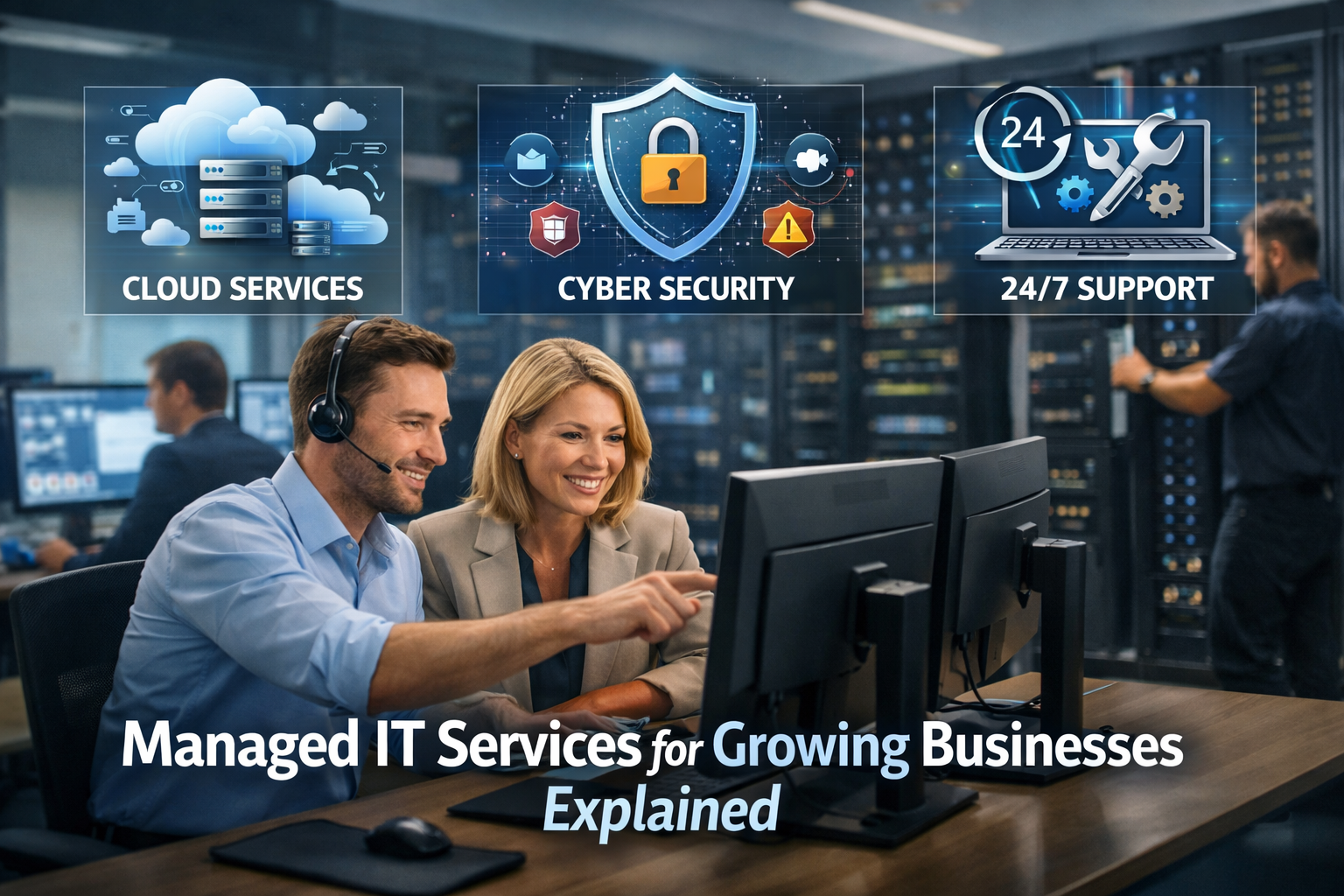
The defining feature of managed IT services for growing businesses is proactive management. Systems are monitored 24/7, updates are scheduled regularly, and risks are identified before they cause disruption. This reduces downtime and protects operational continuity.
Why Growing Businesses Need Structured IT Support
As businesses expand, their technology requirements increase in complexity. More employees mean more devices, user accounts, and access permissions. Expanding operations often require cloud platforms, collaboration tools, customer databases, and cybersecurity safeguards.
Without structured IT management, growth creates operational risk. Slow systems, data breaches, and unexpected outages can damage revenue and reputation. Managed IT services for growing businesses help ensure infrastructure scales in a controlled and secure way.
Security is a primary concern during growth. Cyberattacks target small and mid-sized companies because they often lack advanced protection. Managed service providers implement firewalls, endpoint protection, multi-factor authentication, and compliance measures that reduce exposure.
Financial predictability is another key factor. Growing companies need stable cost structures. Managed services typically operate on a fixed monthly fee, replacing unpredictable emergency repair costs with planned investment.
Core Services Included in Managed IT Solutions
Managed IT providers typically deliver a broad range of technical services under a single agreement. These services are designed to maintain operational stability while supporting long-term growth.
Network management ensures routers, switches, and internal systems operate efficiently. Continuous monitoring helps detect performance issues before they affect employees or customers. Updates and patches are deployed systematically to maintain stability. Cybersecurity management includes threat detection, endpoint protection, intrusion prevention, and data encryption. Providers often conduct vulnerability assessments and implement security policies tailored to business needs. For growing companies, this reduces exposure during digital expansion. Cloud services and infrastructure support are increasingly central. Many growing businesses rely on cloud platforms for storage, applications, and remote work capabilities. Managed providers assist with migration, optimization, and performance monitoring to ensure smooth operations. Data backup and disaster recovery are critical safeguards. Automated backups and structured recovery plans minimize data loss during system failures or cyber incidents. This ensures business continuity even during unexpected disruptions. Help desk and user support provide employees with reliable technical assistance. Quick resolution of everyday technical issues prevents productivity loss and maintains workflow efficiency.
Strategic Benefits Beyond Technical Maintenance
The value of managed IT services for growing businesses extends beyond troubleshooting. These services support strategic growth by aligning technology with business objectives.
Scalability is a primary advantage. As companies hire new staff or expand locations, IT systems must adapt quickly. Managed providers can deploy new user accounts, expand cloud storage, and integrate new tools without delays.
Access to specialized expertise is another benefit. Growing businesses often lack internal cybersecurity analysts, cloud architects, or compliance specialists. Managed service providers bring cross-functional knowledge that supports more complex digital strategies.
Improved focus on core operations strengthens productivity. Leadership teams can concentrate on sales, marketing, and product development instead of resolving server issues. This separation increases operational efficiency and strategic clarity.
Regulatory compliance also becomes more manageable. Industries such as healthcare, finance, and e-commerce face data protection requirements. Managed providers implement documentation, monitoring, and reporting systems that help businesses remain compliant.
Cost Efficiency and Long-Term Value
Hiring an internal IT team involves salaries, training, certifications, and infrastructure investments. For a growing business, these fixed costs can strain cash flow. Managed IT services for growing businesses provide enterprise-level support at a predictable monthly rate.
The subscription model transforms IT from a reactive expense into a controlled operational investment. Instead of paying for emergency fixes, businesses invest in preventive maintenance. This reduces unexpected capital outlays caused by system failures.
Downtime reduction also contributes to financial stability. Even short outages can disrupt revenue, especially for e-commerce or service-based companies. Proactive monitoring lowers the probability of costly disruptions.
Technology lifecycle management improves long-term value. Managed providers track hardware and software lifecycles, recommending upgrades before performance declines. This structured approach prevents sudden replacement costs.
How to Evaluate a Managed IT Provider
Choosing the right provider requires structured evaluation. Growing businesses should assess technical capability, response times, and security frameworks. Service Level Agreements (SLAs) define response guarantees and accountability.
Transparency in reporting is essential. Reliable providers offer regular performance reports, security updates, and system health summaries. This ensures leadership maintains visibility into technology performance.
Scalability should be clearly addressed in the agreement. The provider must demonstrate the ability to support expansion without requiring major restructuring. Flexibility in service packages allows businesses to adjust coverage as operations evolve.
Security protocols deserve close examination. Providers should implement multi-layered protection strategies and maintain industry certifications where applicable. Data protection and privacy policies must align with regulatory requirements.
Cultural alignment and communication clarity also matter. Managed IT services operate as an extension of internal teams. Clear communication channels and defined escalation procedures support efficient collaboration.
Conclusion
Managed IT services provide growing companies with structured, proactive technology management that supports scalability, security, and operational efficiency. By replacing reactive IT support with strategic oversight, managed IT services for growing businesses reduce risk, stabilize costs, and enable sustainable expansion. For companies experiencing rapid growth, this model transforms technology from a liability into a controlled asset.
FAQ
Q: What are managed IT services for growing businesses? A: They are outsourced IT management solutions that provide proactive monitoring, maintenance, cybersecurity, and support designed to scale with business growth.
Q: How do managed IT services reduce downtime? A: Providers monitor systems continuously, apply updates proactively, and address potential issues before they disrupt operations.
Q: Are managed IT services cost-effective for small companies? A: Yes, they replace unpredictable repair costs and full-time IT salaries with a predictable monthly fee while providing broader expertise.
Q: Do managed IT services include cybersecurity protection? A: Most providers include cybersecurity measures such as firewall management, endpoint protection, threat monitoring, and data backup.
Q: Can managed IT services support remote teams? A: Yes, providers manage cloud infrastructure, secure remote access, and collaboration tools to ensure distributed teams operate securely and efficiently.
