
Depression fears drove Orie’s retirement decision
Depression fears drove Orie’s retirement decision
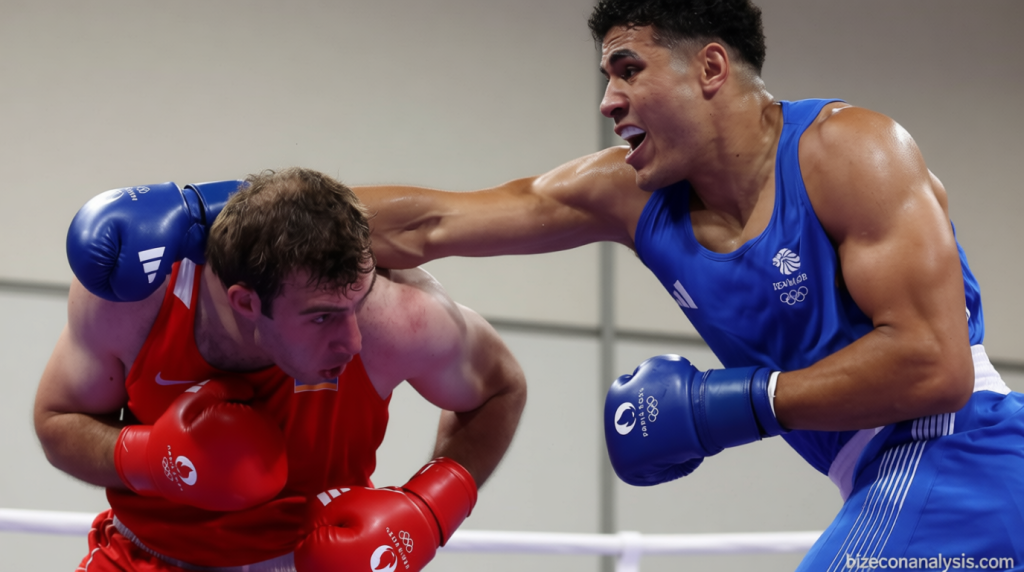
At the age of 28, Delicious Orie made the unexpected choice to retire from boxing, citing fears of becoming a world champion weighed down by sadness and despair. “I would’ve been a miserable world champion,” he shared with BBC Sport. “I fear that I would have ended up being a world champion but one that’s very depressed, sad, and miserable.” His professional debut a year prior had seemed like a stepping stone to greatness, with the world of boxing vying for his talent after his Olympic campaign. Despite falling short of a medal in the heavyweight category, Orie became a focal point in the sport, drawing interest from Frank Warren’s Queensberry and Eddie Hearn’s Matchroom, as well as offers from the WWE.
From amateur success to professional challenges
Orie’s journey in boxing began in the amateur ranks, where he stood out despite taking up the sport at 18. Originally from Russia, he relocated to the UK as a child with his family, quickly realizing the opportunities that awaited him. His ambition was clear: to become part of Team GB and secure a steady income from the sport. Over nearly a decade, he focused relentlessly on achieving Olympic glory. Yet, when that dream didn’t materialize, he felt a quiet shift within himself.
“There was no Plan B, no other path—it was just tunnel vision to win that medal,” Orie explained. “So the fact that I didn’t [win] magnified the feeling even more when my hand wasn’t raised. I gave everything to the sport, but I missed out on happiness, birthdays, weddings, funerals—everything.”
Orie’s professional debut was meant to be a straightforward introduction, but it proved to be a trial. A win against Milos Veletic was supposed to be an easy start, yet he struggled to deliver the knockout many expected. The experience left him questioning his purpose. “I had to make a choice,” he said. “Either step away when it was almost too late—when in my third or fourth year I got knocked out by some up-and-coming guy who just wanted it more than me—or hold on to the power in my hands to walk away from what I could have achieved.”
A turning point and new direction
Amid his professional career, Orie felt the burden of continuing without his full commitment. He feared how his mental state might deteriorate. “You start to find other things that could be destructive instead of constructive,” he noted. “I’ve seen it countless times in boxing, like Tyson Fury and others. I genuinely feel like that was the path I was heading down.” With this realization, he decided to retire, seeking fulfillment beyond the ring.
Orie now works as a financial advisor, aiming to inspire others to prioritize purpose over profit. He has spoken openly about his decision to leave boxing, hoping to guide young men toward meaningful lives rather than chasing wealth. Initially, he made the choice without consulting those close to him, a move he now reflects on as a mistake. “Being strong mentally doesn’t mean cutting off your emotions,” he said. “The negative side of mental health grows when it’s ignored and pushed aside. Then, before you know it, it’s too late. I think education is key.”
For Orie, the decision to retire came down to personal fulfillment. He aspires to be a role model, much like Anthony Joshua once was for him during the London 2012 Olympics. “Pushing on any further would have been me seeking validation from others externally,” he concluded. “It wouldn’t have given me the satisfaction I needed.”
