
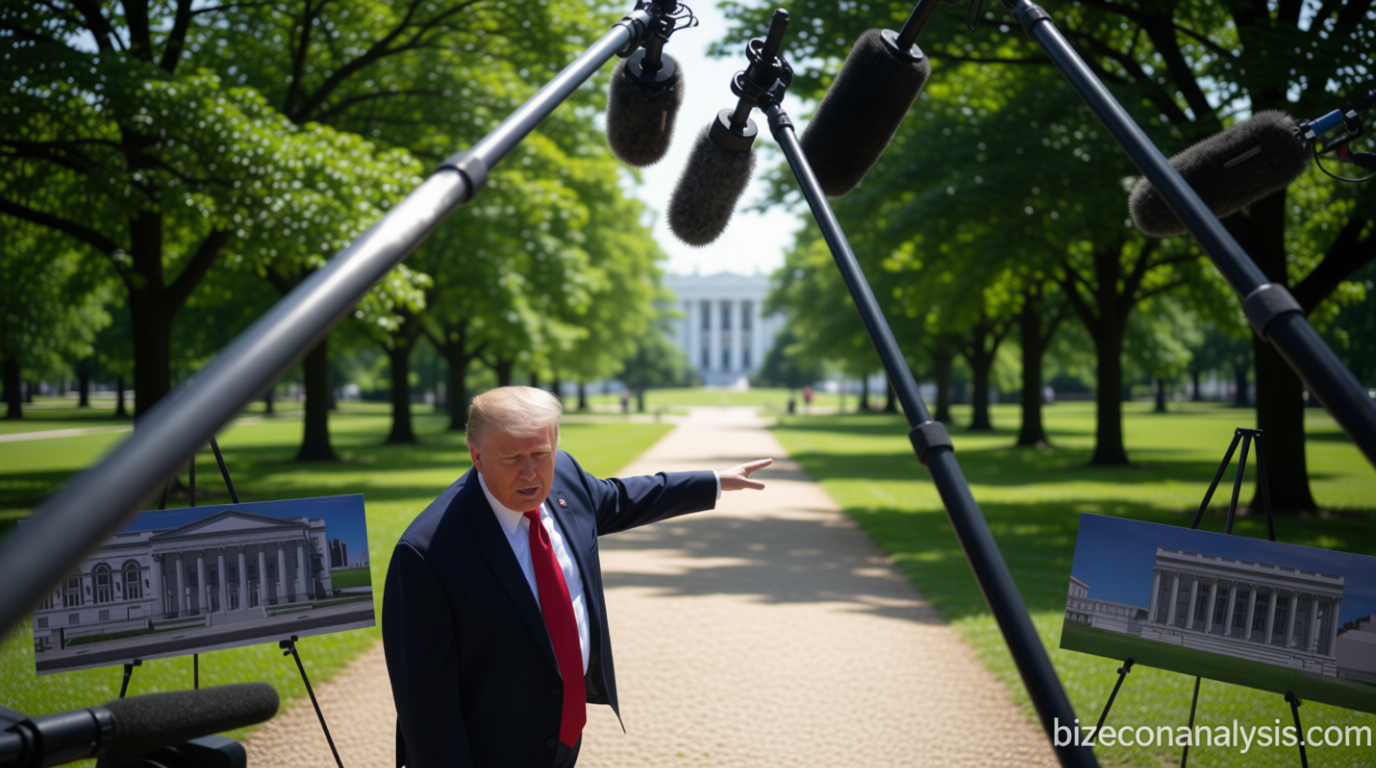
Who will Pay for Trump’s Pet Projects? Taxpayers Remain the Final Recipients
Who will pay for Trump s pet – When it comes to funding his ambitious initiatives, President Donald Trump has consistently framed them as ventures supported by private contributions and his personal wealth. Yet, tracing the financial trail reveals that the ultimate cost often falls on the public. While Trump has asserted that the White House’s expanded ballroom—designed to showcase his vision of a grand presidential space—will be funded through a mix of his own resources and donations from supporters, the reality is more complex.
The Ballroom Dilemma: A $220 Million Request
Despite Trump’s claims of self-funding, the project’s financial demands have already drawn significant attention. In a recent address at the construction site, he emphasized that the ballroom’s costs would be covered by “my money and donors’ money.” However, this assertion has been challenged by the need for additional taxpayer support. A new proposal seeks $220 million from Senate Republicans to cover the project, which would require a party-line vote. This amount exceeds the original estimated cost, raising questions about the project’s escalating expenses.
The ballooning budget, according to Trump, is attributed to requests from the military and the Secret Service. While he has defended the increased size and scope, critics argue that these justifications may not fully account for the financial strain. The issue highlights a broader pattern: Trump’s projects, though marketed as privately funded, often depend on public resources to stay afloat.
The Judgment Fund: A $1.8 Billion Promise
Another financial vehicle under scrutiny is the US Treasury’s Judgment Fund, a tool used to settle lawsuits against the government. Trump’s administration is expected to allocate nearly $1.8 billion from this fund to compensate individuals who claim they were targeted by the Justice Department. This move, part of an agreement to drop a lawsuit, has sparked debate over its fairness.
“Yet, the question all of us ask every single day is, ‘How do we make our fellow citizens more prosperous?’” Vice President JD Vance remarked, defending the fund as a way to address past grievances while supporting current initiatives. He suggested that the administration could balance aiding everyday Americans with making amends to those he described as “mistreated by the last administration.”
The fund, established in the 1950s, has historically been used for various legal settlements. Previous presidents, including Obama, tapped into it for high-profile cases, such as resolving a decades-old dispute with Iran over a failed arms deal. Trump, who later withdrew from that agreement, now appears to be leveraging the same fund for a different purpose: a war against Iran. While the administration has not detailed the full cost of this conflict, a Pentagon official noted that $29 billion has already been spent, a figure that may still be an underestimate.
From Kennedy Center to Garden of Heroes
Meanwhile, Trump’s influence extends beyond the White House. The administration has also sought to repurpose public funds for projects like the Kennedy Center rehabilitation. Congress allocated $257 million for this endeavor, which Trump has described as “fully financed.” Yet, the actual cost is still borne by taxpayers, underscoring the disconnect between his rhetoric and the financial reality.
Similar tactics are being employed for the “Garden of Heroes,” a planned monument meant to honor notable Americans with 250 life-size statues. The initiative, tied to the 250th anniversary of the Declaration of Independence, has already secured around $74 million in government funding. Critics argue that these projects, while symbolically significant, divert resources from other priorities, including essential public services.
Donors and Duress: The Hidden Costs of Influence
Trump’s fundraising efforts have also raised eyebrows. A recent report revealed that one of the donations to the ballroom project was made under duress, following a settlement with YouTube. The company had suspended Trump’s account for years, and he agreed to pay $22 million to resolve the dispute. This transaction, while framed as a private contribution, highlights how his political leverage can indirectly affect public funding.
Additionally, the White House has not disclosed the full list of donors for the ballroom, with many of them being tech companies that have previously done business with the government. This lack of transparency fuels skepticism about the extent of private support and whether taxpayers are being fairly informed about their role in financing these initiatives.
The Broader Implications: A Pattern of Reliance
As Trump’s administration continues to push for expansive projects, the reliance on taxpayer money becomes increasingly apparent. The $220 million request for the ballroom, the $1.8 billion from the Judgment Fund, and the $74 million for the Garden of Heroes all contribute to a growing financial burden. While the president has promised that these projects will be funded through private means, the scale of the spending suggests otherwise.
Democrats have pointed out that the National Endowment for the Humanities, which received millions in taxpayer appropriations, could also be used to finance the “triumphal arch” in a traffic circle near Arlington National Cemetery. This arch, once envisioned as a symbol of Trump’s legacy, now appears to be another project with public funding at its core. The administration’s strategy seems to involve a blend of private donations and government resources, ensuring that its initiatives remain financially viable regardless of the source.
Ultimately, the question of who truly pays for these projects remains a point of contention. While Trump and his allies frame them as privately funded, the reality is that taxpayers are still expected to cover significant portions. This dynamic has led to calls for greater oversight, as Congress has yet to impose clear limitations on the use of the Judgment Fund. As the financial commitments mount, the debate over the allocation of public funds continues to shape the narrative around Trump’s vision for the country’s future.





