
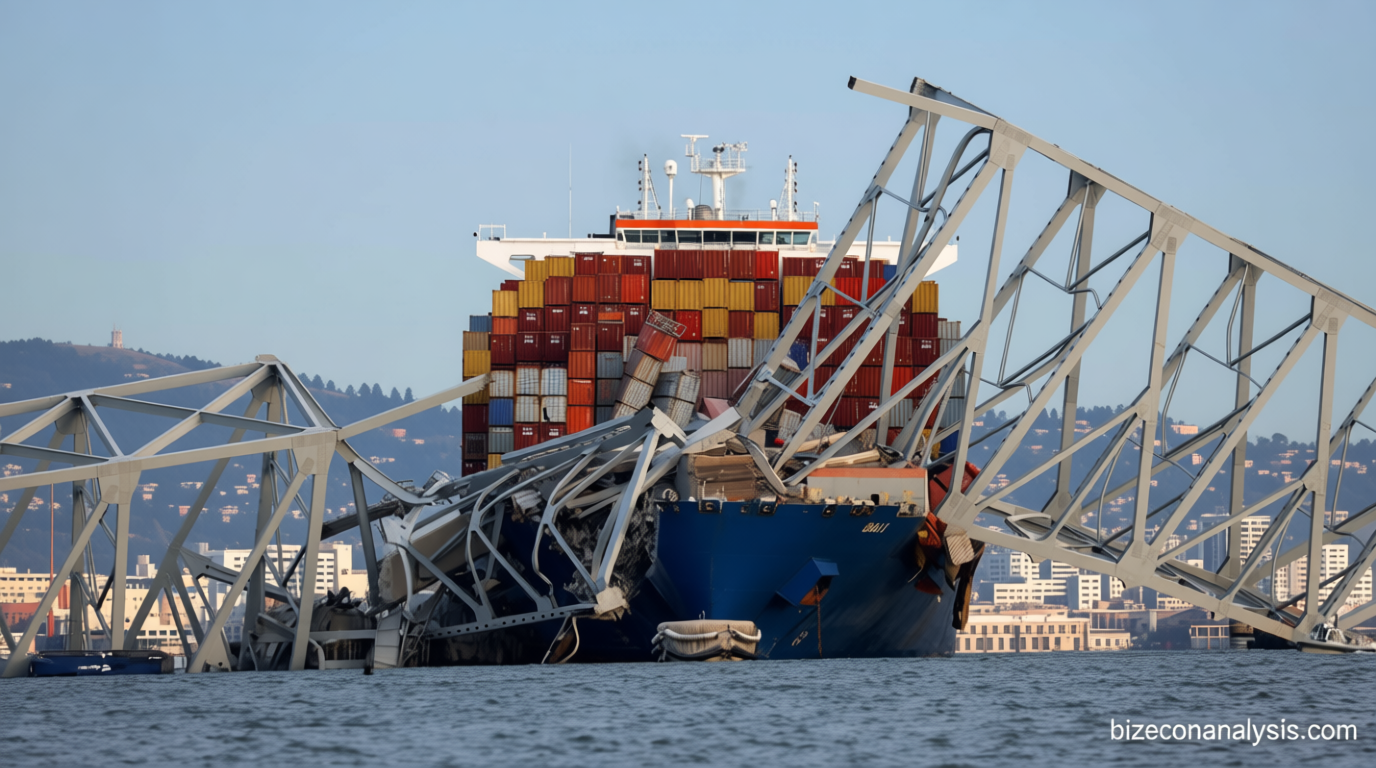
Justice Department Announces Criminal Charges in Key Bridge Collapse
Justice Department announces criminal charges in Baltimore – The U.S. Justice Department has filed criminal charges in the aftermath of the deadly Francis Scott Key Bridge collapse in Baltimore, which occurred two years ago when a container ship collided with the structure. The incident, which killed six individuals and caused significant damage to a critical port artery, has now led to formal accusations against two companies and the ship’s technical superintendent. The charges include conspiracy, willful negligence, obstruction of justice, and false statements, all tied to the failure of safety protocols that contributed to the disaster. Officials stated the probe uncovered systemic issues in how Synergy Marine and Synergy Maritime managed the vessel’s systems, leading to a misleading assessment of its readiness.
Accountability and Legal Actions
Justice Department officials have emphasized that the charges reflect a deliberate pattern of negligence. The indictment alleges that Synergy’s technical staff manipulated safety inspections and certifications to conceal flaws in the ship’s operation. “The government’s investigation revealed that Synergy’s personnel not only falsified records but also directed the creation of these documents to hide critical risks,” explained Jimmy Paul, a special agent from the FBI’s Baltimore office. The legal team is now focused on securing Nair, a 47-year-old technical officer, who is believed to be in India and is central to the obstruction of investigation claims.
The Justice Department’s announcement comes as federal agencies probe the incident’s root causes. The FBI and U.S. Coast Guard have been key in examining the ship’s operational procedures, uncovering lapses in protocol that may have contributed to the accident. Among the findings, the National Transportation Safety Board highlighted a loose wire connection as the primary cause, which led to the vessel losing propulsion during a critical moment. This oversight, coupled with the companies’ alleged misconduct, has drawn widespread attention to the need for improved maritime safety standards.
Technical Failures and Crew Response
The indictment details how the Dali’s design choices directly influenced the collapse. The ship relied on a flushing pump to deliver fuel to its generators, a system that failed to restart automatically after a power outage. This flaw left the vessel vulnerable when the pump malfunctioned, triggering a second blackout and preventing the crew from regaining control. The Justice Department claims that had the ship not used this method, the crew could have restored power and avoided the collision. Nair’s misrepresentation about the flushing pump’s role is central to the obstruction charge, underscoring the severity of his alleged actions.
“The evidence shows that Synergy’s management prioritized operational efficiency over safety, leading to a tragic outcome,” said Kelly O. Hayes, U.S. Attorney for the District of Maryland. “These charges aim to hold them accountable for the lives lost and the economic impact of the disaster.”
Following the incident, the Justice Department has prioritized transparency, with the criminal charges serving as a clear step toward holding responsible parties accountable. The legal proceedings will now test whether the companies and Nair’s actions were intentional or the result of systemic oversight. Meanwhile, the Maryland Transportation Authority is under scrutiny for not conducting a thorough structural evaluation of the bridge before the collision, raising questions about its preparedness for such a critical event.
Broader Implications and Ongoing Cases
Justice Department’s decision to pursue criminal charges marks a significant development in the broader investigation. The case has drawn comparisons to past maritime incidents, with experts noting that such negligence could have been prevented through stricter oversight and documentation. As the legal team works to secure Nair’s presence for trial, the focus remains on how his role in the vessel’s operation intersected with corporate decisions. The charges are expected to set a precedent for accountability in maritime safety practices, particularly in cases involving international companies.
With the Justice Department’s focus on the technical superintendent and the companies, the legal battle will likely unfold over several months. The indictment’s details, including the alleged falsification of safety records, provide a roadmap for the prosecution’s case. Meanwhile, the public continues to demand answers, and the Justice Department has committed to providing clarity on the matter. The collapse of the Key Bridge has not only been a personal tragedy but also a catalyst for reevaluating the safety measures in place for critical infrastructure and transportation systems.





