
Iran’s new leader has never been tested. He now faces an existential battle
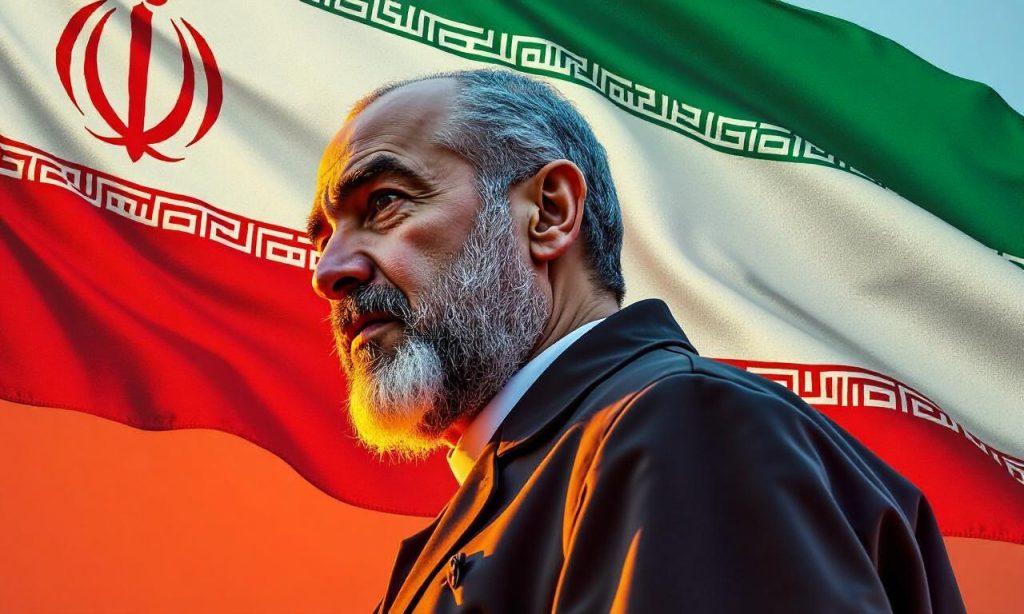
Iran’s Untested Leader Faces Existential Challenge in Theocracy’s Crucible
With the Islamic Republic confronting its most critical juncture in half a century, Mojtaba Khamenei, 56, assumes the role of supreme leader—a position now under immense pressure. His rise follows the assassination of his father, Ayatollah Ali Khamenei, which marked the beginning of a conflict that has reshaped the nation’s political landscape. Yet, the new leader’s inexperience raises questions about his ability to navigate the complex challenges ahead.
The Assembly of Experts, a council of 88 Shia Muslim clerics, has chosen Mojtaba, ensuring a continuation of his father’s legacy. Security forces have vowed unwavering support, declaring their readiness to follow him “until their last drop of blood.” State television has already begun symbolizing his authority, featuring missiles emblazoned with the message: “At your service, Seyyed Mojtaba.”
Despite this unity, tensions persist. In January, demonstrators had marched to condemn his father as a “dictator,” even calling for his death. Now, some of those same voices are echoing “Death to Mojtaba!” as they confront the prospect of a more rigid regime. For survivors of the crackdown that claimed thousands, the transition feels like a return to an era of harsh rule.
“God is greatest” — a rallying cry that once echoed through the streets in celebration, now echoes with a different intent.
Mojtaba’s leadership is deeply intertwined with the Islamic Revolutionary Guard Corps (IRGC), an institution he joined as a teenager shortly after completing high school. Before studying in Qom, the revered center of Shia Islamic scholarship, he became a key figure in the IRGC’s inner circle. This connection gives him an advantage in maintaining control over Iran’s multi-tiered security apparatus and its vast economic influence.
His father’s assassination in an Israeli attack not only elevated him to power but also personally devastated him. Mojtaba lost his mother, Mansoureh Khojasteh Bagherzadeh, his wife Zahra Haddad-Adel, and a son in the same strike. While his injuries remain unconfirmed, his absence from public view has only deepened the enigma surrounding his leadership.
“He won’t last long,” Trump declared, positioning Mojtaba as a direct challenge to his policies.
The younger Khamenei’s ascent signals a shift toward ultraconservatism, sidelining reformist voices like current President Masoud Pezeshkian. His father had previously ruled him out of succession to avoid a hereditary system reminiscent of the monarchy overthrown in 1979. Now, Mojtaba’s leadership appears to solidify a hardline approach, with the IRGC’s commanders steering the direction of the nation’s fate.
Meanwhile, the conflict has taken on a deeply personal dimension. Israel’s Defence Minister, Israel Katz, has labeled Mojtaba an “unequivocal target,” aligning with U.S. President Donald Trump’s public disdain for the new leader. Trump had previously dismissed Mojtaba as “unacceptable,” a sentiment that now echoes as the battle for Iran’s future intensifies.
