
Iran is escalating the war by placing explosive mines along a key oil route. Here are the risks.
Iran’s Strategic Move: Mines in the Strait of Hormuz Threaten Global Oil Supplies
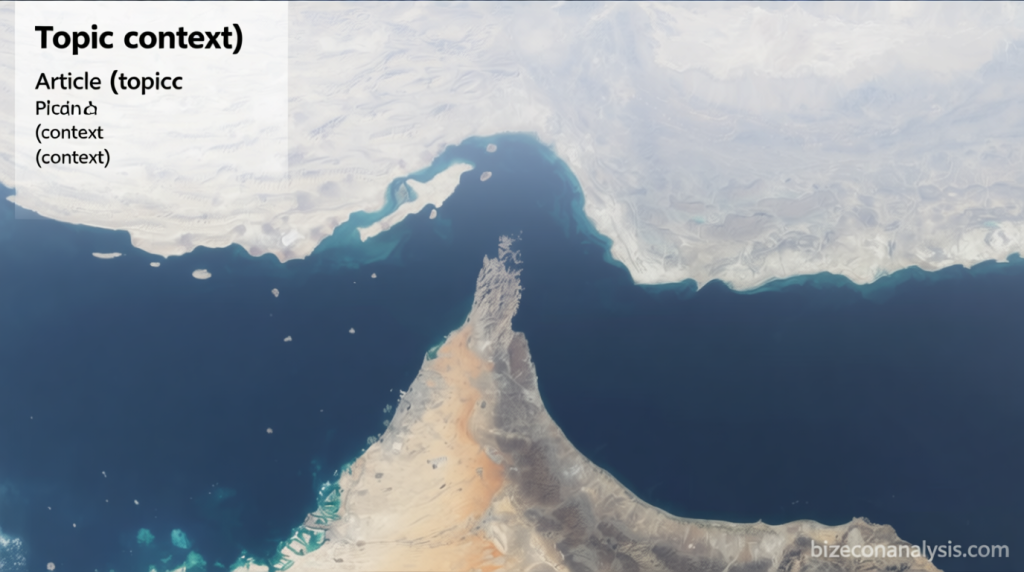
Despite being outgunned and outspent by the US and Israel, Iran holds a significant advantage through its control of the Strait of Hormuz. This vital waterway, which transports one-fifth of the world’s oil supply, has become a focal point of the escalating conflict. Recent reports indicate Tehran has expanded its operations by mining the strait, further complicating navigation and signaling a new phase in the war.
Iran’s Mine Deployment and Naval Capacity
According to two intelligence sources, Iran has recently placed several dozen mines in the strait. While the operation is not yet extensive, the country maintains a substantial fleet of minelayers and small boats, with over 80% to 90% of its vessels still operational. This contradicts claims by former US President Donald Trump that Iran possesses ‘no navy.’ The move underscores Iran’s reliance on asymmetric warfare, which can disrupt global supply chains even as it faces relentless airstrikes.
“If Iran has put out any mines in the Hormuz Strait, and we have no reports of them doing so, we want them removed, IMMEDIATELY!”
Trump expressed uncertainty about the mine deployment, warning that failure to remove them could lead to ‘consequences never before seen.’ However, he also acknowledged that removing ‘what may have been placed’ would be a ‘giant step in the right direction.’ Meanwhile, the United Kingdom Maritime Trade Operations (UKMTO) noted that ‘there is no confirmed evidence of mine deployment or detonation’ in the strait, maintaining a cautious stance on the situation.
Types of Mines and Recent Attacks
Iran’s mine arsenal includes limpet mines, which are manually attached to ship hulls by divers; moored mines, floating just below the surface and detonating on contact; and bottom mines, resting on the seabed until triggered by nearby vessels. The Islamic Revolutionary Guard Corps (IRGC), a military force with its own naval capabilities, has demonstrated its ability to deploy a ‘gauntlet’ of mines, suicide boats, and shore-based missiles, earning the strait the label ‘Death Valley’ from US officials.
On Tuesday, the IRGC attacked the Thai-flagged bulk carrier Mayuree Naree, causing an explosion in its engine room. Thai authorities reported that three of the 23 crew members on duty at the time were missing. Later that day, the Liberian-flagged Express Rome was also struck by Iranian projectiles, underscoring the ongoing threats.
US Response and Challenges in Minesweeping
US Central Command stated it had destroyed 16 minelayers and other Iranian naval ships near the strait, though it did not confirm any mines were removed. The US Navy decommissioned its last dedicated minesweeper in September, shifting reliance to littoral combat ships (LCS). Critics dub these vessels ‘Little Crappy Ships’ due to their history of technical issues.
Analysts estimate that the strait’s closure has trapped nearly 15 million barrels of crude and 4.5 million barrels of refined oil daily in the gulf. Storage tanks across the region are filling rapidly, highlighting the economic stakes. Even in peacetime, the strait’s narrow and congested waters require precision navigation, but the mines now heighten the risks, making reopening the passage more challenging.
