
WHO Director Calms Tenerife Residents Over Hantavirus-Infected Cruise Ship Arrival
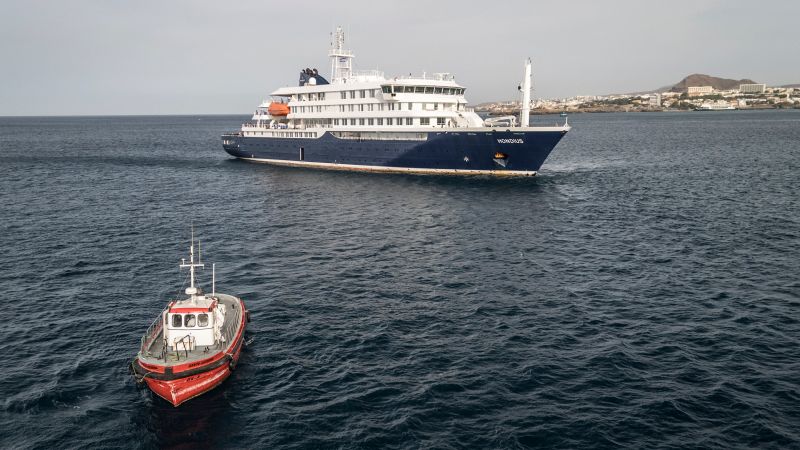
WHO chief reassures worried Tenerife residents – The World Health Organization’s (WHO) director general, Tedros Adhanom Ghebreyesus, has taken steps to address concerns among Tenerife’s residents as a cruise ship contaminated with hantavirus is set to arrive early Sunday morning. With nearly 150 passengers aboard the MV Hondius, the vessel has drawn attention due to three reported fatalities linked to the disease. While the island’s population has expressed unease, Tedros has sought to ease fears by underscoring that the current outbreak does not equate to a new global pandemic.
A Global Health Perspective
In a letter distributed to Tenerife’s citizens, Tedros emphasized that the hantavirus, which primarily spreads through rodent excretions, does not pose the same level of threat as the previous pandemic. “This is not another Covid-19,” he stated, highlighting the low risk to public health. The WHO official noted that the assessment was made with care, ensuring residents understand the measures in place to contain the virus.
“The current public health risk from hantavirus remains low,” Tedros said, adding that the organization did not make this conclusion lightly. “We will do everything tomorrow to make the operation a success,” he assured at a news conference alongside Spain’s Minister of Health, Monica Garcia, on Saturday.
The MV Hondius is scheduled to dock at Tenerife’s Granadilla port on Sunday at 5:30 a.m., according to Oceanwide Expeditions, the cruise operator. From approximately 8 a.m., guests and a select group of crew members will be disembarked in organized groups, the company confirmed. The plan includes transporting passengers via sealed, guarded vehicles to prevent exposure to local communities before they are repatriated.
Spain’s Preparedness
Spanish authorities have developed a meticulous, step-by-step strategy for handling the ship’s arrival. The island’s infrastructure, including medical facilities, has been deemed capable of supporting the evacuation process. “Tenerife was chosen for its readiness to ensure the safety of those on board,” Tedros explained, applauding the government’s decision to accommodate the vessel.
The country’s Prime Minister, Pedro Sanchez, has been credited with facilitating the evacuation, with Tedros calling it “an act of solidarity and moral duty.” The operation involves a combination of logistical precision and health safeguards, as passengers will be kept isolated from residential areas until their departure. “You will not encounter them. Your families will not encounter them,” Tedros reiterated, aiming to reassure locals of the thoroughness of the plan.
Global Collaboration and Risk Assessment
As the MV Hondius prepares to anchor off the port, the U.S. Centers for Disease Control and Prevention (CDC) has mobilized its experts to support the effort. A CDC spokesperson noted that the agency is conducting individual risk assessments for American passengers, emphasizing the low likelihood of widespread transmission. “The outbreak involves the Andes variant of hantavirus, with which we have deep expertise,” the official added, reinforcing confidence in the measures.
“The risk to the broader American public remains extremely low,” said an official from the U.S. Department of Health and Human Services. The CDC’s involvement underscores the international focus on containing the virus while maintaining essential travel operations.
Meanwhile, Germany, France, Belgium, Ireland, and the Netherlands have pledged to send aircraft to repatriate their nationals from the ship. These nations have coordinated with Spanish authorities to ensure a seamless evacuation process. The use of a biocontainment unit on the charter aircraft mirrors the protocols applied during the earlier pandemic, according to a source familiar with the arrangements.
Logistical Safeguards
Spain’s Secretary General for Civil Protection and Emergencies, Virginia Barcones, outlined that the ship will anchor at a distance from the dock in a location deemed “the safest” by maritime and port officials. This strategic positioning aims to minimize any potential spread of the virus during the disembarkation process. Once passengers begin to leave the vessel, they will be divided by nationality and transferred via small inflatable boats, with 14 Spanish nationals receiving immediate medical attention at a military hospital.
Those requiring hospital care will be isolated in individual rooms, with visitor access restricted to prevent cross-contamination. PCR tests will be administered upon arrival and again after seven days, as per the health ministry’s statement. “Active monitoring will also be carried out, including twice-daily temperature checks to promptly identify any compatible symptoms,” the ministry added, ensuring transparency in the response.
Community Concerns and Political Backlash
Despite the WHO’s assurances, tensions have lingered in Spain. Fernando Clavijo, the leader of the Canary Islands, initially voiced opposition to the ship docking in Tenerife. His concerns were echoed by some residents, who worried about the virus’s impact on their daily lives. However, Clavijo later acknowledged the necessity of the operation, stating that his government “will no” — the sentence seems cut off, but the sentiment reflects acceptance of the plan.
Protests by port workers in Tenerife highlighted early worries about the lack of communication regarding the outbreak’s potential risks. These demonstrations, which took place earlier this week, underscored the community’s desire for clarity and preparedness. “We have a detailed plan to manage the situation,” Tedros noted, emphasizing the collaborative effort between international agencies and local teams.
As the ship’s arrival approaches, the evacuation process has become a test of both resilience and coordination. With the WHO’s top official on-site and the CDC’s specialists en route, the focus remains on preventing any unintended spread of the hantavirus. The successful execution of this operation will not only rely on medical preparedness but also on the cooperation of local and national authorities, as well as the trust of the island’s residents.
International Response and Future Implications
The MV Hondius’s docking in Tenerife represents a significant moment in global health management. By prioritizing safety measures, the island’s government has set a precedent for handling infectious outbreaks





