
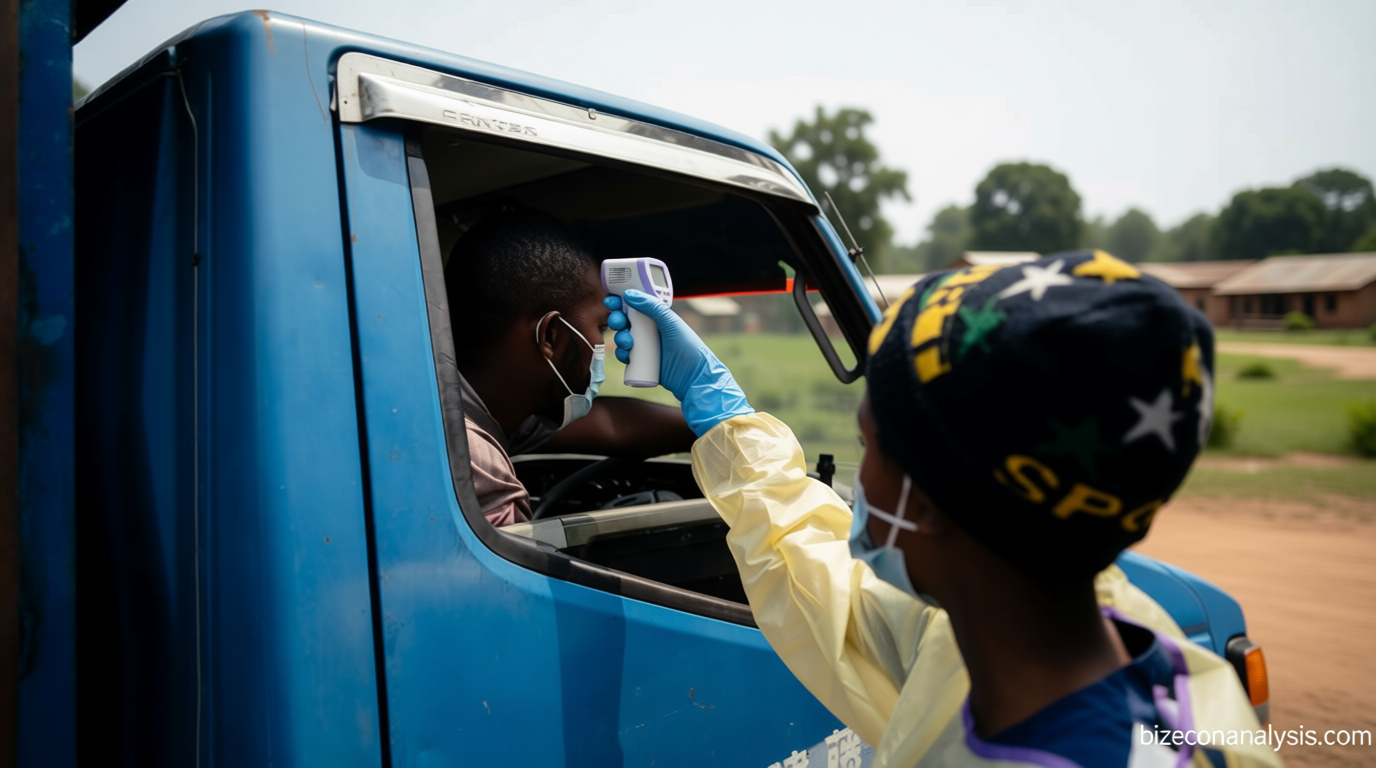
What the numbers tell us about the Ebola outbreak
What the numbers tell us about – The World Health Organization (WHO) has raised alarms over a rapidly spreading Ebola outbreak in the Democratic Republic of Congo (DRC) and Uganda, labeling it a “public health emergency of international concern” while cautioning that global risks remain relatively low. The outbreak is attributed to a strain known as Bundibugyo, which currently lacks a specific treatment or vaccine. Despite the alarming classification, the agency emphasizes that the virus has not yet reached a stage where it could spread uncontrollably beyond the region.
The American Patient and Global Response
At least one American individual working in the DRC has contracted the virus, according to international charity Serge. The Centers for Disease Control and Prevention (CDC) confirmed on Tuesday that the infected person, Dr. Peter Stafford, a general surgeon specializing in burn care, is being relocated to Germany for specialized treatment. The U.S. government is also coordinating the transfer of six high-risk contacts from the region, ensuring they receive close monitoring under stricter conditions.
“We have significant uncertainty about the number of infections and how far the virus has spread,” said Dr. Anne Ancia, WHO’s representative in the DRC.
Dr. Stafford, who was treating patients in Bunia, has exhibited symptoms of the disease, though his exact condition and progression remain under evaluation. Serge reports that two additional medical professionals—his wife, Dr. Rebekah Stafford, and Dr. Patrick LaRochelle—may have been exposed to the virus but are currently asymptomatic. These individuals are following quarantine protocols to prevent potential transmission.
Confirmed Cases and Uncertainty
As of Tuesday, only 51 cases have been officially confirmed in the DRC, with the WHO estimating that at least 139 deaths are likely linked to the outbreak. Nearly 600 additional cases are suspected, but the exact figures remain unclear due to challenges in diagnosing the virus. Dr. Tedros Adhanom Ghebreyesus, WHO’s director-general, expressed deep concern over the “scale and speed” of the outbreak, noting that the strain’s behavior has made containment more complex.
“The potential spread of Ebola warrants serious concern,” Tedros remarked during a Wednesday briefing. The agency has been working closely with local authorities to track the virus’s movement and identify new cases. However, the lack of definitive data continues to complicate efforts, as the true magnitude of the outbreak remains uncertain.
Transmission and Incubation
According to WHO, Ebola spreads through direct contact with bodily fluids from an infected person, such as blood, vomit, or fecal matter. It can also transmit via objects or surfaces contaminated with these fluids. People are not contagious until symptoms appear, which typically occur two to 21 days after exposure. The incubation period’s variability contributes to delays in detection and response.
Uganda has reported two confirmed cases so far, both linked to the DRC. The first case involved a patient who was treated at a Ugandan facility but later succumbed to the illness. The second case is also considered imported, highlighting the virus’s ability to cross borders. Health officials in Uganda have activated outbreak control measures, including disease surveillance, rapid screening, and readiness protocols to manage the situation effectively.
Timeline of the Outbreak
The outbreak was first noticed on May 5 when WHO received an alert about a mysterious illness in Mongbwalu, a town in the DRC’s Ituri province. Four healthcare workers in the area died within four days of each other, prompting the agency to investigate. Despite these early signs, the virus remained undetected for a critical four-week period before it was officially confirmed.
WHO officials stated on Wednesday that the outbreak likely began “a couple months ago,” but the precise origin remains under scrutiny. An investigation team was deployed to the region on May 12, where they collected samples to test. The delay in diagnosis, they noted, was due to the initial patients presenting with non-specific symptoms like fever, vomiting, and severe fatigue. These signs are common in many diseases, leading to confusion before the Bundibugyo strain was identified.
“WHO assessed the risk of the epidemic as high at the national and regional levels and low at the global level,” Tedros said during the Wednesday briefing.
Dr. Ancia explained that the absence of a clear “patient zero” so far is partly because the early symptoms of the Bundibugyo strain are less distinctive than those of other Ebola variants. This, combined with limited testing capabilities, contributed to the delayed confirmation of the outbreak. She added that the region’s familiarity with Ebola outbreaks—such as the one that concluded in December—may have influenced the initial response, though the virus has shown new patterns in this case.
With the situation evolving, health authorities continue to monitor both countries closely. The focus remains on preventing further spread, especially in areas with high population density and limited healthcare infrastructure. As the investigation progresses, more clarity on the outbreak’s trajectory and impact is expected, but the challenge of identifying all cases persists. The WHO’s swift action and international collaboration are critical in mitigating the virus’s potential to escalate into a larger crisis.
Global Implications and Preparedness
Although the outbreak is classified as a national and regional emergency, the WHO’s global risk assessment remains cautiously optimistic. The agency is working to ensure that international travel and trade are not significantly disrupted, but vigilance is necessary. Health experts stress that early detection and rapid response are key to curbing the spread, especially in the absence of a targeted vaccine or treatment for the Bundibugyo strain.
With the American patient and their contacts now in Europe, the global health community is watching closely to see how the situation develops. If the virus continues to spread, it could test the preparedness of countries outside the DRC and Uganda. The ongoing investigation into the outbreak’s origins and the implementation of control measures are vital steps in containing the epidemic and protecting public health.





