
Trump and Greenland loom over Denmark’s snap election, but voters appear focused on other issues. Here’s what to know
Trump and Greenland loom over Denmark’s snap election, but voters appear focused on other issues. Here’s what to know
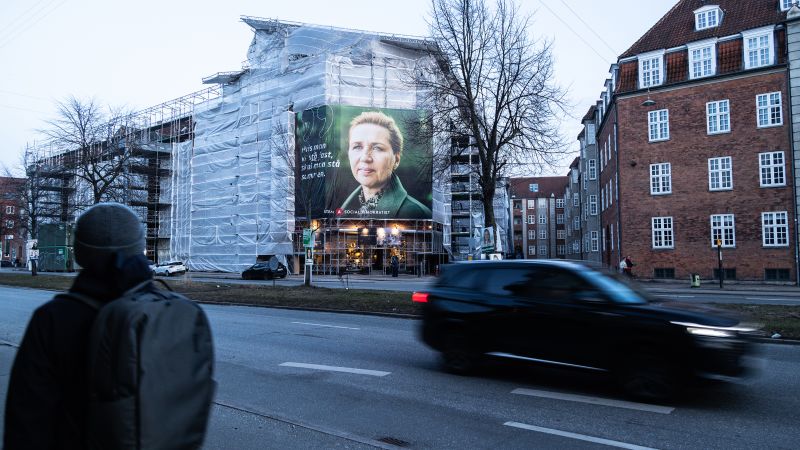
Denmark’s Prime Minister Mette Frederiksen is running on a message of stability, aiming to leverage her management of tensions with the Trump administration over Greenland’s future. Her campaign seeks to rally public support by emphasizing resilience amid global uncertainty, even as international attention remains fixated on the geopolitical showdown. Frederiksen’s international standing has grown through decisive actions on the war in Ukraine, the Nord Stream pipeline sabotage, and Trump’s assertive stance on the island territory. She called the election before October, timing her bid to capitalize on recent momentum.
Frederiksen’s Social Democrats faced a decline in local elections last year, with support slipping to 17% in December, according to Megafon polling. However, the party’s rebound to 20.9% followed her handling of the Greenland dispute, as highlighted in a Megafon survey for Danish media outlets TV2 and Politiken. While the Greenland controversy has dominated global headlines, domestic discussions center on economic challenges. “The campaign is primarily about everyday concerns,” said Ulrik Pram Gad, a senior researcher at the Danish Institute for International Studies. “She aimed to harness the rally-around-the-flag effect, but it’s more about maintaining momentum than a lasting political strategy. Once debates began, the focus shifted to the economy and environmental policies.”
Key issues for Danish voters include the cost-of-living crisis and inequality, alongside debates over the nation’s nuclear energy ban and strict immigration policies. Local matters, such as the welfare of farm pigs, also spark discussion. Frederiksen, 48, is seeking her third term, but critics argue she hasn’t adequately addressed rising housing, food, and energy costs. In her final week of campaigning, she pledged intervention with food and heating aid if the war in Iran escalates inflation.
The Liberal (Venstre) party, led by Defense Minister Troels Lund Poulsen, polls at 10.1%, campaigning on tax cuts and tighter immigration rules. A 34-year-old contender, Alex Vanopslagh of the Liberal Alliance, has also emerged, advocating lower taxes and reduced bureaucracy. However, his campaign has been derailed by a cocaine scandal. With 12 major parties in play, Denmark’s elections often result in coalition governments, requiring immediate compromises.
Greenland’s two parliamentary representatives, along with the Faroe Islands, may significantly influence the outcome. “Traditionally, they avoid meddling in Danish domestic politics, but when elections are closely contested, their votes can tip the balance,” Pram Gad explained to CNN. If current polls hold, Frederiksen’s party could secure a narrow lead, projected at 86 seats in the 179-seat parliament. This would fall short of the 90 needed for a majority, marking a potential low point for the Social Democrats in over a century. Meanwhile, the right-leaning “Blue Bloc” is expected to win 78 seats, with the Moderates possibly boosting their tally to 89 if they join the coalition.
The Role of Greenland in Danish Politics
“Traditionally, they avoid meddling in Danish domestic politics, but when elections are closely contested, their votes can tip the balance,” Pram Gad explained to CNN.
Despite the international spotlight on Greenland, its domestic impact remains secondary. The territory’s representatives, though small in number, could sway the result in a tight race, underscoring the complexity of Denmark’s multi-party system. This election, like others, may shape the nation’s future governance through coalition-building and compromise.
