
Will Ukraine help Gulf states down Iranian drones?
Will Ukraine Help Gulf States Counter Iranian Drones?
In the ongoing conflict, Ukraine has claimed it can provide expertise to defend Gulf nations from Iranian drone attacks. However, the country’s military personnel are unable to leave their homeland while the war continues. President Volodymyr Zelenskyy highlighted Ukraine’s extensive experience in drone defense, stating that his nation is ready to share this knowledge with Middle Eastern allies.
Conditions for Assistance
Zelenskyy outlined a condition for Ukraine’s aid, suggesting that Gulf leaders must secure a month-long ceasefire with Russia. “Middle Eastern leaders have strong ties with Russians,” he told Bloomberg, “so they can ask Russia to halt attacks for a month.” This pause would allow Ukraine to deploy its top drone defense specialists to the region. He also noted that Ukraine could offer similar support to Israel.
“We can help Israel in the same way,” Zelenskyy added.
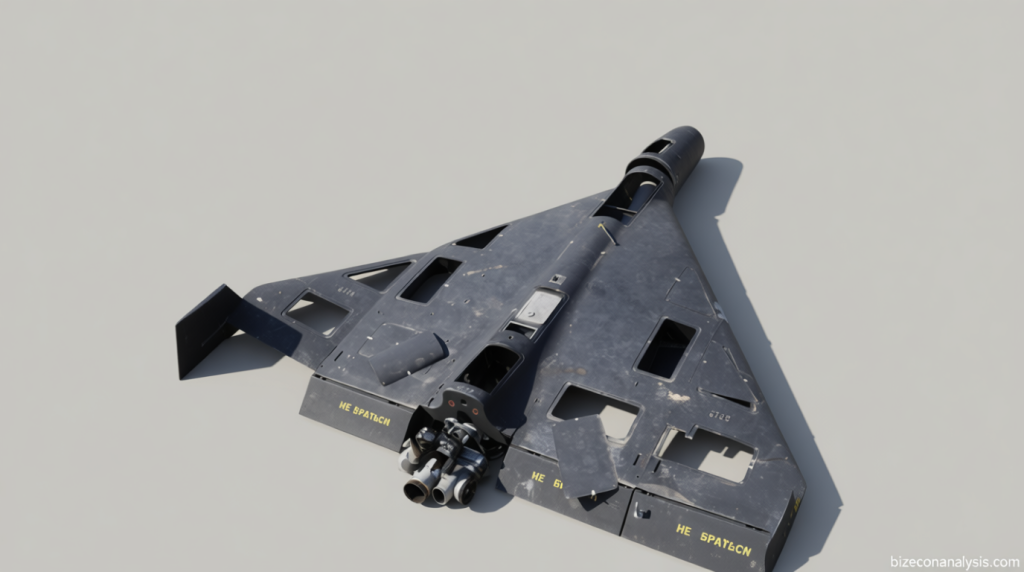
Ukrainian Foreign Minister Andrii Sybiha echoed this sentiment in a Reuters interview, emphasizing that the armed forces could neutralize 90% of Iranian Shahed drones using domestically developed interceptor systems. He stressed that Ukraine would send some of its forces, provided there is a guarantee that Russian attacks on its territory would cease.
Strategic Importance of Drone Defense
Oleksandr Chara of the Center for Defense Strategies (CDS) pointed out that Arab states initially underestimated Russia’s role in the conflict. They failed to recognize that Russia, as a key Iranian ally, had been instrumental in advancing drone technology. This changed when Iranian drones, equipped with Russian components, started targeting Gulf infrastructure.
Chara argued that Kyiv could offer both technical knowledge and trained operators to help defend against such threats. He noted that Ukraine intercepts hundreds of drones nightly, gaining valuable experience in the process. For wealthy Gulf countries, the challenge of drone defense lies more in economic terms. “Using a $100,000 missile to down a $30,000 drone is costly,” Chara said. “Investing in Ukrainian systems makes sense given the Iranian threat.”
Cooperation Scenarios
Chara outlined three potential collaboration models. First, Ukraine could send experienced teams to protect Gulf facilities immediately. Second, it might train drone pilots in Arab nations, fostering stronger military ties. Third, Gulf capital could fund mass production of interceptors in Ukraine’s defense industry. The president has already mentioned considering transferring parts of production to Gulf allies, in exchange for PAC-3 missiles to bolster Ukraine’s air defenses.
On March 5, the Financial Times reported that the Pentagon and at least one Gulf state were discussing the purchase of Ukrainian-made drones, as noted by an unnamed industry representative. According to military expert Oleh Katkov, Gulf nations have the financial means to acquire advanced equipment but lack practical data and tested algorithms. “Our experience provides critical insights,” Katkov told DW. “No one else has detailed information on deployment numbers, ammunition usage, or which systems truly work.”
Broader Implications
Zelenskyy aims to leverage Ukraine’s military know-how to pressure Russia into ending its war. He hopes that countries benefiting from Ukrainian support will shift their aid to Russia toward helping Ukraine. Chara called this a “classic win-win” for both sides, where Gulf nations gain effective defense while Ukraine secures resources and strategic alliances.
