
EU weighs options as Israel threatens Lebanon offensive
EU Weighs Options as Israel Threatens Lebanon Offensive
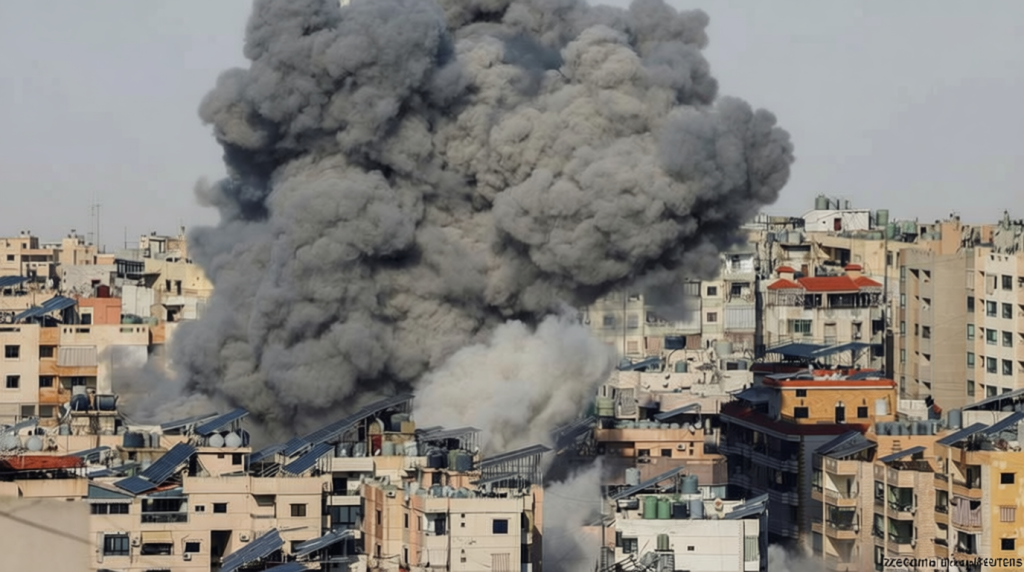
European Union leaders are cautioning Israel against launching a full-scale military operation in Lebanon. However, the effectiveness of these warnings remains uncertain, especially regarding their ability to persuade Hezbollah to cease hostilities or halt Israeli advances. The Israeli military has acknowledged conducting “limited and targeted ground operations” in southern Lebanon, targeting the Iran-backed militant group Hezbollah, which holds significant influence in the region.
Concerns are mounting in Lebanon about the potential escalation of these incursions into a broader invasion. The country’s parliament recently approved an extension of its term for two additional years, postponing elections initially planned for May due to the impracticality of holding a national vote amid ongoing conflict and widespread displacement.
Escalation and Regional Tensions
Two weeks ago, Hezbollah launched attacks on Israel following the US and Israeli strikes on Iran, which killed the country’s supreme leader, Ayatollah Ali Khamenei. Despite appeals from Lebanon’s government to avoid involving the nation in the US-Israeli conflict, Hezbollah proceeded with its retaliation. European leaders now face a dual challenge: urging Hezbollah to disarm while anticipating the consequences of an Israeli ground push.
“We’ve seen [a cycle of statements] from Europeans, asking, begging the Israelis not to escalate, not to widen their offensive, whether it’s Lebanon, Gaza or elsewhere. But it never really amounts to much more than a polite request,” said Julien Barnes-Dacey, director of the Middle East and North Africa program at the European Council on Foreign Relations (ECFR), in an interview with DW.
The primary worry for European officials is the potential for the conflict to spread further across the Middle East, destabilizing the region and exacerbating internal tensions. Displacement of Shiites from Hezbollah-controlled areas into Sunni and Christian communities has already heightened fears of sectarian clashes. “The Israeli army is talking of going up and even beyond potentially the Litani River and depopulating that area,” Barnes-Dacey noted, highlighting the risk of fracturing Lebanon’s social fabric.
Humanitarian and Strategic Concerns
Lebanon’s ongoing economic crisis has left the nation vulnerable to additional strain. A prolonged conflict could deepen this crisis, driving more refugees toward Europe and increasing pressure on its resources. “There’s a real concern that this is precisely the kind of situation that pushes more people from the Middle East to look to flee the region and head to Europe,” Barnes-Dacey emphasized.
Additionally, the safety of UN peacekeepers in southern Lebanon is at risk. The United Nations Interim Force in Lebanon (UNIFIL) has reported instances where observers were struck during clashes with Hezbollah. The force operates in zones vacated by civilians, raising fears that their presence could be exploited in future attacks. “It is unacceptable that peacekeepers performing Security Council-mandated tasks are targeted,” UNIFIL stated in a March 6 release, two days after calling for restraint from both sides.
European Leverage and Economic Ties
Analysts suggest Europe’s primary influence over Israel lies in its economic partnerships. The EU could consider suspending the EU–Israel Association Agreement to impose trade restrictions, a measure previously discussed to curb Israel’s military actions in Gaza. “The key card that Europeans have been unwilling to play over the last two years is the economic card,” Barnes-Dacey explained, underscoring the need for more decisive action.
With tensions rising and regional instability growing, Europe must balance its diplomatic appeals with tangible pressure. The outcome of this situation could shape both the Middle East’s future and the continent’s response to an influx of migrants seeking refuge.
