
She spent 20 months battling to die under a euthanasia law. On Thursday, Spain let her
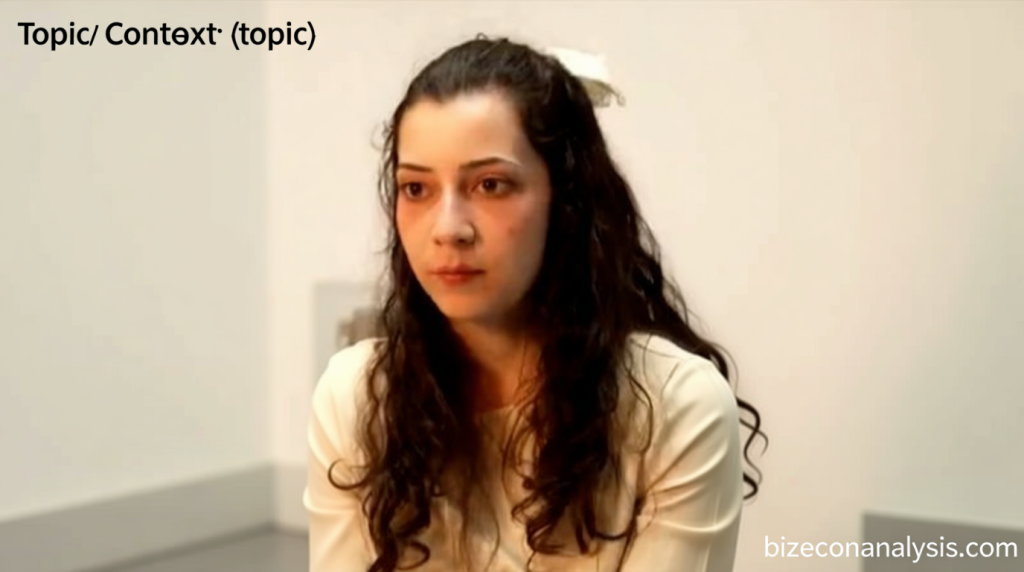
She spent 20 months battling to die under a euthanasia law. On Thursday, Spain let her
EDITOR’S NOTE: This story includes discussions about suicide that may disturb some readers. If you’re in crisis, contact the 24-hour Suicide Crisis Lifeline by calling or texting 988. Noelia Castillo’s journey was shaped by enduring pain—both bodily and mental. Her decision to end her life, made in 2024, was finally realized at age 25, marking the end of a prolonged struggle.
A turbulent path to a quiet end
Noelia Castillo’s choice to seek euthanasia was influenced by a chaotic family environment following her parents’ split when she was 13. She resided in a supervised facility and was diagnosed with Obsessive-Compulsive Disorder and Borderline Personality Disorder. During her interview on Spanish television, she detailed three instances of sexual abuse: an ex-partner’s alleged actions, an assault in a nightclub by two men, and a third incident in a bar involving three young men. She recounted never reporting any of them.
“I want to leave in peace already and stop suffering, period,” Castillo stated days before her passing. Her narrative ignited widespread discussion in Spain, with supporters and detractors expressing strong opinions. Some criticized her on social media, urging her to reconsider, while others stood by her choice.”
Her decision was cemented after a suicide attempt in October 2022, which left her paralyzed and reliant on a wheelchair. This event became the catalyst for her pursuit of euthanasia. “Sleeping is very difficult for me, and besides that, I have back and leg pain,” she explained. However, she underscored that her anguish extended beyond the physical. “My world was very dark … I had no goals, no objectives, nothing,” she added.
A legal battle spanning multiple courts
Castillo’s euthanasia was executed at Sant Pere de Ribes hospital. Assisted suicide has been permitted in Spain since June 2021, but her case required navigating a complex process. The Catalonia Guarantee and Evaluation Commission approved her request on July 18, 2024, citing her “nonrecoverable clinical situation” and the severe impact on her autonomy and quality of life.
Her father, influenced by the conservative Christian Lawyers group, challenged the process. He argued she lacked the capacity to make such a choice, sparking a 20-month legal dispute that involved five levels of the judiciary: a Barcelona court, the High Court of Justice of Catalonia, the Supreme Court, the Constitutional Court, and the European Court of Human Rights. None of these institutions contested her decision, affirming her ability to choose death.
“He has not respected my decision and he never will,” Castillo said about her father. She described feeling disconnected from him, questioning his motives. “He ignores me. So why does he want me alive? To keep me in a hospital?” she wondered.
Castillo’s resolve culminated in her final moments, where she asked for solitude. “I can’t take this family anymore, I can’t take the pain anymore, I can’t take everything that torments me in my head,” she reflected. Her passing symbolized not just an end to suffering, but a testament to the legal and emotional hurdles she overcame.
