
No timeframe for ending US war against Iran, says Pete Hegseth
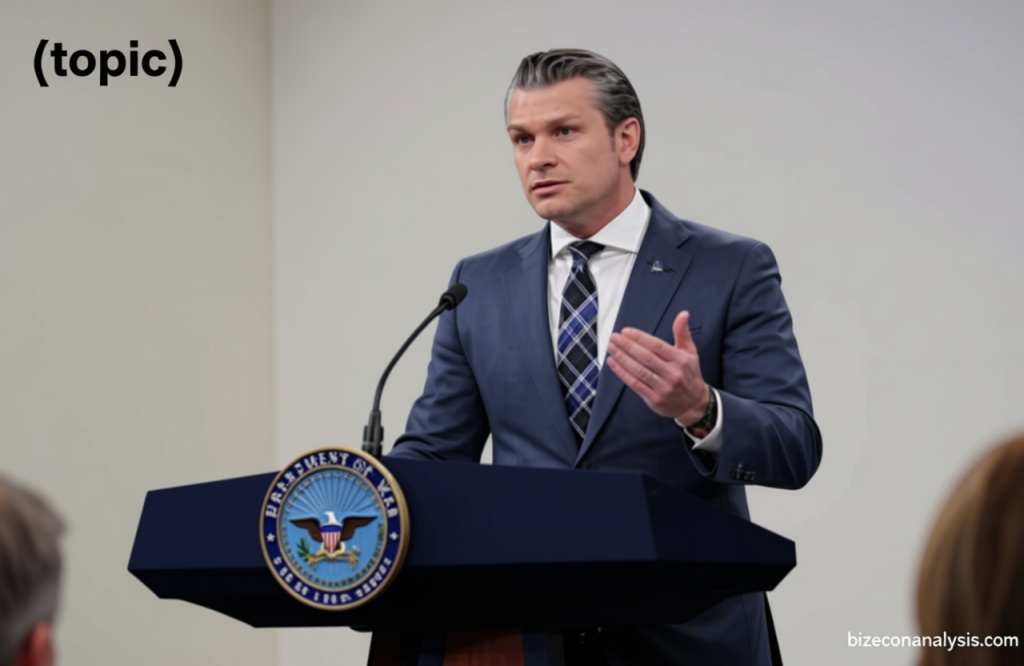
Pete Hegseth Announces No End Date for U.S. Conflict with Iran
Defense Secretary Pete Hegseth stated Thursday that there is no established “timeline” for concluding the U.S. military campaign against Iran, and he did not dispute claims the Pentagon may seek an additional $200 billion in funding from Congress. The offensive, which began three weeks prior, has expanded its reach, intensifying operations across multiple fronts.
President Donald Trump warned Wednesday of “massively damaging” the globe’s largest gasfield following Israeli strikes on an Iranian facility, which led to increased attacks on oil and gas infrastructure across the Gulf. Hegseth indicated that Thursday would mark the most significant aerial assault yet, with over 7,000 Iranian military sites and installations already targeted.
“To date, we’ve struck over 7,000 targets across Iran and its military infrastructure,” the defense secretary said. “Today will be the largest strike package yet … death and destruction from above.”
Despite surging oil prices and a declining presidential approval rating, Hegseth refused to propose a strategy for withdrawal. “We wouldn’t want to set a definitive timeframe,” he said, adding that “we’re very much on track” and Trump will decide when to stop. “It will be at the president’s choosing, ultimately, where we say, ‘Hey, we’ve achieved what we need to.’”
Military Operations Expand Across Key Regions
In the Gulf, A-10 “Warthog” jets are targeting fast-attack vessels in the Strait of Hormuz, while Apache helicopters in Iraq are engaging Iran-backed militias. Allied forces have begun deploying similar systems against Tehran’s one-way attack drones. General Dan Caine, a senior U.S. military official, added that forces were “advancing steadily” and intensifying operations within Iranian territory.
Long-range strikes are now penetrating further east, hitting underground storage facilities, drone garrisons, and coastal missile sites with bunker-busting munitions. Caine outlined the widening geographical scope of the conflict, emphasizing the military’s momentum.
Hegseth’s Religious Appeal
Hegseth, a known advocate of Christian nationalism, concluded his address with a fervent appeal for prayer, urging Americans to “beseech the Lord in their homes, schools, places of worship, and the name of Jesus Christ.” He also criticized the media, calling them “dishonest and anti-Trump” and accusing them of “Trump derangement syndrome” in their reporting.
“A dishonest and anti-Trump press will stop at nothing – we know this at this point – to downplay progress, amplify every cost and call into question every step.”
The Guardian noted that initial six days of the conflict had already cost approximately $13 billion. Hegseth acknowledged the financial commitment, saying, “Obviously it takes money to kill bad guys,” and reiterated the need for continued congressional support.
He dismissed claims of “mission creep” as a fabrication by the media, reaffirming the campaign’s goals: to neutralize Iran’s missile infrastructure, weaken its defense production, and destroy its naval forces, all to prevent the country from obtaining nuclear weapons. “Our objectives, given directly from our America-first president, remain exactly what they were on day one,” he said.
