
EDITOR’S NOTE
Call to Earth is a CNN editorial series dedicated to highlighting environmental challenges and their solutions. In partnership with Rolex’s Perpetual Planet Initiative, the series aims to raise awareness about sustainability issues and encourage meaningful action.
From Depleted Land to Wildlife Haven
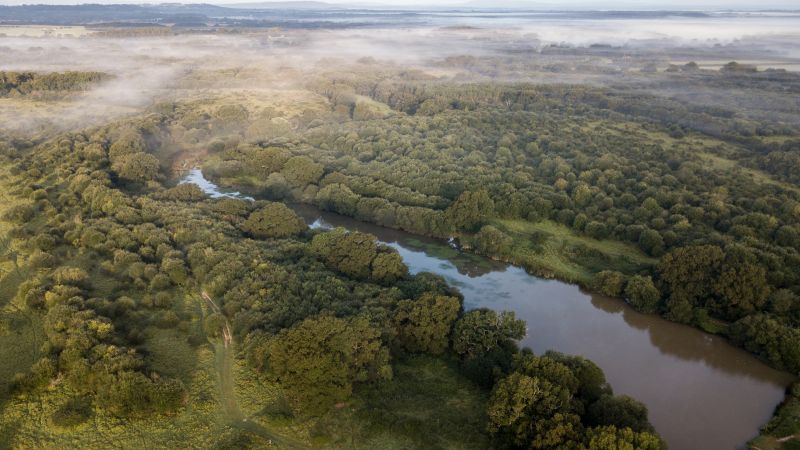
Once a struggling agricultural site, the Knepp Estate in southern England has transformed into a thriving natural sanctuary. Strolling through the area, one might spot beaver wetlands, nesting herons, and Exmoor ponies roaming freely—alongside the melodic call of a turtle dove. This bird, once a common feature of English summers, has seen dramatic declines since the 1990s.
Historic Decline
Turtle doves were once widespread in the UK, but their population has plummeted by 98% since 1994. For two decades, they’ve remained on the UK’s Red List, indicating their vulnerable status. Yet, at Knepp, signs of recovery are emerging.
“It’s a sound that used to define our summers. Everyone in England once knew that call,” reflects Isabella Tree, co-owner of the 3,500-acre estate with her husband, Charlie Burrell.
A Rewilding Revolution
Tree and Burrell initiated rewilding in 2001, shifting the estate from a heavily farmed landscape to a biodiversity hotspot. A recent study spanning two decades reveals remarkable growth: turtle dove singing males increased from two in 2008 to 22 in 2024. This resurgence is part of broader ecological improvements, including an 870% rise in dragonflies and damselflies between 2005 and 2025.
Reviving Nature’s Balance
The couple’s approach involved reintroducing native species and allowing nature to take over. By removing internal barriers, they enabled animals like Tamworth pigs, longhorn cattle, and fallow deer to roam, dispersing seeds and nutrients naturally. Beavers, extinct in the UK since the 16th century, were also brought back, creating ponds that now support bird populations.
“The rewilding concept is about stepping back and letting ecosystems evolve on their own,” Tree explains.
Biodiversity Boost
Letting fields revert to wild thorny scrub has become a catalyst for species like turtle doves and nightingales. “This habitat acts as a powerful refuge for nests and a rich food source for songbirds,” Tree notes. While nightingales, once abundant, have also rebounded—spotted in numbers nine times higher than in 2007—she remains cautious about their long-term survival.
“Despite this success, turtle doves still face a precarious future in the UK,” she adds.
Agriculture’s Impact
Over 70% of UK land is used for farming, according to Rob Stoneman of the Wildlife Trusts. This intensive use has pushed wildlife to the brink, affecting not just biodiversity but also flood control, drought resilience, and climate stability. The government has committed to restoring 500,000 hectares of wildlife habitat, but Tree argues that more action is needed.
Knepp’s journey underscores the potential of rewilding to reverse ecological damage. By embracing natural processes over human intervention, the estate has become a beacon of hope for species on the decline, proving that even degraded landscapes can flourish with the right approach.





