
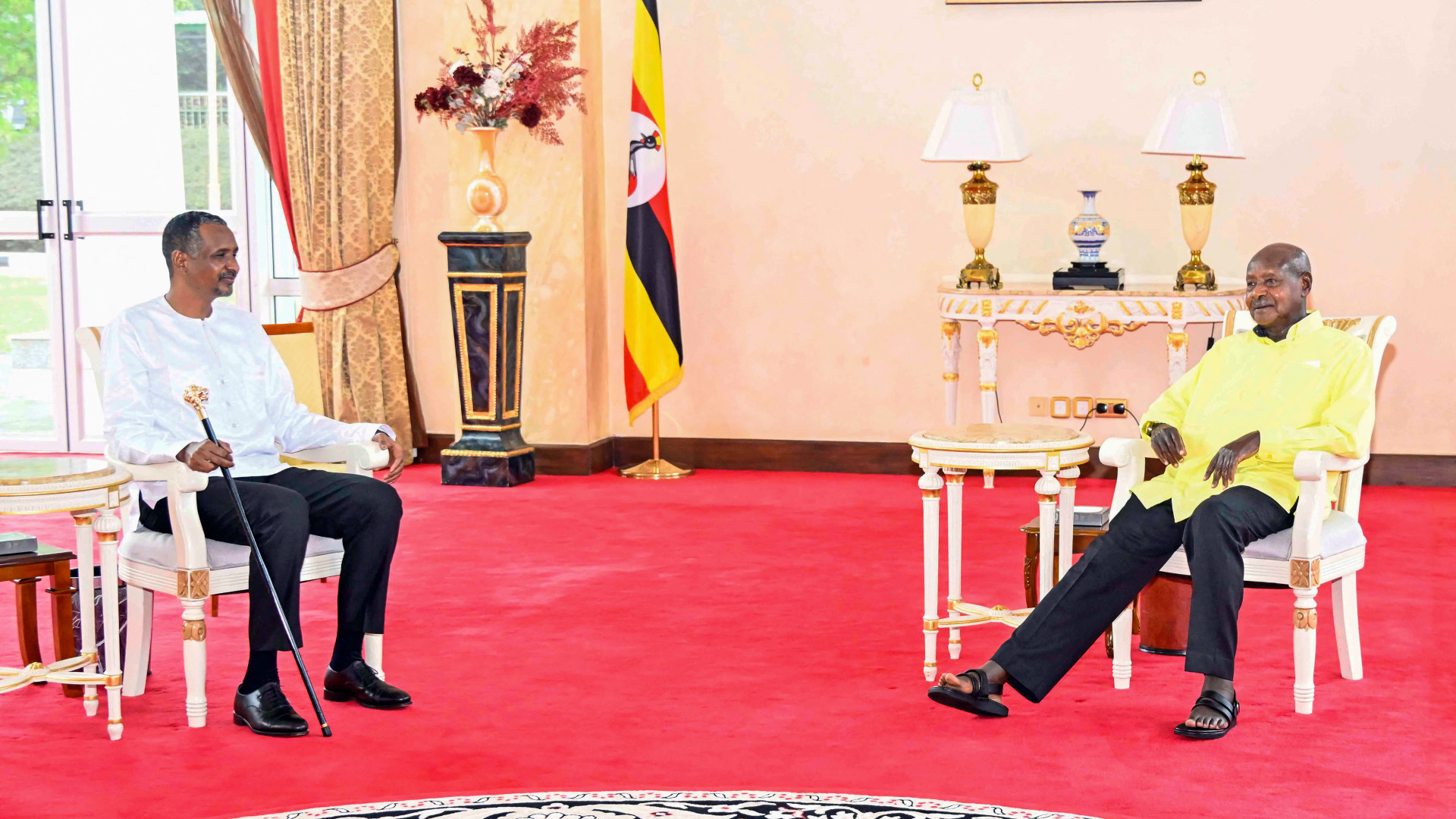
Sudan War: Why Hemedti’s Legitimacy Push in Uganda Falters Amid RSF Atrocities
On 20 February, Mohamed Hamdan Dagalo, the Sudanese Rapid Support Forces (RSF) commander known as Hemedti, traveled to Kampala, Uganda, where he held discussions with President Yoweri Museveni. This marked Hemedti’s most prominent diplomatic appearance beyond Sudan’s borders in recent months.
The visit occurred shortly after a UN investigation uncovered evidence of genocide by the RSF in Darfur. Days later, the US imposed sanctions on three RSF leaders for their role in atrocities in el-Fasher. These events followed years of international criticism against the RSF, including a December 2023 US ruling that classified RSF actions in Darfur as ethnic cleansing. The Security Council also passed resolutions throughout 2024 highlighting the group’s violent conduct.
Hemedti was not alone during his trip. He brought with him figures tied to the political framework he established in Nairobi, dubbed “Tasis.” This initiative aimed to present RSF-controlled regions as civilian-administered alternatives to the central government. However, it failed to gain significant backing from Sudanese political factions or secure recognition from regional and global entities, including the UN.
Sudan’s government criticized Uganda for hosting Hemedti, framing the gesture as a slight to the Sudanese people and a challenge to humanity’s collective values. The move underscores Kampala’s strategic role as more than a diplomatic courtesy; it represents a renewed effort to position the RSF as a legitimate actor on the international stage.
The RSF currently manages administrative functions in areas it controls, fostering parallel governance systems. This development raises concerns about Sudan’s potential to fragment into competing power centers. Hemedti’s timing suggests a deliberate shift in strategy: moving from battlefield dominance to building influence across borders.
In Uganda, Hemedti emphasized unity, opposed territorial division, and pledged to engage in dialogue. He portrayed the conflict as a fight against entrenched Islamist groups, while positioning himself as a proponent of civilian-led political reforms. His address highlighted the RSF’s military might, claiming the force now exceeds 500,000 fighters and is prepared for broader involvement in Sudan’s governance.
“The war is no longer just about Khartoum; it’s a battle over competing claims to sovereignty,” noted analysts at the International Crisis Group. Prolonged dual-authority scenarios in African conflicts often lead to entrenched fragmentation.”
By aligning with Uganda, Hemedti seeks to bolster the RSF’s image under global scrutiny and secure diplomatic acceptance as a political entity. Museveni’s decision to host the RSF reflects his commitment to “African solutions to African problems,” leveraging Uganda’s neutral stance in regional diplomacy. The country’s role as a respected leader allows it to grant symbolic credibility to the RSF, offering a platform away from Nairobi’s failed Tasis project.
The engagement also ties into broader African mediation efforts, such as those led by the African Union and the Intergovernmental Authority on Development (Igad). Yet, Museveni’s public support for Hemedti places him in a precarious position, balancing regional influence with potential backlash from Sudan’s domestic opposition.





