
A free Iran is their shared dream. But the diaspora remains torn on the best path forward.
A Free Iran Is Their Shared Dream. But the Diaspora Remains Torn on the Best Path Forward
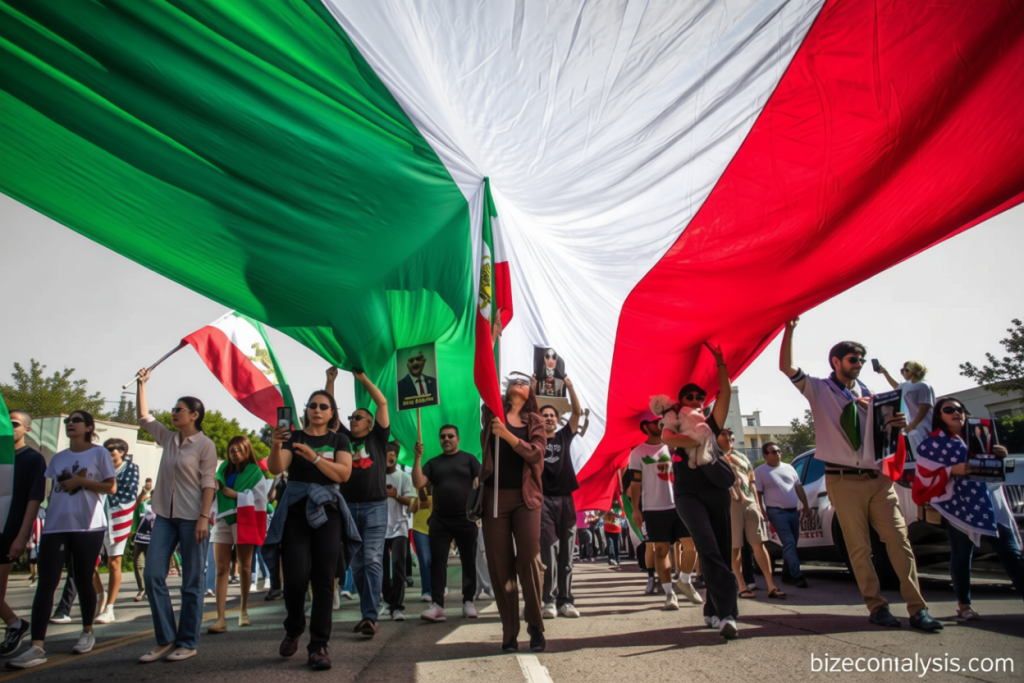
Los Angeles has become a microcosm of Iranian diaspora sentiment, where opposing views converged last weekend. In one corner, crowds gathered near City Hall to voice opposition to an unauthorized conflict, chanting slogans like “End the war in Iran” and “We the people reject war.” In another, the same community celebrated across town in Tehrangeles, a neighborhood steeped in Persian culture, as they embraced the possibility of regime change following U.S.-Israeli strikes that reportedly killed Iran’s supreme leader, Ayatollah Ali Khamenei.
The emotional spectrum of the Iranian diaspora has grown more complex in recent days. Many who fled the theocratic regime after the 1979 Islamic Revolution now face a dilemma as violence escalates in the Middle East. Some are driven by deep resentment toward the current leadership, advocating for its complete dismantling even if it means sacrificing parts of the country. Others seek to replace the regime without plunging Iran into further chaos. This divide reflects a shift from earlier this year, when the diaspora appeared unified in backing Iranians resisting the government’s harsh tactics.
Online Tensions and Ideological Fissures
Debates have intensified online since the strikes, with accusations flying between factions. Supporters of military action are increasingly called “Zionists,” a term that has taken on a more hostile connotation since the Hamas attacks on Israel in October 2023. Meanwhile, those opposing the war face claims of being pro-regime. The conflict has exposed a broader ideological rift, as Iranians argue over who should lead if the current government collapses.
“Some people are so aggrieved at this regime that they say, ‘At any cost, come and destroy this regime even if it means destroying parts of the country,’” said Abbas Milani, director of Iranian studies at Stanford University. “Others want to get rid of the regime but not at the expense of war.”
Opinion splits also occur over the potential successors to Khamenei. Reza Pahlavi, the son of the last shah, garners support from some, while others remain cautious about restoring ties to the monarchy. Analysts note that the Islamic Revolutionary Guard Corps, a powerful entity in Iran, may consolidate its influence if the conflict persists.
As the death toll rises and internet outages restrict communication, the Iranian diaspora navigates a rapidly evolving landscape. Nowruz, the Persian New Year symbolizing renewal, looms on the horizon, with rumors circulating about Mojtaba Khamenei, the supreme leader’s son, being named to replace him. This uncertainty adds to the tension, as the future of Iran remains unclear.
President Donald Trump has expressed a desire to dismantle Iran’s leadership structure entirely, suggesting potential candidates for a “good leader.” However, his approach faces criticism, as a recent NBC News poll revealed that 54% of potential voters disapprove of his handling of the situation. This mirrors the internal division within the Iranian diaspora, where 53% of respondents in a prior NIAC-YouGov survey opposed U.S. military action against Iran.
“We are not a monolith,” wrote the Iranian Diaspora Collective, an Instagram account with over 81,000 followers. “Millions of people will never share the same ideology or identity, and that plurality is the strength of any free society.”
Los Angeles-based pastor Ara Torosian, a Christian who relocated to the U.S. from Iran in 2010, described the current turmoil as a painful reminder of past struggles. While he lamented the destruction of historic landmarks and the loss of innocent lives, particularly children, he acknowledged that the suffering today rivals the hardships faced by earlier dissidents. Torosian, who was once detained and beaten by the Revolutionary Guard for possessing Christian symbols, celebrated Khamenei’s death as a turning point. “This is not the first time we’ve seen upheaval,” he said, “but it feels like a new chapter.”
