
The Greens’ Gorton and Denton by-election win was about inclusion — not sectarianism
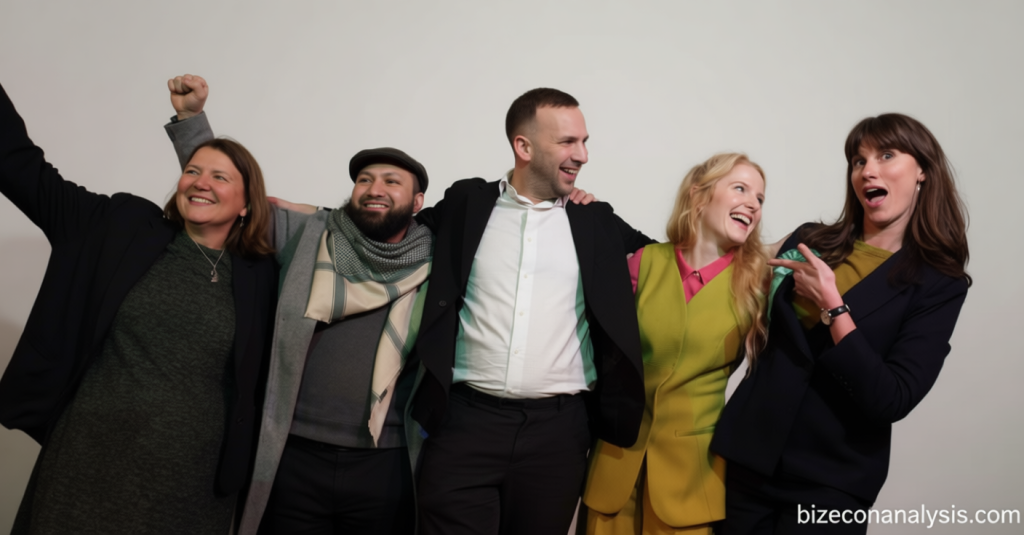
The Greens’ Gorton and Denton by-election win was about inclusion — not sectarianism
It was a momentous night for the Green Party — not only because they secured their first parliamentary by-election victory in Gorton and Denton, but also because they reversed a Labour majority that had stood for over 13,000 votes. This achievement marked a significant shift in the political landscape of the North of England, as the party now has a representative in the region for the first time. Yet, the broader implications of this win go beyond these milestones.
A new era of political engagement
What stood out was the message of hope and unity this victory sent across the nation. It demonstrated that British politics can embrace a more inclusive approach, prioritizing connection over division. In places like Gorton and Denton, where nearly 40% of residents identify as Muslim and many speak languages such as Urdu or Bangla at home, the campaign proved that representation in English alone is insufficient.
While opponents like Matt Goodwin, Reform’s candidate in Kent, relied on a traditional, Westminster-style English rhetoric, the Greens adapted their communication to resonate with diverse communities. This strategy wasn’t just about reaching people in their native tongues — it was about ensuring their voices were central to the political dialogue.
Breaking down barriers through language
The use of multilingual materials, including a viral Urdu video, was a deliberate effort to bridge gaps. It wasn’t a superficial tactic, but a sincere commitment to making politics accessible. For many, this meant seeing their cultural identity reflected in the campaign, fostering a sense of belonging and trust.
“In a democracy, language should never be a barrier to participation; it should be a bridge.”
Some critics, particularly those who lost the election, have labeled this approach as divisive. But the Greens argue that multilingual outreach is about inviting people into the conversation, not pushing them apart. As seen in New York with Zohran Mamdani’s campaign, language inclusivity expands political engagement, especially in communities often overlooked by mainstream voices.
Politics that matters to everyone
Issues like housing costs, NHS care, and racial equality are universal, regardless of the language spoken at home. The Greens’ focus on these themes, alongside efforts to speak directly to communities in Punjabi, Somali, or Arabic, underscored their belief that diversity strengthens democracy.
By translating their message into multiple languages, the party made a clear statement: every individual’s perspective holds value. This wasn’t about creating factions, but about ensuring all people — whether they grow up in English or other linguistic traditions — feel represented in the political process.
The campaign’s success, with a 26.5% shift toward the Greens, reflects a growing appetite for inclusive politics. It’s not merely about increasing parliamentary seats — it’s about proving that when people feel heard, their participation can reshape the future of governance.
